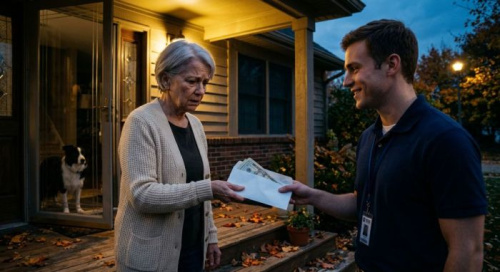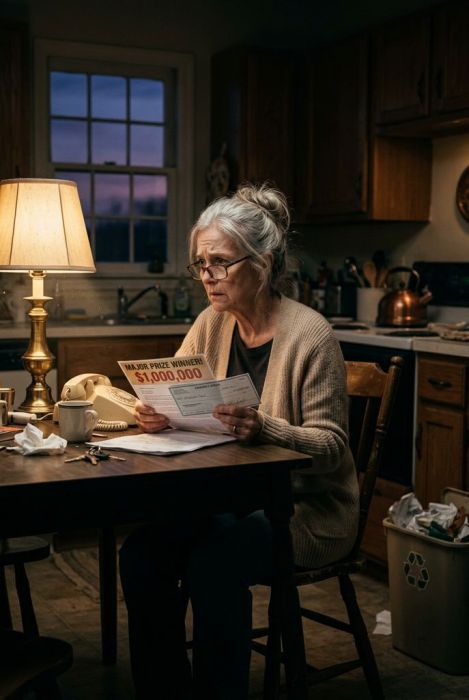
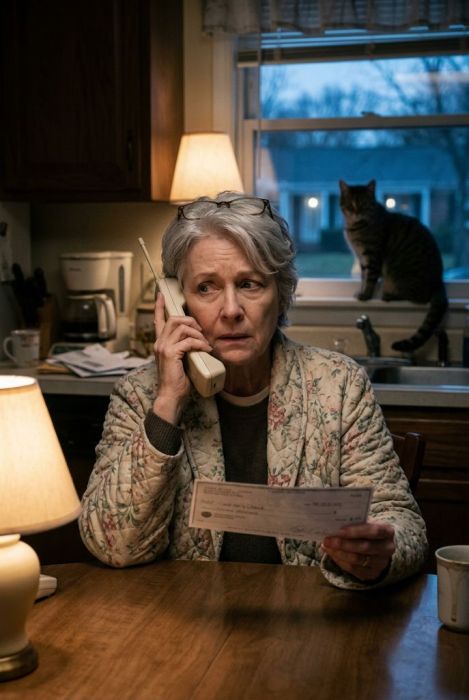
The envelope had no return address. No postmark Evie Hart could read, no smudged handwriting — just her name in perfect black type on plain white paper. Evelyn Hart. Sixty-six years old. Spokane, Washington. Inside waited a cashier's check for $2,850, paper-clipped to a letter on thick ivory stationery announcing BrightPath Consumer Research in quiet blue serif. She read the first paragraph twice before her hands began to shake.
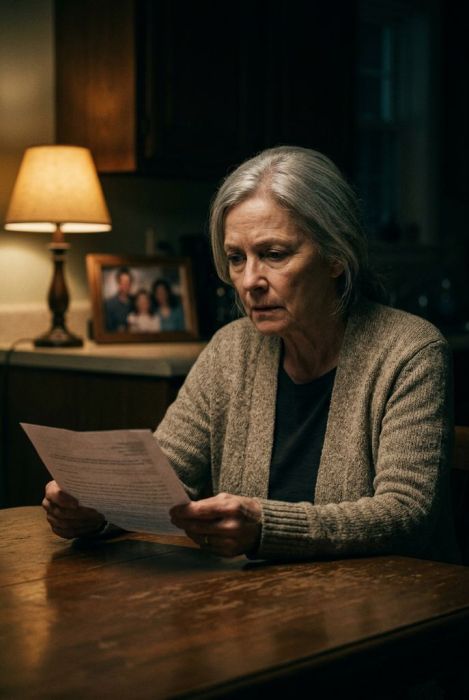
"Congratulations on your acceptance into our Senior Evaluation Panel," the letter said. "Your first major assignment has been scheduled. Enclosed, please find a cashier's check in the amount of two thousand eight hundred fifty dollars. This money will be used to evaluate the fraud-prevention systems of major money-transfer services..."
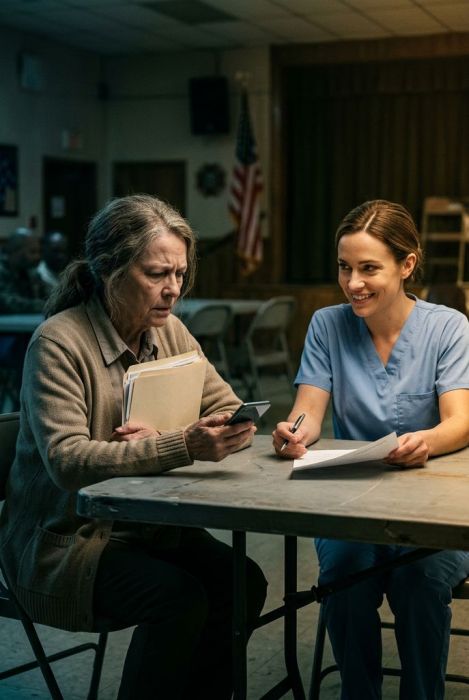
On her kitchen table, in the pile of mail she usually sorted into bills and junk, the envelope looked almost official. Almost kind. It had arrived exactly nine days after she filled out the mystery shopper application on the rickety public computer at the Spokane Senior Center — the one where a young man named Brandon always helped the older folks fix their email.
Brandon Whitley had been a blessing since he'd started at the center the year before. Twenty-eight, patient, quick with a joke, he could coax a jammed printer back to life with a single smile. He had pinned the flyer to the bulletin board himself: SENIORS EARN FROM HOME. FLEXIBLE HOURS. HELPING COMPANIES IMPROVE CUSTOMER SERVICE. Evie stopped to read it because her grandson Noah was a freshman at the University of Oregon, Christmas was eleven weeks away, and she had been lying awake at night doing arithmetic that never came out right.
Her pension stretched far enough. Earl's UPS pension helped a little more. But Noah refused to ask his father for anything — Derek's own paycheck barely covered the trailer park he rented — and the boy was too proud to admit he couldn't afford the flight home. Evie knew, because she had raised his father, and pride was a family inheritance. So when she saw the flyer, she told herself this wasn't a job so much as a gift she could wrap in a round-trip ticket.
The first assignment had been almost too easy. Evaluate two stores near the mall. Note the greeting, the cleanliness, the wait time. She did it happily, and ten days later a real check for $40 arrived, drawn on a real bank. It cleared. Evie's shoulders relaxed. The job was real, the work was honest, and she had already picked out the exact aisle seat she was going to buy for Noah's flight home.
Now here was the second assignment, and the instructions were simple. Deposit the $2,850 check at Great Northwestern Savings. Keep $390 as her pay for the quarter. Then withdraw the remaining $2,460 in cash and send it through Western Union to a quality assurance specialist named Marcus Reyes in Phoenix, Arizona. Evaluation number 2241. She would call the toll-free number after the transfer and give a four-digit code to "complete the test."
Her neighbor Marjorie Pike came over for coffee that morning while the check was still on the counter. Marjorie had been a nurse for forty years and could smell trouble the way other people smell rain. "Evie, honey, no job on earth pays you to send money somewhere," she said, holding the letter up to the light. "Why would a company hand you their own money to test their own security? They'd test it in-house."
Evie had taken offense, and later she would remember the heat rising in her chest. "It's not like that, Marge. It's a real company. I already got a real paycheck. You're just jealous I'm not sitting around bored like you." It was the cruelest thing she had said in years, and she said it because the arithmetic in her head was already singing. $390. Several times a year. Enough that she could tell Noah not to worry about the ticket, that Grandma had a job now, that she was still useful, still sharp, still someone a nineteen-year-old could be proud of.
The teller at Great Northwestern — a red-haired young woman named Piper who always asked about Noah — was the one who caught it first. She looked at the check, tilted it, ran a fingernail over the paper, and called her manager. Mr. Grabanski studied the routing number and made a phone call that took six minutes. Evie stood at the counter the whole time, smiling, telling herself everything was fine, that big checks simply needed review.
"It's a counterfeit, Mrs. Hart," Grabanski said quietly. "The bank of issue has no record of this check, and the account it references doesn't exist. We'll have to reverse the provisional credit. And because funds were moved before it cleared... that's a matter for the U.S. Secret Service."
The withdrawal slip for $2,460 was already signed in Evie's own hand. She hadn't wired the money yet — that was scheduled for that afternoon. She would learn later that this was the single luckiest moment of her life, because the cash was still sitting in an envelope in her purse when the world came apart.
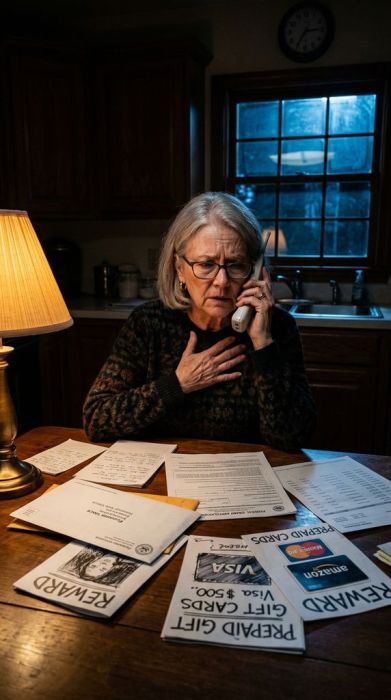
For three days she did not answer the phone. She did not open her mail. She hid the flyer, the letter, and the $2,460 in the cookie tin her mother had used for wedding money, and she told Marjorie she had the flu. The second envelope arrived on the fourth morning, fatter than the first. BrightPath wanted to "resolve the misunderstanding." Enclosed was a new cashier's check for $4,200, printed by a "preferred partner bank," along with a typewritten note from a woman named Angela in payroll.
"Bank errors are not uncommon, Mrs. Hart. We've upgraded your contract to Executive Evaluation Tier. Please deposit the enclosed check, keep $590 for your inconvenience, and complete the fraud test using the new confirmation code on page three. Do not discuss this with your local branch. Our legal department is handling the matter." The signature was script so perfect it could have been printed, and beneath it ran the phone number Evie now knew by heart.
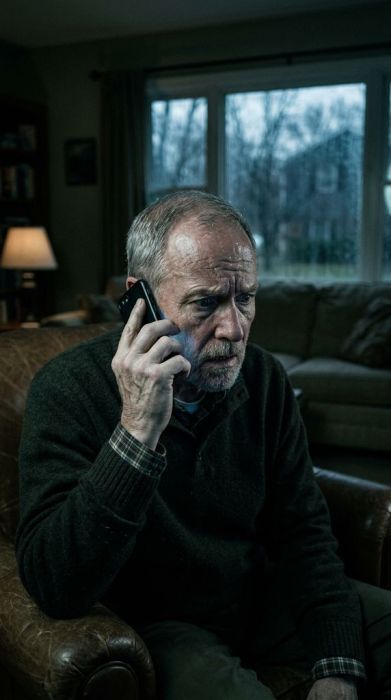
She called it the way a drowning woman reaches for the surface. Angela's voice was warm and unhurried, the voice of a woman who had never once in her life been told she couldn't fix something. "This happens all the time, honey. Think of it as a test of patience. Banks flag large checks when a customer doesn't usually deposit them. That's your real assignment — evaluating how your bank reacts. You're doing wonderfully."
"Should I go to the police?" Evie asked. "Oh, honey. That would only confuse things," Angela said. "You're not a victim, you're an evaluator. We're about to pay you $590 to keep doing what you're doing. Doesn't that make sense?"
It made terrible, perfect sense, which is the thing about a good scam. It builds a small, airtight world where the lie is the furniture and the truth is the intruder. For three days Evie kept the second check in the cookie tin, unresolved and festering. She cooked small meals she couldn't taste. She took Chester the cat onto her lap and stared at the television without seeing it. She did not tell Marjorie, because Marjorie would say "I told you so" in exactly the gentle voice that would have broken her.
Then, on a Tuesday morning, the Secret Service knocked.
The woman at the door was tall, fortyish, dressed in a navy suit that said government in three syllables. Agent Dana Whitfield asked if she could sit down. She did not ask about the check. She asked about the application. "Mrs. Hart, where did you first see the advertisement for BrightPath?"
"The bulletin board at the senior center. Brandon printed it for me." Agent Whitfield's pen paused. "Who is Brandon?"
And here is where the arithmetic in Evie's head finally began to come out in a different shape.
Brandon Whitley had helped them all. He showed Dorothy how to video chat her grandkids. He un-jammed the printer for Gerald. He changed Evie's own passwords when her email got "slow" — his gentle word for a phishing problem he somehow predicted a week before it happened. He knew their birthdays, their bank names, their children's names, because he asked with such easy, friendly interest over the checkers table in the rec room.
The application she'd filled out on the public computer under his "tutelage" had required her routing number "to set up direct deposit of your earnings." He had scanned her driver's license "for payroll." He had praised her patience with the forms. Every single question he asked was a key being turned in a lock.
The ledger the agents found in the closet of his apartment had thirty-one names in it. Evie's was number eleven. Beside each name, in pencil: TRUST LEVEL: HIGH. BANK: GREAT NORTHWESTERN. BEST TIME TO CALL: 9 AM, AFTER COFFEE.
Brandon was not in the apartment when the search warrant was served. He was at the senior center, in the computer lab, clicking through the morning like the good young man everyone loved. Evie walked in on the third swing of the door and saw, on his monitor, a blank BrightPath application form with the logos freshly loaded. He turned around and smiled. "Mrs. Hart. You look like you've seen a ghost."
"You're Angela," Evie heard herself say. Her voice came out quiet and sure, like a judge reading a verdict. "You're the voice on the phone. You're the one who told me not to talk to the police."
His smile didn't drop; it widened, then tightened at the edges, and for one long second Evie understood what hunters mean when they say an animal turns. "Evie. Honest to God, I was only trying to help. The job's real. The company's real. It's the bank that's crooked. They don't want you making money, that's all."
Behind Evie, Agent Whitfield stepped out from the hallway, phone in hand, the recording of Angela's voice already playing at low volume. It was Brandon's voice — deepened and smoothed into a woman's cadence with a free sound editor on his laptop. The notes Angela typed were written in the same careful script as the labels on the care packages he made for seniors every Thanksgiving.
He had run the Spokane branch of a mail-fraud ring for eighteen months. The wire transfers moved through mule accounts in three states. The counterfeit checks came from a print shop in Boise that officially no longer existed. The profits moved as cash pickups, nearly untraceable. Thirty-one names in the ledger. Three victims who had wired away their full retirement savings. Two families who had lost their homes.
Brandon's arrest took less than four minutes. Every senior in the building watched him get handcuffed in the maroon cardigan he always wore, and for a long time afterward nobody could look at that color without flinching.
Evie did not get all her money back. The first wire had never been sent — that was pure luck. But $1,850 of her own savings, the cushion she kept for emergencies, had been drained in small ATM withdrawals she had believed were tests. The numbers on her statement matched the dates of her "assignments." She had been funding the scam with her own money and calling it a paycheck. That detail haunted her more than the handcuffs.
What she got instead was a classroom. The senior center asked her — at the urging of a sheepish, grateful Marjorie — to teach a monthly seminar called Before You Sign. She stands at the front of the same room where Brandon used to run his help desk, holding up a real cashier's check drawn from the center's account, and she tells them the questions to ask before any job, any call, any knock on the door.
No legitimate employer sends you a check and asks you to send money anywhere. No bank hires customers to test its own fraud systems. No real company ever tells you not to talk to the police. And if someone offering you money asks you to keep it a secret — that secret is the whole scam, right there.
Noah came home for Christmas on a ticket she bought with her own careful savings — a little lighter, a lot wiser. He hugged her at baggage claim and told her his grandmother was the bravest person he knew, and Evie let him believe it, because somewhere between the white envelope and the courtroom she had started to believe it herself.
The BrightPath letterhead was eventually traced to a defunct marketing firm dissolved twelve years earlier — a shell Brandon bought for nine hundred dollars and a smooth story about "reactivating an old brand." It is the detail that keeps Evie up at night, because it means the lie was built with patience and care, the same way a man builds trust, the same way he built a cardigan-wrapped Sunday persona. The same way, she tells her students, every trap is built: one small, believable piece at a time.