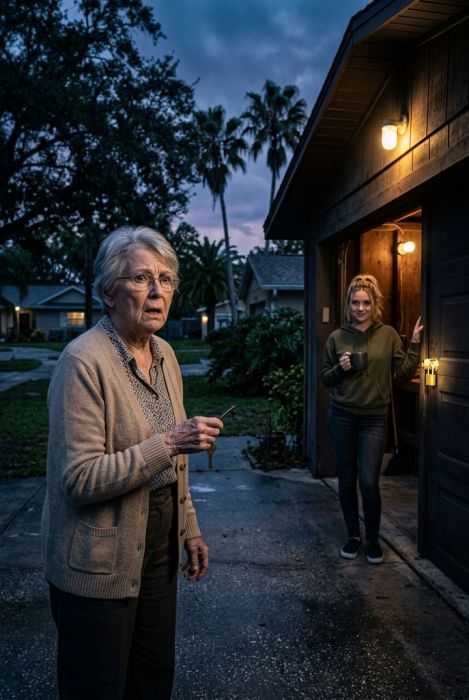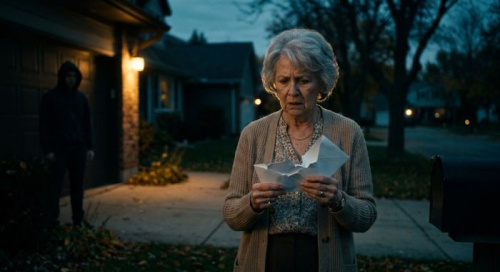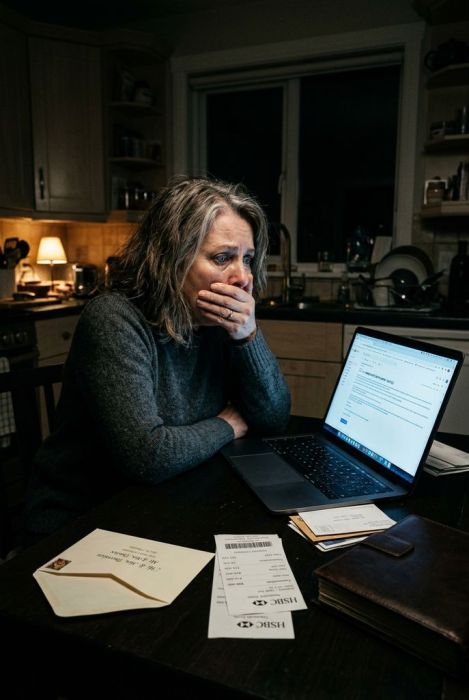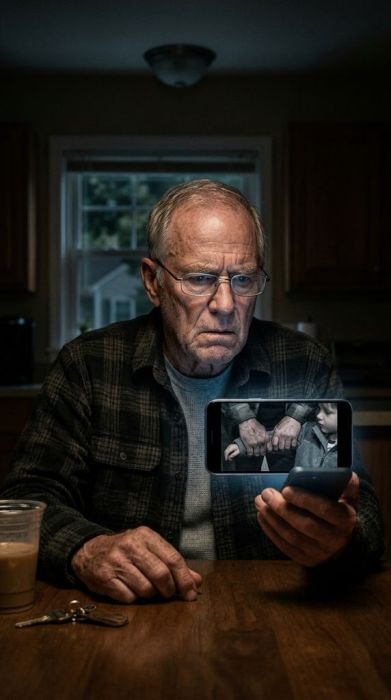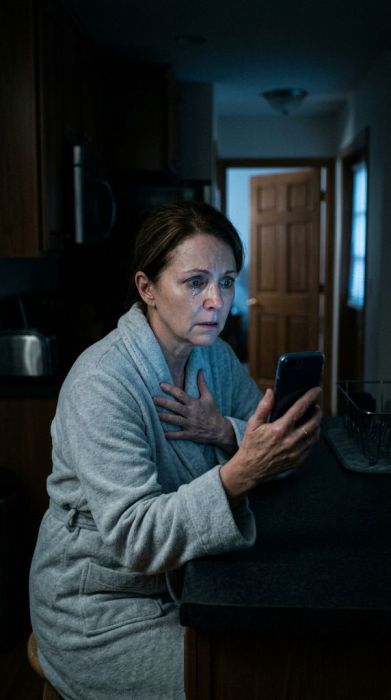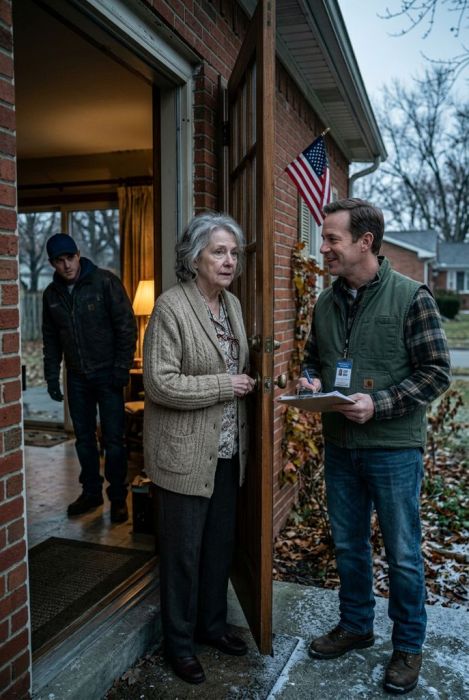
The phone rang at 6:12 in the morning, and Diane Whitaker knew before she answered that somebody had died. Nobody called a retired school librarian at that hour with good news. It was Rose Callahan, her next-door neighbor for twenty-two years, and Rose only managed four words before her voice came apart. "Walter's gone, Diane." Walter had collapsed over his eggs at the Pancake House on Coliseum Boulevard, right in the middle of the Wednesday-morning coffee crowd. A stroke, the doctors said. By the time the paramedics reached him, he was already gone.
There are moments when a person's understanding of the world shifts without a sound, like a house settling. Diane drove Rose to Hartley & Sons Funeral Home on Calhoun Street, the brick Victorian with the wraparound porch and the ferns that came out every Memorial Day. It was the same dignified old home that had handled Ray's funeral eighteen months earlier, when Diane's husband had died shoveling their driveway on a blue-cold January morning.
Gerald Hartley had carried Ray's service with such quiet competence that Diane told herself she would never let anyone else arrange a single thing for her family. That very week, still hollow with grief, she did what she thought was the most responsible thing a widow could do. She signed a prepaid funeral contract with Hartley & Sons. Nine thousand five hundred dollars from the savings account, drawn in one careful check, with her daughter Nicole's name written in the beneficiary line.
"This way it's all taken care of," she said to Ray's photograph. "She won't have to worry about a thing."
Walter's arrangements, though, were handled by a young man Diane had never met. He introduced himself as Marcus Bell, and he shook her hand with both of his, which Diane had always found disarming in a man who wore suits that well. Marcus was Gerald's grandson, back in Fort Wayne after a decade away, and everyone said what a mercy it was that he had come home to help after Pops had his stroke.
In that hard hour Marcus was everything a family could want. His voice never rose above a murmur. He looked Rose in the eye when he spoke about Walter, not at the paperwork, and he remembered, without being told, that Diane took her coffee with two creams. He walked them through the catalog like a man quoting scripture, gently, unhurried, one option at a time. By the end of the afternoon, Rose had agreed to the same style of service Walter's own father had once had, and Diane had found herself thinking what a fine boy Gerald had raised.
On the drive home, Rose mentioned, almost shyly, that she had already taken care of her own arrangements years earlier. After Walter's bypass surgery in 2019, she had prepaid seventy-three hundred dollars at the same funeral home, putting it in some kind of trust so her children would never carry that weight. "Marcus says everything's in perfect order," she said, and Diane had smiled and patted her hand, because that was the kind of town Fort Wayne was, the kind of place where a promise made on Calhoun Street still meant something.
A week after the burial, Diane sent Gerald Hartley a thank-you card, and she got a telephone call instead. It was Marcus, apologetic in that same soft register, explaining that the trust company which held all the preneed funds had been restructured after a merger. Account numbers had changed, he said. They needed updated signature pages on the beneficiary forms, and a small verification fee of two hundred and forty dollars to re-register the contract. "I know it's annoying," he said. "But the state requires it. I'm just doing what Pops would have done."
Diane, who kept every receipt in a labeled folder in her desk drawer, asked for something in writing. The email arrived that afternoon from an address she did not recognize, with a post-office box in Indianapolis and an 800 number. When she called the number, music played for a very long time. Then the line went dead.
Nicole went quiet on the Sunday call to Milwaukee. "Mom, a nine-thousand-five-hundred-dollar prepaid contract does not need a verification fee," her daughter said slowly. Nicole was a loan officer at a regional bank, and she had reviewed a thousand bad loans in her career. "And that number doesn't match anything on the state board's website. I'm telling you, something's off."
Diane defended Marcus. Gerald's own grandson. The boy who brought Rose flowers and let her talk about Walter whenever she needed to. The stroke had made a mess of the old man's ledgers, and the young man was only cleaning it up. Diane had raised a daughter who saw fraud in everything, she told herself, which said more about bankers than about a kind boy in a navy suit.
Three weeks later, the kindness stopped.
Marcus Bell called Nicole in Milwaukee on a Tuesday evening. There was an outstanding balance on her father's account, he explained, thirty-four hundred dollars, for the open-casket service upgrades from eighteen months ago. Her mother's card on file had been declined. He needed payment within forty-eight hours to avoid collections, and possible legal action against the estate. When Nicole asked for the account number, the invoice, and a signature, his voice changed. It went flat and official, the way voices do when the script runs out. He mentioned liens. He mentioned consequences. He mentioned her mother's good name.
Nicole did three things before she booked her flight. She asked her mother to fax over every piece of paper from the funeral home. She called the number on the letterhead, which rang to a full voicemail box. And she searched the name on her mother's new trust certificate, a company called Heritage Guardian Trust, which appeared in no state registry anywhere in the United States. Then she called her mother back and said, in a voice Diane had never heard from her: "Do not give that man another dollar. I'm coming home."
At the same time, Rose's daughter Karen was going through Walter's papers in Columbus, Ohio, where she worked as an accountant. Karen found her mother's old trust contract, the one from 2019, and she noticed, with a particular professional chill, that the certificate number did not match the series the funeral home had been issuing. She called the bank where the trust had been held for six years. The account, she was told, had been closed fourteen months earlier. The closure form listed an authorized representative. The signature on it matched Marcus Bell's perfectly.
Karen and Nicole met at a Panera on Jefferson Boulevard and spread both folders across the table like evidence at a trial. The certificates were numbered in sequence. Both named the same phantom custodian. Both bore the same post-office box. Rose's account had been emptied fourteen months ago. Diane's had been emptied eleven. Karen, whose own father's funeral had just been paid for with money that no longer existed, said the only thing there was to say: "People don't accidentally close a trust account. He signed her life's arrangements away."
They drove to the funeral home together, and they found Gerald Hartley in the hospital instead. A second stroke, worse than the first. Marcus Bell sat beside his grandfather's bed like a son at a death watch, and when the two women asked to speak with him privately, he stepped into the hallway and closed the door with terrible gentleness. "Pops has been signing things wrong for months," he said softly. "That's why I do all the paperwork now. I've been fixing the mess he made. You have no idea how grateful I am that you care enough to ask."
He even produced a few of Gerald's papers from a leather case, the old man's signature trembling across the lines like a spider dying on a window ledge. "See?" Marcus said. "The tremor. I'm protecting him. That's all."
Diane went back to the hospital the next morning, not to see Marcus, but to sit with Gerald's wife, Clara, who was sixty-eight years old and looked twenty years past that. Clara was trying to find Gerald's reading glasses and address book, just to keep her hands busy, and in her exhaustion she said the sentence that changed everything. "Marcus has been so good with the papers," she said. "Gerald can't read them anymore, you know. He used to keep every statement in that tan folder under his desk." She looked up, puzzled. "I don't know where that folder's gone."
Diane found it that night, after the building was dark, while helping Clara fetch a coat from the back office. She had knelt to reach her own dropped keys beneath Gerald's desk when her fingers brushed against something taped to the underside of the drawer. A tan folder, held there with silver duct tape, the color of a summer bruise.
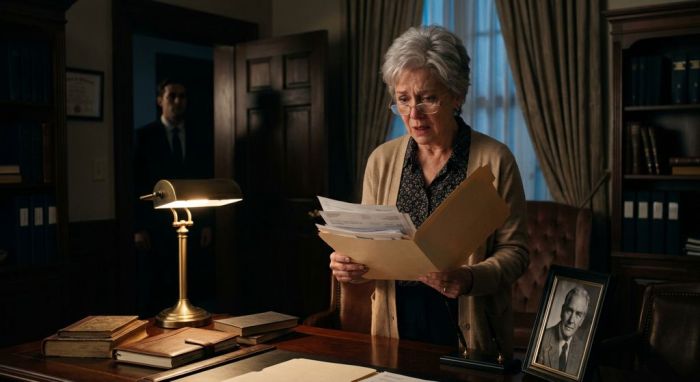
Inside were bank statements. Monthly statements for accounts under the name Hartley Family Trust, with withdrawals made out to M. Bell, fourteen months of them, in amounts that made Diane's breath catch. There were blank trust certificates, waiting for names. And there was a spiral notebook, the kind a student would carry, listing forty-one names in Marcus's tidy handwriting, each with a dollar amount beside it and a small checkmark.
Walter Callahan, seventy-three hundred dollars. Check.
Diane Whitaker, ninety-five hundred dollars. Check.
She read her own name in the soft desk lamp and understood, in a way that emptied the room, exactly how the trap had been baited and who had been standing on the other side of it the whole time.
She did not touch a single page. She photographed every sheet with her phone, slid the folder back beneath the drawer exactly as she had found it, and called Nicole from the car. Then she called the Indiana Attorney General's consumer protection division, and the state board of funeral and cemetery service, and she left messages that she recited twice, slowly, in the dark.
The next afternoon, Marcus called her, warm as ever. Pops's doctors thought he could come home next week, he said. And Pops had asked him, personally, to make sure her beneficiary forms were finished. "Can you stop by tonight?" Marcus said. "We'll take care of everything."
Diane said yes.
She wore her good coat. She parked in front of the brick Victorian and sat for a moment looking up at the ferns, thinking about the hearse she had followed down that same street behind Ray, thinking about Rose in her kitchen, thinking about forty-one checkmarks in a spiral notebook.
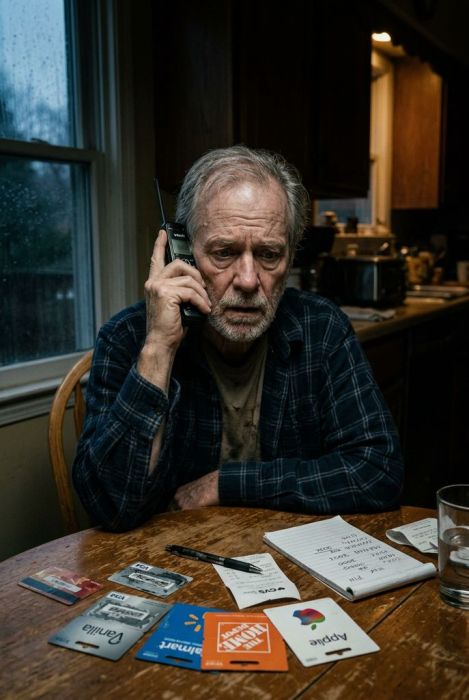
Marcus had coffee waiting. He poured it himself, two creams, and he spread the updated papers across the arrangement table like a man laying out a winning hand. There was just one small thing, he said, almost shyly. The verification fee could be paid in gift cards, to expedite the state re-registration. Diane went cold in a way she had never been cold, and she looked at him across the table the way his grandfather would have looked at her, with recognition.
The door opened. Clara came in first, holding Gerald's address book in both hands like a shield. Then Nicole. Then Karen. Then Detective Sergeant Dana Reyes of the Fort Wayne Police Department, and two officers behind her.
And then the telephone on the desk rang, and Diane answered it, and put it on speaker, and Gerald Hartley's voice came out of the small speaker thin and trembling from the rehab wing two miles away. "Mark," he said. "I taught you to drive the hearse when you were fifteen." There was a silence that stretched the length of the room. "I never taught you to do this."
Marcus stood up, and the chair scraped the floor, and for one moment his face was not the face of the patient boy in the navy suit. He insisted he had kept the place alive. He insisted Pops could not even sign his own name. He insisted, until Sergeant Reyes began to read him his rights, and then he stopped insisting, and the words hung in the room over the coffee that had gone cold in Diane's cup.
They recovered some of the money through the state's guarantee fund, which exists for exactly this kind of betrayal, and Diane got most of her ninety-five hundred dollars back, and Rose got most of her seventy-three hundred. Marcus Bell was charged with theft and fraudulent conversion involving a regulated trust, and Fort Wayne learned his folder had been growing for a lot longer than fourteen months. Hartley & Sons closed that autumn. Diane watched them take the sign down, the old letters from 1927, and she felt the loss of it like the porch light going out.
Gerald never came home. He died in the spring, in the same quiet way he had lived, and Clara told Diane at the service that the worst part was that he had known, in the end, and had said nothing, because some men would rather swallow a whole winter of silence than admit that the boy they loved was something else entirely.
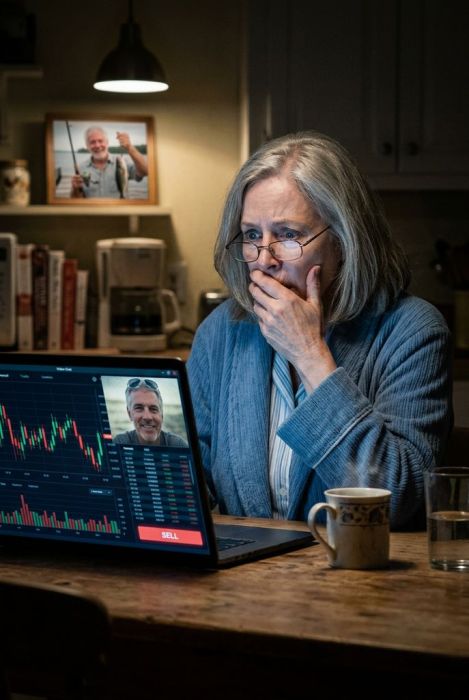
Diane and Rose started meeting in the church basement once a month. They named it, with dark humor, the Prepaid Club. They taught anyone who would listen the things nobody tells you: that a preneed contract must come with a trust receipt the same day, from a custodian you can call and verify; that the certificate number should match the state registry; that no legitimate funeral home will ever ask you to settle a fee in gift cards; that a signature on an old form can close an account you thought was safe forever; and that the people who love us best are sometimes the easiest people to fool, because we planned for everything except the person standing on the other side of the desk.
Diane keeps her own new contract now in the same tan folder, bought fresh, in her own desk drawer, in her own house. This time, the folder is hers. And whenever she opens it, she hears Gerald's thin voice over the speaker, and she remembers what the lesson cost, and she thinks about the forty-one names in the notebook, and she says a small, angry prayer that no one else ever reads their own name off a page like that.