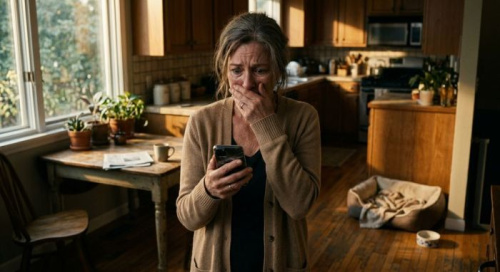

Margaret Collins had been a retired schoolteacher for three years when the letter arrived in a plain white envelope. She was sitting on the porch of her Tucson home, enjoying the dry November morning, when she noticed the return address: Pima County Medical Billing Services. She assumed it was a routine Medicare statement, the kind she received every month without much thought. But this one was different. The total at the bottom read $247,893.42. The procedures listed included spinal fusion surgery, cardiac catheterization, and a hip replacement — three major operations she had never undergone, performed at a hospital she had never visited. Margaret laughed at first, convinced it was a computer error. She called the number on the letter expecting a simple apology and a corrected bill. What she got instead was a polite but firm woman who said, "Mrs. Collins, these procedures are listed under your name, your Social Security number, and your Medicare ID. If you didn't have them, someone else did."
The call lasted forty-seven minutes. The billing representative, a patient woman named Diane, walked Margaret through each line item. The spinal fusion had been performed on March 14th at St. Joseph's Medical Center in Phoenix, two hours north of Margaret's home. The cardiac catheterization was on June 22nd. The hip replacement was on September 3rd. All three were listed under Margaret's full legal name — Margaret Ellen Collins — with her correct date of birth, her correct Social Security number, and a photocopied driver's license that matched her details except for the photograph. When Diane emailed the scanned license, Margaret stared at the screen for a long time. The woman in the photo was younger, perhaps fifty, with darker hair and a sharper jawline. But everything else — the name, the number, the expiration date — was Margaret's.
She hung up the phone and sat in the dark living room until her daughter Claire arrived for their weekly dinner. Claire was thirty-eight, a paralegal at a corporate law firm in downtown Tucson, and she had inherited her mother's practical nature. When Margaret showed her the letter and the scanned license, Claire did not panic. She opened her laptop and began researching medical identity theft with the methodical precision of someone who dealt with legal paperwork every day. Within two hours, she had found three more hospitals that had treated the impostor under Margaret's identity — one in Flagstaff, one in Mesa, and one in Scottsdale. The total fraudulent billing exceeded $680,000. And the worst part, Claire discovered, was that the impostor had been using Margaret's Medicare benefits for over eighteen months.
The next morning, Margaret filed a police report at the Tucson Police Department. The officer who took her statement was a young man named Detective Salazar, who specialized in identity theft and financial crimes. He listened carefully, took photocopies of everything, and asked Margaret a single question that made her blood run cold. "Mrs. Collins, has anyone stolen your purse or wallet in the last two years?" Margaret thought hard. She remembered a strange incident at the grocery store six months ago — a woman had bumped into her aggressively in the checkout line, apologized profusely, and disappeared before Margaret could react. She had not thought much of it at the time. She had checked her purse, found everything in order, and assumed it was just an accident. But Detective Salazar shook his head slowly. "That wasn't an accident," he said. "That woman likely photographed your ID while you were distracted. With your Medicare card, your driver's license, and your Social Security number, she built an entire medical history under your name."
The investigation stretched across four months. Detective Salazar worked with the Medicare Fraud Control Unit, the Arizona Department of Health, and three different hospital security teams. They pulled surveillance footage from St. Joseph's Medical Center, and there she was — the woman from the driver's license photo. She was walking into the hospital with a confident stride, carrying a handbag that looked expensive, speaking on her phone like she owned the place. The footage showed her checking in at the reception desk, presenting Margaret's identification with a practiced smile, and being escorted to the surgical wing for procedures she did not medically need. The hospitals had never questioned her. They had verified the insurance benefits, confirmed the coverage, and wheeled her into operating rooms without a second glance.
The truth, when it finally emerged, was far more disturbing than Margaret had ever imagined. The impostor was a woman named Elena Vasquez, a fifty-two-year-old former medical billing clerk who had been fired from a hospital in Phoenix for forging documents. Elena had perfected the art of medical identity theft over seven years. She would steal or photograph a victim's Medicare card, commission a fake driver's license with her own photo but the victim's information, and then undergo elective surgeries at different hospitals across the state. She would then sell the prescription painkillers she received as part of her recovery on the black market. She never stayed in the hospital longer than necessary. She would check herself out against medical advice, load the medications into her car, and drive to the next city to do it all over again.
Margaret's medical records had been corrupted beyond repair. Elena Vasquez had been treated for conditions Margaret did not have. She had been prescribed medications Margaret was now allergic to. She had undergone surgeries that left scars on Elena's body but were now permanently etched into Margaret's medical file. When Margaret visited her own doctor for a routine checkup, the physician pulled up her chart and frowned. "Margaret, it says here you had a hip replacement in September. Did you forget to tell me?" Margaret sat in the examination room and felt something inside her break. She was no longer the author of her own medical history. A stranger had rewritten it, surgery by surgery, fraud by fraud, until Margaret Collins barely recognized her own health record.
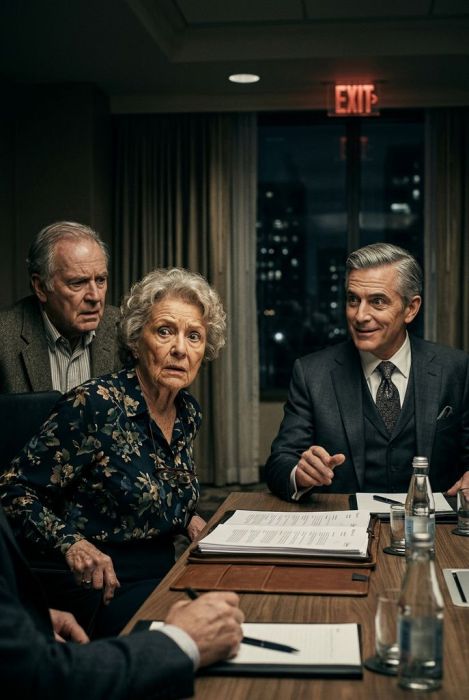
The legal battle lasted eleven months. Elena Vasquez was finally arrested at a hospital in Yuma, moments before she was scheduled for a knee replacement under another victim's identity. She had seventeen fake IDs in her car, along with a notebook containing the personal information of over forty victims. When the police searched her apartment, they found boxes of prescription bottles, stacks of medical records, and a filing cabinet organized by victim name. Margaret's folder was the thickest. Elena had been using her identity for twenty-three months. At the sentencing hearing, Margaret stood at the podium and looked at the woman who had stolen more than just money. "You took my name," Margaret said, her voice shaking but clear. "You changed my medical history. You put things in my body that I never consented to. And now I have to spend the rest of my life explaining to doctors that I did not have those surgeries, that I do not have those conditions, that I am not the person in my own medical file."
The judge sentenced Elena Vasquez to twelve years in federal prison. But for Margaret, the end of the trial was only the beginning of a much longer battle. She spent months filing paperwork with Medicare, with the three credit bureaus, with the Social Security Administration, and with every hospital that had treated her impostor. She obtained a new Medicare number, but the old one could not be erased from the records already filed. She placed a fraud alert on her identity, but doctors still pulled up the corrupted file by accident. Every appointment became an interrogation. Every prescription required an explanation. Every medical form raised questions she could not easily answer.
Six months after the trial, Margaret started a support group for victims of medical identity theft. She met people like her — retirees, widows, aging parents — who had discovered that their medical records had been stolen and rewritten by people they had never met. She learned that medical identity theft was one of the fastest-growing crimes in America, targeting seniors most aggressively because they had the most robust insurance benefits and were less likely to scrutinize their medical statements. The group met twice a month in a community center on the south side of Tucson. They shared stories, resources, and practical advice. Margaret became their unofficial leader, a woman who had turned her trauma into a mission.
One evening, after a particularly emotional meeting, a woman named Dorothy approached Margaret with tears in her eyes. "I caught it early because of you," Dorothy said. "I got a statement for a test I never had. I remembered what you said at the meeting. I called the hospital. They found a woman using my name in Las Vegas." Dorothy hugged Margaret and whispered, "You saved me."
Margaret drove home that night with the windows down, letting the Arizona desert air fill her car. She thought about Elena Vasquez, sitting in a prison cell somewhere, and she thought about the forty other victims whose names had been in that notebook. She thought about the surgeries she never had, the scars that belonged to another woman, and the medical history that was no longer truly hers. And she thought about the small room in the community center where a group of ordinary people gathered twice a month to take back what had been stolen from them.
She parked in her driveway and sat for a moment, looking at the house she had lived in for thirty-two years. The same porch where she had opened that first letter. The same mailbox where it had arrived. The same quiet street where she had believed, for sixty-four years, that her identity was something no one could take from her.
The next morning, she wrote a letter to her Medicare provider. She attached a copy of her new fraud alert, a summary of her case, and a simple request at the bottom: before any procedure is authorized under my name, call me first. Verify my voice. Confirm my identity. Because the most dangerous thing in the world, Margaret had learned, was a stranger who knew your name better than you did.
She sealed the envelope and walked it to the post office herself. Along the way, she passed a woman on a park bench who smiled at her. Margaret smiled back, but she kept walking. She did not stop. She did not look back. She had learned to trust no one with her name except herself.
And somewhere in the prison records of the Federal Bureau of Prisons, Elena Vasquez was already planning how she would start over when she got out. She had forty names in her head. She only needed one.
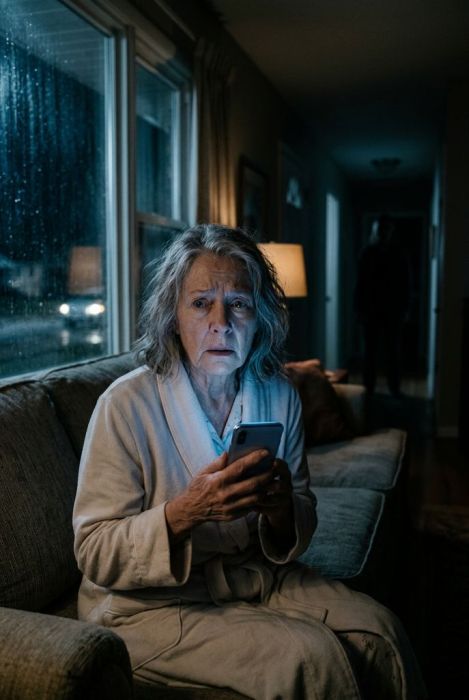
Margaret had changed her Medicare number three times. She had installed a locked mailbox. She had frozen her credit with all three bureaus. She had put a verbal password on every medical account she owned. But late at night, when the desert wind rattled her windows and the house was perfectly still, she still wondered: was it enough? Because the truth about identity theft was the one thing no one wanted to say out loud — once someone had worn your name long enough, you could never be completely sure you had taken it back.