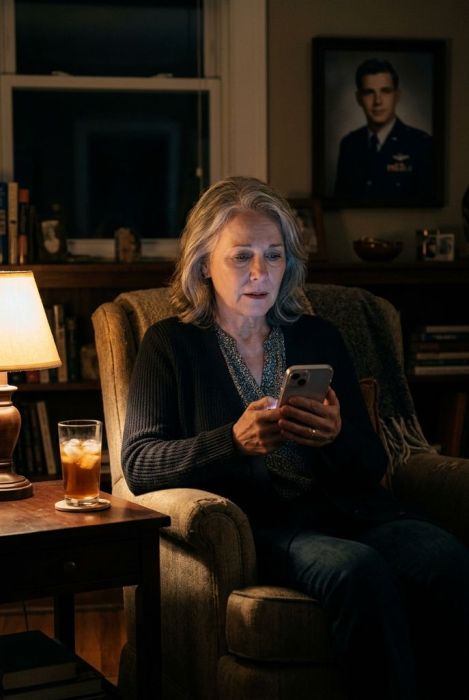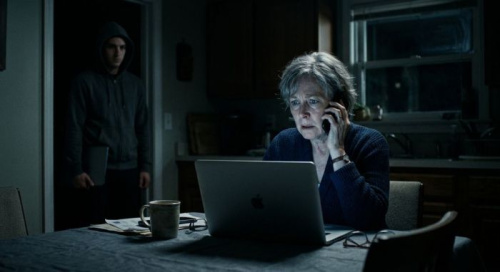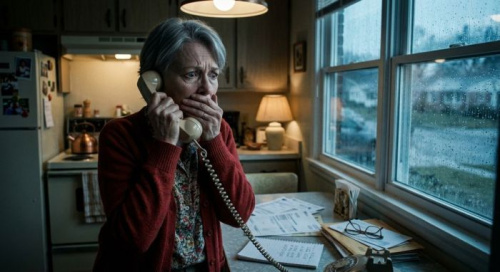
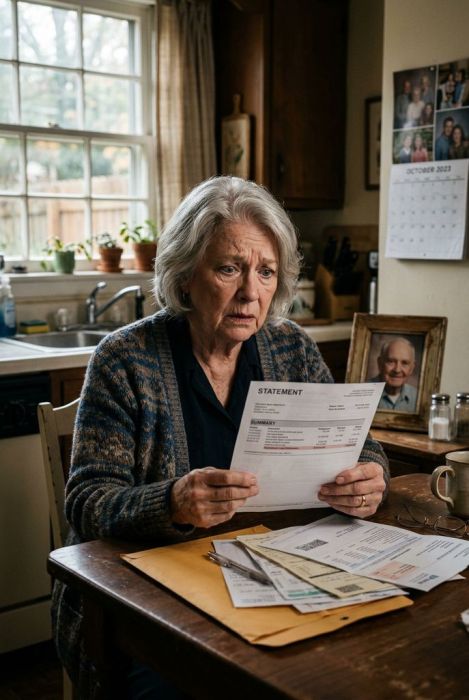
The call came on a Tuesday afternoon, and Rita Callahan almost did not answer it. She was seventy-one, a retired school cafeteria lady who had spent thirty-two years spooning out mashed potatoes to hungry children, and she had learned long ago that the phone rarely rang with good news late in the day. But she recognized the number on the screen, a local branch of South Trust Bank in Clarksville, Tennessee, a bank where she had done her business since before her Tom passed. So she picked it up.
"Mrs. Callahan, this is Brenda at South Trust. I just wanted to confirm that everything is all right with your account."
Rita laughed, a dry, good-natured sound. "Well, Brenda, it's about as all right as a widow's money can be. Why do you ask?"
There was a pause on the other end of the line, and in that pause Rita heard something she had never noticed before. It was the careful sound of someone choosing their next words.
"It's just that you've made, um, quite a few transfers out of your savings over the last few months," Brenda said. "I wanted to make sure you were still doing okay."
Rita set her coffee cup down. "Transfers? I haven't transferred anything, sweetheart. The only money that leaves that account is my automatic tithe to the church and my grandchildren's birthday checks."
There was a longer pause then. And when Brenda spoke again, her voice dropped low and careful, the way you speak to a friend before a terrible accident has even happened.
"Mrs. Callahan, could you maybe come in and see me tomorrow? There are some things I'd like to show you."
Rita agreed, because that is what polite Southern women do when a bank teller asks nicely. She hung up thinking nothing of it and went back to her chrysanthemums on the front porch, wanting them in the ground before the first frost. She had no idea that her quiet, orderly life was about to collapse into a single manila envelope.
The man inside that envelope called himself Elder Gerald Wainwright.
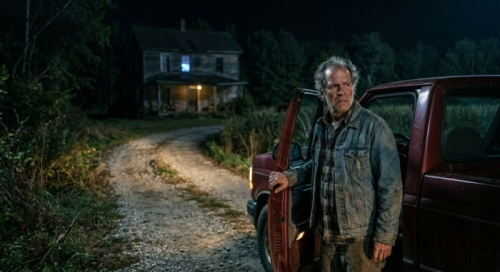
Gerald Wainwright had been a pillar of New Hope Baptist Church for twenty-three years. He was sixty-eight, with a halo of silver hair and a voice like warm syrup when he prayed at the altar. He was tall and dignified, and he always smelled faintly of pine shavings and Old Spice. When he laid his broad, calloused hand on your shoulder and whispered, "The Lord is carrying your burdens, sister," you believed him, because there was no reason on God's green earth not to.
He was the deacon board chairman. He organized the food drive. He visited the sick in their homes and read scripture to those too frail to reach the church. Once, he had sat with Rita's own husband, Tom, for two whole nights in hospice, holding his hand and letting him talk about the cattle ranch he missed. Tom had died grateful there was a man that good in the world.
After Tom passed, Rita found herself alone with nineteen thousand dollars in savings and a heart full of slow Sunday grief. It was the patient, small kind of grief, the kind that sits at the kitchen table with you and pours you lonely coffee. And it always seemed Gerald Wainwright was nearby around that particular hour.
"Rita," he told her one evening out on the church steps, "the Lord has put a burden on my heart for you. Tom would not want you to fret over a single penny. That man worked his whole life to provide for you."
Rita nodded, grateful. "I know, Gerald. He was a good provider."
"And I want to be a good steward too," Gerald said. "There's something I've been wanting to share with the faithful ones, the sheep who truly trust the Lord. I don't tell just anyone. Only the ones who are ready."
He showed her a glossy brochure with golden sheaves of wheat on the cover. It was called Partnership Harvest, "run through the Foundation," as Gerald explained. It promised modest returns for those who chose to store their treasure there, protected and multiplied without any risk, because "the Lord's work is its own engine." He pulled out charts of people who had put in five thousand dollars and watched it become ten and twenty.
Rita was not a foolish woman. She had kept the household books for thirty-two years while Tom drove his truck between Nashville and Memphis. She knew that you did not usually get something for nothing. But Gerald had always been honest. He wore good shoes, paid his bills, and helped the widows. He was not the sort of man who would ask her to trust him with her money unless it was going to feed the fatherless somewhere.
And in those lonesome months after Tom's passing, there was something almost healing in letting a man of God carry her worries. It felt like prayer with a little interest on the side. It felt like belonging.
She started small, with three thousand dollars. Gerald wept and praised Jesus and gripped her gnarled hands in his own broad palms as if sealing a covenant. "This is the beginning of a walk of faith, Rita," he said. "One day you'll look back and thank the Lord."
In February he told her the fund was being harvested. But there was a catch: she had to bring in a little more to round out the parcel, because the yield only multiplied on whole shares. She added two thousand. In April there was a processing fee that sounded, in Gerald's careful church voice, entirely official. In June there was a delay, and he asked for fifteen hundred dollars to hold the valve. Each time he came to her door he brought a covered dish and prayed over her checkbook before she signed. It was the most reverent a bank transfer had ever been.
By the time the frost came and Brenda the bank teller made her phone call, Rita had handed a little over eleven thousand dollars to the stewardship of the Lord. And sitting on the polished desk in front of Brenda was a manila folder that told a very different story from the one Gerald had been whispering into Rita's ear all year long.
"I want you to look at this, and I want you to breathe," Brenda said gently, spreading the paperwork across the desk. "Do you recognize any of these?"
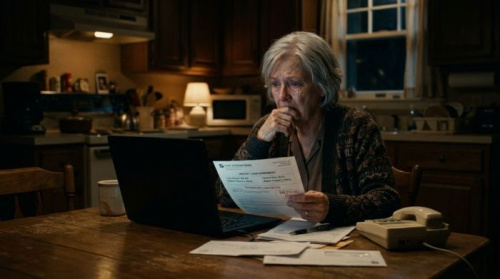
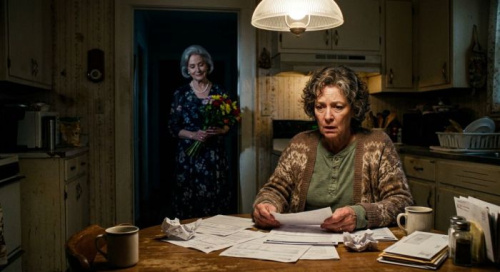
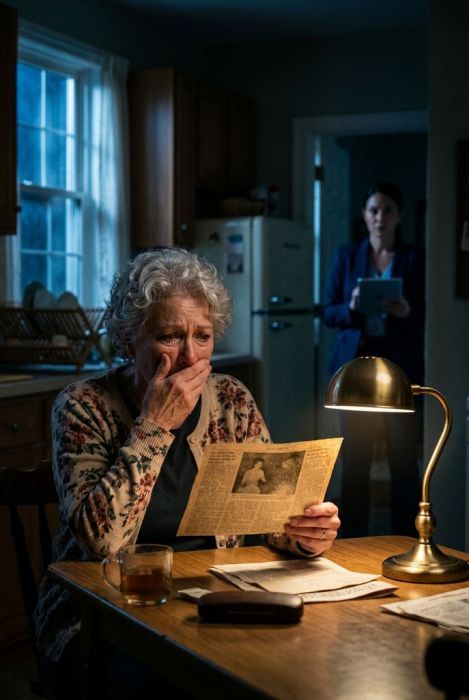
Rita picked up the topmost page and squinted. It was a statement from a separate account, opened in her name and Tom's name, that she had never seen. There were signatures at the bottom. And they had, to the horror of her own shaking hands, a dreadful and familiar smoothness.
"That is not my signature," she whispered. "And it's not Tom's either. He's gone."
Brenda pointed to the disbursement line. "Seven of these withdrawals routed to a single destination," she said. "He opened a routine account in your name, authorized himself as a contracted steward, and moved your savings into what I can only describe as his own pocket. We've pulled records showing he's done the same sort of thing for widows in Georgia and in Oklahoma."
Rita sat there, her breath coming in small ragged puffs. It was not about the money yet. It was the size of the wrongness, the way a whole heart can be lifted out of you while you hand over your savings and say grace. Outside, the frost she had meant to beat had settled onto the lawns of Clarksville, and every chrysanthemum she had planted was turning black.
That is how, three nights later, Rita Callahan came to stand in the warm, candlelit fellowship hall of New Hope Baptist Church and face the man who had prayed over her checkbook.
"There's been a misunderstanding," Gerald was saying in his honeyed voice, hands spread as if he could push the night away. "The Lord told me to guard the trust. There is nothing to fear if you stay faithful."
But a young woman had walked into the room that moment, holding a duplicate manila folder. She did not sweep to the front. She stopped in the doorway, and the whole hall turned to look at her. It was Gerald's daughter, Denise.
"I'm sorry, Daddy," Denise said, and her voice held every broken thing she had carried. "I'm so sorry."
The room went quiet. Denise worked in the bank's compliance department, and no one understood why she was trembling or why she was there.
"I found your ledgers," Denise said, to her father, to everyone, to God. "I found the real Partnership Harvest journal under the floorboards of the shed behind your house. I found the names and the amounts and the promises," she said, "and the page where you stopped believing in any of it. I called the state securities office the day I saw them. I turned you in, Dad."
Gerald took a step back as if she had struck him. A strange, cold color seeped across him from the collar. "You would destroy this church?" "you destroy the family the Lord gave you?"
"I would save us," Denise said. "But I will not stand here and let you keep stealing from widows and calling it faith."
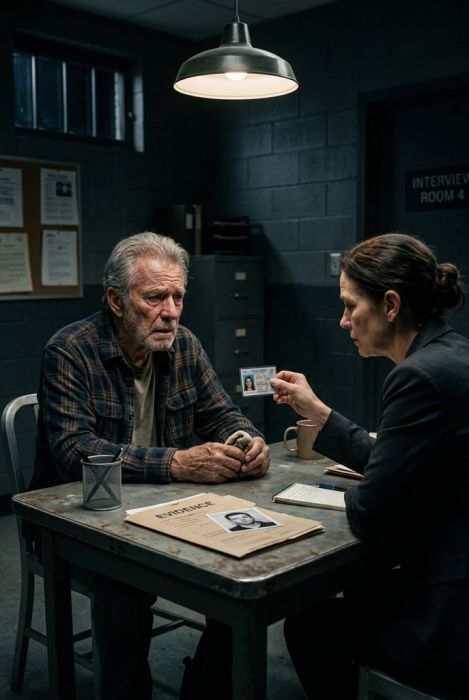
The fellowship hall erupted. Men shouted, women as. And when two Clarksville police officers opened the door and walked toward Gerald Wainwright on the altar linoleum, Rita watched all the warm honey drain out of a man in an instant, leaving nothing of him behind the empty mask of a thief.
They recovered better than half of the stolen funds once the state's investigators finished winding through the accounts. Rita's share came back as a check for a little over six thousand dollars. It wasn't the point. The point had settled at her kitchen table, where she had believed a prayer dressed up as a bank transfer.
"I should have let you check," Rita told Denise, when the younger woman came by a month later carrying the recovered community's fund checks. "I trusted a seat instead of my gut. I tell you, a man who wants to holds your money for you is already holding your leash. It only feels like grace when you don't look at the ledger."
Denise squeezed her hand. "Miss Rita, it's not the strangers who get us. It's the ones we love, it's the ones who sit in our pews."
Rita did not go to New Hope after that, not the following Sunday nor any after. She was done with the church, she was done with the pew in a mask. She kept the chrysanthemums. She kept the faith. But Rita Callahan never wrote another check, never forgave a signature, without a bank statement she could read in front of her.
"Trust, " she finally said, "is not a man giving you a prayer. Trust is a ledger that stands up to the light." She had learned, in the coldest winter of her life, that the most dangerous con of all is the one that arrives wearing the face of grace.