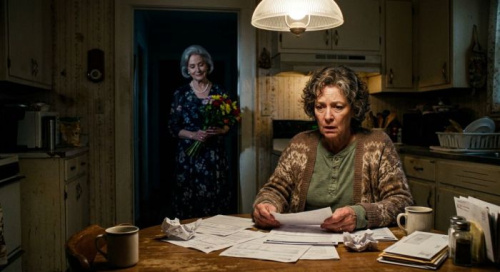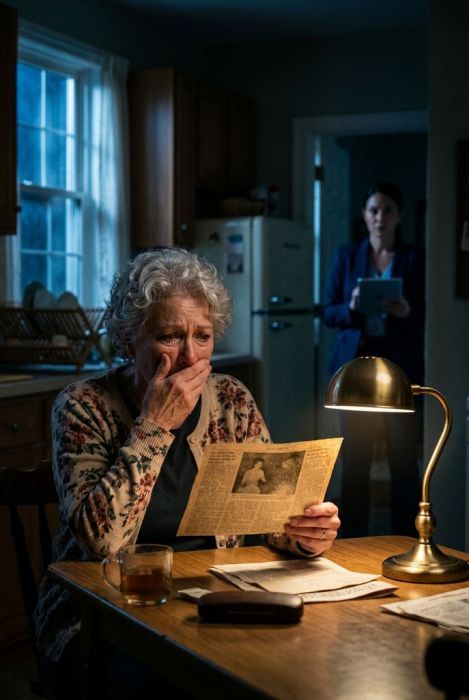
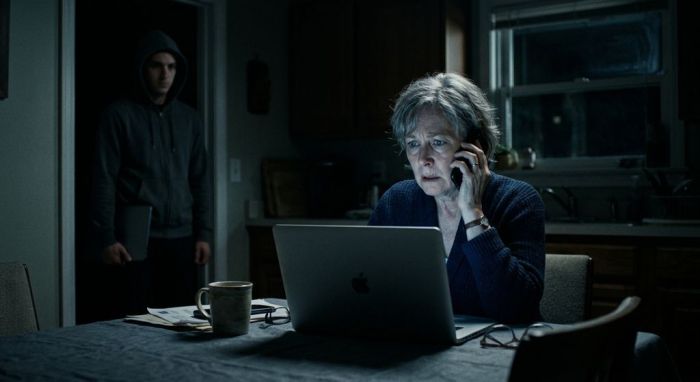
The red warning appeared at 7:14 on a Tuesday evening, just as Peggy set her cup of chamomile tea beside the keyboard. CRITICAL DAMAGE DETECTED. DO NOT SHUT DOWN. CALL THIS NUMBER IMMEDIATELY. Beneath it, in smaller letters, came the threat that all her personal files would be permanently locked within the hour.
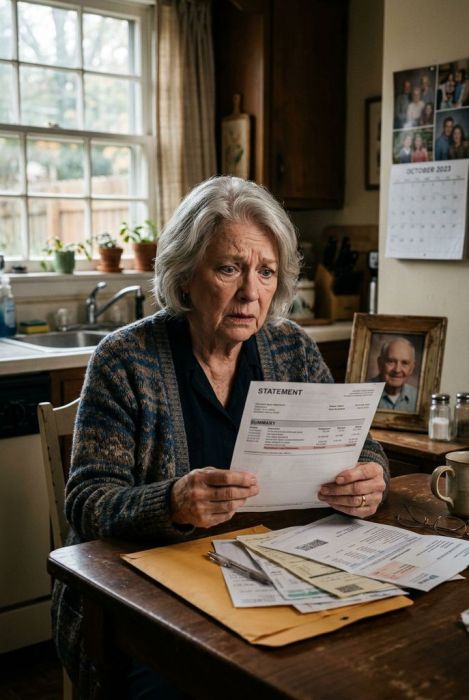
Peggy was sixty-six, a retired school cafeteria worker who had lived alone in a quiet house on the edge of Saint Paul, Minnesota, since her husband Peter passed away three years earlier. Peter had always handled everything that ran on wires, from the thermostat to the router. Peggy could check her email and play a round of solitaire, and not much beyond that. So when that red screen screamed at her, she had no way of knowing whether her computer was truly dying or whether somebody simply wanted to sell her something she did not need. All she knew for sure was that inside that tower sat photographs of her grandchildren, a careful record of her retirement savings, and what felt like the quiet ledger of her entire life.
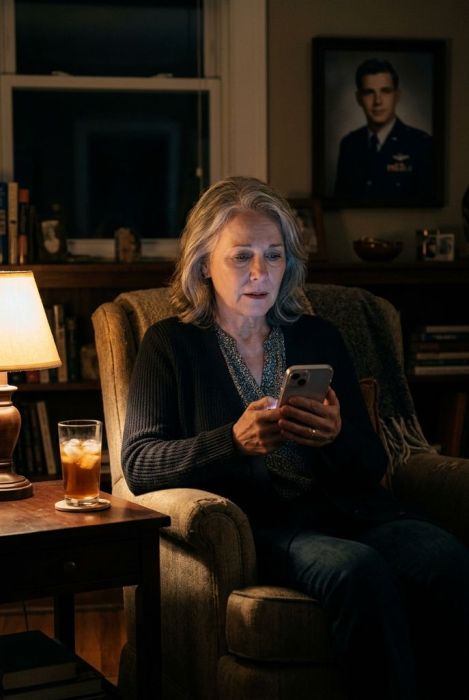
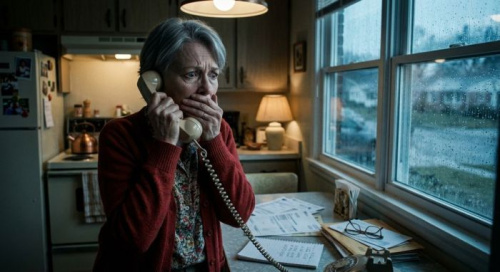
She tried her daughter first. The call rolled straight into voicemail, the way it so often did during the dinner hour, when a career and a young family swallowed everything else. So Peggy did what the warning told her to do. She picked up her phone, her fingers trembling, and dialed the glowing red number.
A man answered on the second ring. His name, he said, was Marcus, and he worked for the computer's own security division. His voice never wavered. Within twenty minutes he had guided her through a few simple clicks, having her type small phrases and read him the numbers that appeared in the corners of the screen. By the time the call ended, Peggy felt something she had not felt in years: a quiet relief that finally understood the machine.
Then Marcus turned serious. He told her that a fraudulent subscription was running against her account and that somebody had charged her four hundred and ninety-two dollars for a service she had never approved. He promised to refund it, but he explained that he first had to confirm she was the real account owner. Gift cards, he said, were the safest way to do that, because larger credit-card refunds sat locked inside the review system for weeks. It sounded like ordinary procedure, the sort of careful paperwork the real world always did.
So Peggy put on her coat and drove seven miles to the big-box store with the pharmacy in the back. She bought two cards worth two hundred fifty each, peeling the last spare cash out of her husband's old envelope, and read the long numbers off the backs to Marcus over the phone. She told herself she was finally solving the problem. She felt relief, not alarm.
But the money did not come back. Marcus called the next evening, warm and unbothered, and explained that a second old subscription had surfaced, another few hundred dollars that had to be cleared while the review was still open. Peggy drove again and bought again. And then again. Every time he promised it would be the last, and every time she chose to believe him, because his voice carried the patience she had been missing for so long.
It was only on the fourth trip, standing at the register near closing with a bag of cards that suddenly felt too heavy, that the first question finally worked its way into Peggy's mind. She looked at herself in the dark glass of the storefront, a woman in a coat she had worn for years, and the thought came slow and cold. Why would anybody need to pay five hundred dollars and then keep paying, just to get back four hundred and ninety-two? If the money was truly hers, why did a refund always seem to arrive only after she handed over more?
When she called Marcus that night and asked for a supervisor, a name, paper proof, something she could read, there was a long, hollow laugh. Then a click. Then nothing. The number that had answered a dozen times simply stopped existing, as if it had never been there at all.
Her daughter drove over before the week was out, found bags of empty cards stacked in the kitchen drawer, and sat Peggy down at the table. She explained the whole cruel engine of it. The warning on the screen was the bait, printed to frighten someone alone into calling the scammer. Once the call was made, the trust was delivered. The refund story was the hook that kept the victim paying, always for an open detail, always just one more transaction before the promised money could finally arrive.
"It was never a mistake, Mom," her daughter said softly. "It was a design. Every urgent, calm word was built to keep you moving."
Peggy spent the next weeks doing the painful, patient work of pulling the accounts apart. She called the real bank from the number printed on the paper statement, froze everything that could be frozen, and reported the fraud to the police and the consumer agency. Some of what vanished came back and to her relief. Most of it did not. The waste of a lifetime was gutted out to the sidewalk, and the sense of shame was almost heavier than the lost money.
And through all of it, her mind kept circling back to Brandon.
Brandon was the nineteen-year-old who had shoveled her driveway through three winters, carried her groceries up the porch steps all summer, and collected the mail when she was sick. After his own mother's trouble, Peggy had looked after him in a quiet way, fed him, listened to him, told him, awkward of all, exactly where she hid the list of passwords, tucked beneath the desk drawer just above the place she thought no one look.
Brandan came around the following Sunday to fix a back door that stuck. He stood on the porch with a tool bag and a careful smile, and he did not seem to want to come in. His silence felt wrong. Then his phone buzzed inside his jacket, and the voice that answered it was not his own. It was Marcus, and Peggy recognized it in the same instant her stomach turned. She had been living inside that voice for weeks before she ever realized.
The whole story came out standing in her kitchen, Brandon no longer able to hold it. He had fallen in with a crowd that promised to fade his bad debts if he delivered one honest catch. He had planted the warning on Peggy's screen one afternoon while she got water, and then he had become Marcus, calm and patient, for every call it took. He listened each time she read him fifty the card numbers, and he spent her savings before the money even cleared.
Peggy did not scream, even then. She had spent sixty-six years being the caretaker, and the betrayal came out of her as weariness, not fire. "You were the one person I handed the whole password like a gift, Brandon," she said. "You did not even take the money first. You took the family of allowing me to think it was my fault."
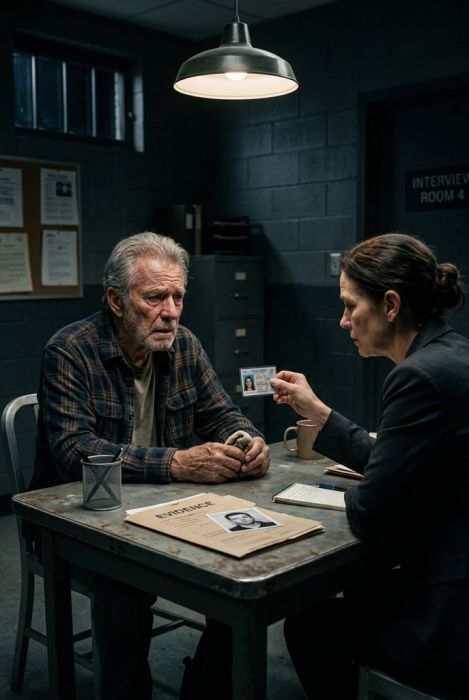
He cried and apologized, and she let him say the words, but she did not spare him. The police arrived as dusk settled, and Peggy watched the boy she had fed like a grandson being led to the car from her own house, holding his glitter, holding their hope, watching them not know whether she was angry or just emptied.
The money did not come home that night. It rarely does. But something else did, a small, hard-won understanding that she has set down against the cold.
She started to teach it at the senior center. No honest company ever launches a refund by sending you to buy gift cards, she tells them. No real warning on your screen requires you to rush out alone and pay. And if somebody telephoning your name, the minute the voice says there is no room to wait, that is exactly the moment to wait. You hang up, you find the real number printed on paper, and you call that number instead of the one flashing at you.
The money she lost, she would never entirely recover. But the clarity dug in, and Brandon's face gave it a place it could not be forgotten. She keeps a yellow note on top of her keyboard now, in blue ink, four words: trust the people, but the numbers never on rose. And when she repeats it to a neighbor with a new slow phone, she still remembers the boy in her kitchen, and the patient voice that lasted long enough to steal her, and the truth that kindness to her was well, true.
The hard truth that Peggy carries, and that she now presses gently into everyone she meets, is that the loudest soothing voice screaming your computer is in trouble may often be the one that caused the trouble itself. It is a very old lie, and we are all alone of the side of the earth enough to believe. She toasted the number to the keyboard so she won't fall again.