The rain had stopped by the time Gloria Nash stepped onto her front porch with the recycling bin, but the night air still held the smell of wet asphalt and cut grass. It was 11:40 on a Tuesday, and County Line Road was quiet, the way it always was after the last of the commuters had gone home. She heard the engine before she saw the car, a low rumbling idle that sounded like a man in no hurry to be anywhere. Then the blue sedan appeared, moving fast, and the man in the crosswalk appeared at the same moment, and everything Gloria had believed about the safety of her sleepy Ohio suburb came apart in a single terrible second.
The sedan blew through the crosswalk without slowing. The man, a gray-haired figure in a windbreaker carrying a grocery bag, went up over the hood and landed on the pavement in a way that did not look survivable. The driver's door opened, and Gloria saw a silhouette lean out and look back at the crumpled shape in the road. Then the door closed, the taillights shrank into the darkness, and the man was still lying there, alone, in the middle of the street while the world moved on around him.
Gloria was already dialing 911 before she realized she had dropped the recycling bin. She had been a high school guidance counselor for thirty-two years, which meant she knew what panic looked like and knew how to keep her voice steady while everything inside her screamed. She gave the dispatcher the cross street, the condition of the victim, and the piece of the plate she had read in the streetlight: three-K-X, four-eight. A blue four-door sedan with a dent in the rear fender and a faded University of Michigan sticker on the bumper. She did not know it then, but she had just become the only witness to a crime the whole town would spend two months pretending had not happened.
Officer Dana Whitlock arrived with the ambulance and took Gloria's statement on the curb, rain misting the pages of her notebook. The victim was Ray Bunting, sixty-eight, a retired history teacher on his way home from the library. He was alive, barely, and the paramedics worked over him with the focused silence of people who had done this too many times. Whitlock told Gloria she had done the right thing. Then she told her, in the gentle way officers do when they want you to sleep at night, that most hit-and-run cases went cold without a plate. Gloria gave her the plate. She went home and did not sleep at all.
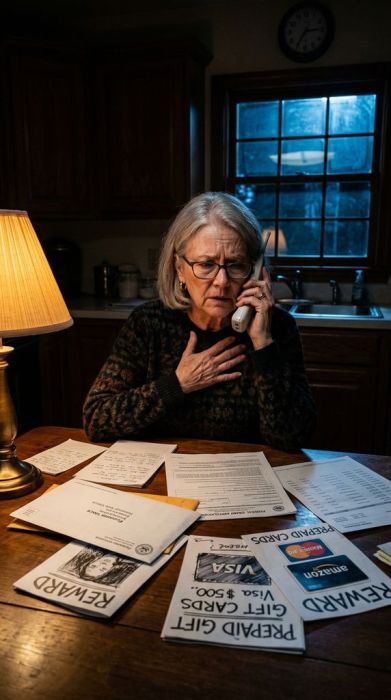
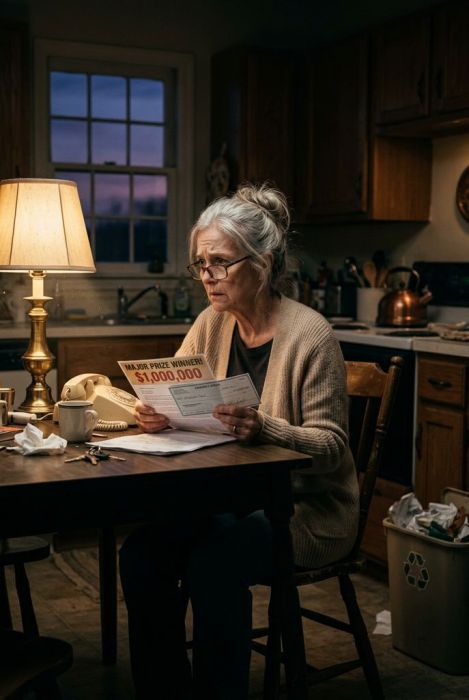
For four days, nothing happened. The news covered the accident for a single evening, a tired segment about a beloved teacher fighting for his life, and then the world moved on. Gloria checked the paper every morning, called the hospital every afternoon, and tried to pretend her life had returned to normal. Then, on Saturday morning, she found the note under the windshield wiper of her car in the Kroger parking lot. It was printed on white paper, in plain black type, no signature. YOU DIDN'T SEE ANYTHING.
She called the police from the parking lot, her hands shaking. Whitlock logged it, took the note, and told her it was probably the driver's way of testing the waters. Probably. Gloria wanted to believe her. She drove home with her doors locked, and for the first time in her life, she checked the back seat before she got in.
The brick came through her living room window on a Thursday night while she was watching television with her golden retriever, Gus. It landed on the rug with a sound like a gunshot, wrapped in more white paper. THIS IS YOUR LAST WARNING BEFORE WE GET SERIOUS. STOP TALKING. The typed letters were the same font as the first note. Gus barked at the window for an hour afterward, and Gloria sat on the floor with her back against the couch, holding a butcher knife she did not know what to do with, and wondered how her quiet life had become this.
Whitlock came again, took photographs, dusted the brick for prints. She told Gloria the same thing she always told witnesses: keep your doors locked, vary your routine, and call if anything else happens. Gloria asked if they could do anything else. Whitlock looked at her with tired eyes and said the truth, which was that without evidence tying the threats to a person, there was very little the department could do. Gloria thanked her anyway, and bought three security cameras the next morning.
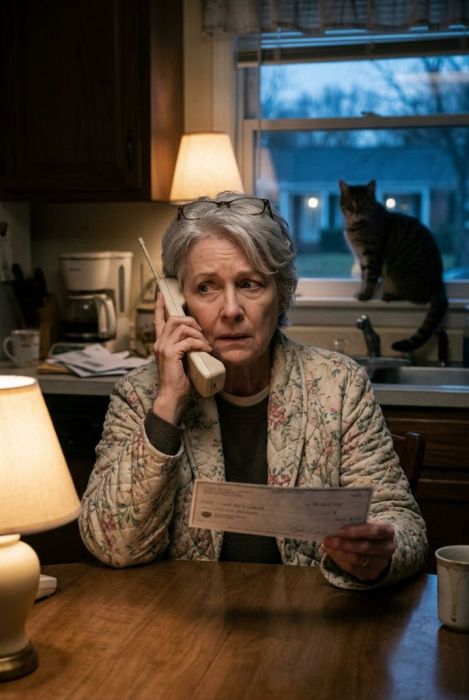
The night calls began two nights later. Her phone would ring at 3:00 AM, and when she answered, a voice distorted by something electronic would whisper four words — drop it or else — and then the line would go dead. She stopped answering. She unplugged the landline. But the calls came anyway, on her cell phone, at odd hours, always the same message, always the same flat, sickening whisper. Her daughter Megan called from Chicago every night and begged her to come stay. Gloria told her she was fine. She was not fine. She had started sleeping with the lights on, and Gus had started sleeping beside her bed instead of his own.
The word SNITCH scratched into the driver's door of her car, in the church parking lot on a Sunday morning, was what finally broke something in her. Someone knew her church. Someone knew her Sunday schedule. Someone had watched her park, watched her walk inside, watched her pray, and had waited until the service started to leave their message. Gloria stood in the bright April sunlight and stared at the raw metal gouge across her door and understood, with a cold certainty that settled into her bones, that the person threatening her was not a stranger at all. A stranger could not know her this way.
She kept a log after that, the way she had taught her students to keep evidence for the school newspaper. Every note, every call, every scratch in her paint went into a spiral notebook with dates and times. She saved voicemails. She took photographs of everything. She told Whitlock about the church, and this time Whitlock's face changed, and she said the words Gloria had been afraid to hear: this matches witness intimidation. It was a crime. It was a serious crime. And it meant the driver had found her.
Ray Bunting survived, though he would never remember the accident. His wife Carol told Gloria, in a tearful phone call, that the doctors said the memory loss might be permanent, a mercy buried inside a tragedy. The community raised a reward fund for information about the driver, and the story made the Columbus papers for a week. People asked Gloria, in the checkout line at the grocery store, if she was the witness, the brave one. She smiled and said it was nothing. It was not nothing. It was the most terrifying thing she had ever done, and it was not finished.
It was her neighbor Bernice Pemberton who got her through the worst of it. Bernice had lived across the street for twelve years, and she had been Gloria's anchor through the divorce, the empty-nest years, the long quiet seasons of being alone. She brought casseroles when Gloria was sad and watered her plants when she traveled and knew, without being told, when a day had been too heavy. Bernice's son Todd was a paramedic, a soft-spoken young man who had once helped Gloria carry her groceries and had never once made her feel like a burden. When the threats began, Bernice came over every evening, holding Gloria's hand and asking the gentle questions a friend asks. Any updates? Has anything else happened? Are you eating?
Gloria told Bernice everything. That was her mistake, and it was the most human mistake in the world, because Bernice was the one person who made her feel safe. She told her about the notes and the brick and the scratches and the calls. She showed her the log. She told her about Whitlock's warning that the driver had found her, and Bernice had cried with her, held her, and told her she would never let anything happen to her. Gloria went to bed that night feeling, for the first time in weeks, like she might survive this.
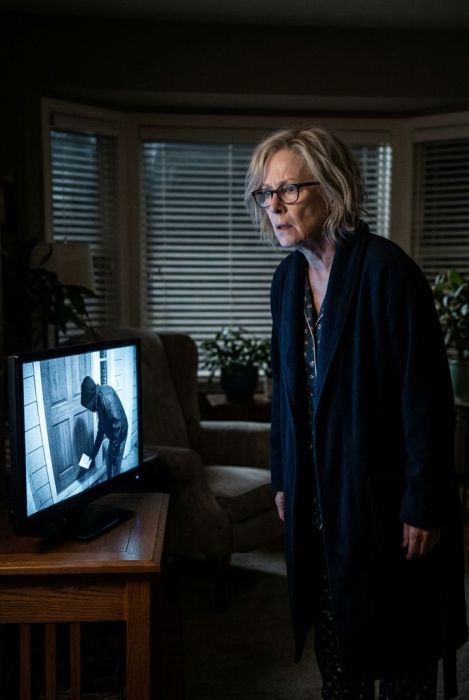
The camera caught Bernice at 1:17 in the morning, three nights later. Gloria slept with the living room lights on now, and on that particular night she was awake, half-watching a movie, when the notification chimed on her phone. The security feed showed a figure in a hooded jacket crossing the street and climbing Gloria's front steps. The figure bent down, slipped something under the door, and walked away with the unhurried ease of someone who knew the houses and the streetlights and the schedule of every dog in the neighborhood. Gloria watched it three times before her brain allowed her to accept what her eyes were telling her. The walk. The shoulders. The way the figure paused to pat Gus through the fence — only someone Gus loved would dare do that.
She found the note when she opened the door. Cream paper, like the kind Bernice used for her birthday cards. Handwritten, in the same looping cursive Gloria had read a hundred times on little notes tucked into her mailbox. Watered your plants. Don't forget book club Tuesday. The words this time were different. LAST WARNING, it said. DROP IT OR LOSE EVERYTHING.
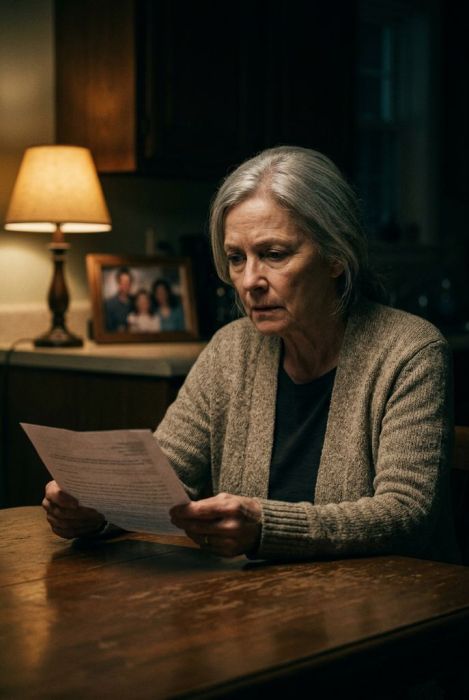
The world went very quiet. Gloria stood in her doorway, in the glow of her porch light, holding the note, and a dozen small memories rearranged themselves into a pattern she could not unsee. Todd's blue Malibu with the Michigan sticker. The fresh dent in the rear fender at the Fourth of July barbecue. The way Bernice had started coming by every evening, asking her questions, gently, patiently, the way you question a witness you need to keep quiet. The person who had been terrorizing her was not a stranger with a grudge. It was the woman who brought her casseroles.
Gloria went to Whitlock the next morning with the note, the log, and the footage. Whitlock watched the video in silence, twice, and when she looked up, her face was very still. They brought Todd Pemberton in that afternoon. He was not a monster. He was an exhausted young man who had worked a double shift, fallen asleep at the wheel, and woken up to the sound of something hitting his windshield in the dark. He had panicked. He had driven home. And the next morning, shaking, he had told his mother everything, because his mother was the person he trusted most in the world.
Bernice had made the decision while he slept. She would protect her boy, the way mothers do, the way mothers convince themselves they can control the fire they are about to set. She typed the notes on a printer at her office. She threw the brick herself, in the dark, and was home before Gloria's lights came on. She slashed the tires. She keyed the car in the church parking lot and felt, she would later say, justified. She whispered into a voice-distorting app at three in the morning and cried afterward, because she loved Gloria and because love, twisted by fear, had made her into the very thing she hated.
The confrontation happened on Bernice's porch, in the kind of April light that makes everything look forgiven in advance. Gloria walked up the steps with the note in her hand, and Bernice opened the door with a smile that died when she saw it. The mask came off slowly, like a wound being uncovered. Bernice did not deny it. She asked Gloria, in a voice Gloria had never heard before, what was she supposed to do, let her son go to prison? And Gloria said the hardest words she had ever said. Yes. Yes, that is what you do. You let the people you love face what they have done. You do not bury them a second crime deep.
Whitlock arrived with the paperwork, and Bernice Pemberton was arrested for witness intimidation, harassment, and criminal mischief on the front steps of the house where Gloria had eaten a hundred casseroles. Todd Pemberton was charged with leaving the scene of an accident, and because he had run from it for two months and then confessed completely, and because Ray Bunting was alive, the judge gave him probation, community service, and restitution. Bernice received eighteen months. At her sentencing, she looked at Gloria from across the courtroom, and Gloria looked back, and neither of them said anything, because the space between them was now a permanent thing, like a scar.
Gloria visited Ray Bunting at his rehabilitation center once, in the early summer. He did not remember the accident, did not remember the crosswalk or the grocery bag or the blue sedan. But he knew her name, the witness who had not looked away, and he held her hand and told her there were still good people in the world. Gloria did not have the heart to tell him how close she had come to becoming a different kind of good person, the kind who looks away.
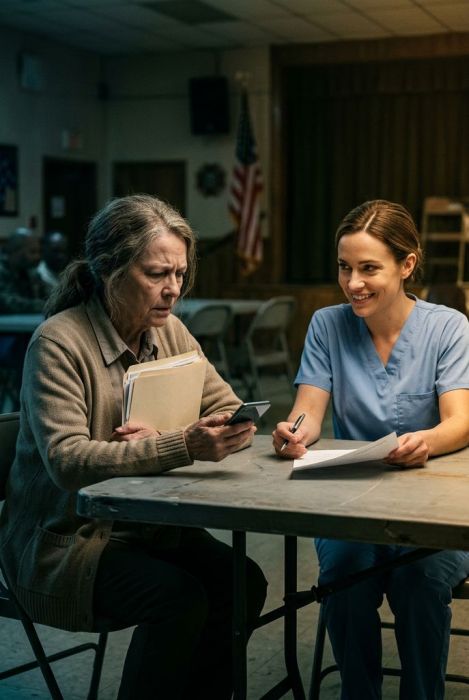
She speaks now, at community meetings and church basements and town halls, because she discovered that the story was not hers to keep. She tells people what she learned, in plain words, without drama. She tells them to document everything, every note, every call, every scratch on the paint, because paper and footage are the only languages the law speaks fluently. She tells them to trust their instincts when a routine feels violated, and to listen when an officer uses the words witness intimidation, because those words mean the danger is already inside their life. And she tells them the truth that cost her her oldest friendship: the people who try to make you quiet are sometimes the people who love you, and the most loving thing you can do for anyone is refuse to be silenced.
Gus still sleeps beside her bed. The porch light stays on. And on the nights when the memory of the sound, the wet thump of a body meeting a hood, wakes her at three in the morning, she reaches for the notebook on her nightstand and writes down the date and the time, because that is what witnesses do. They keep the record. They keep the faith. They keep the truth alive, one documented moment at a time, so that no one else has to be the only one who saw.