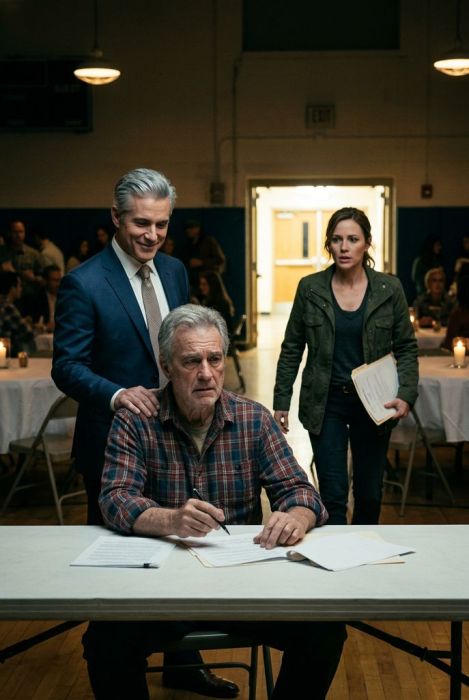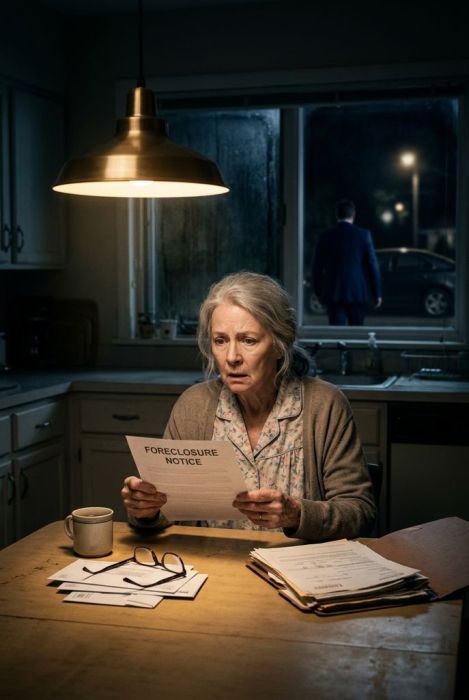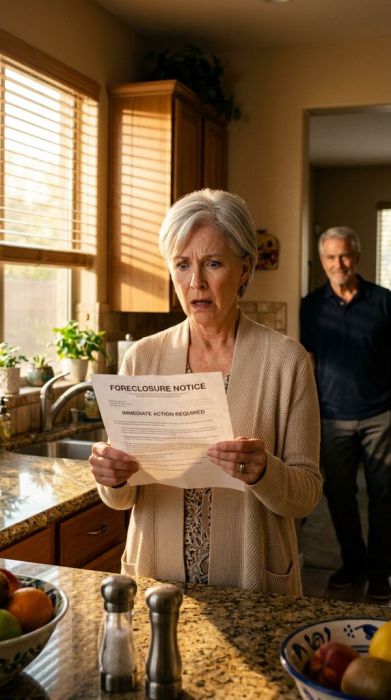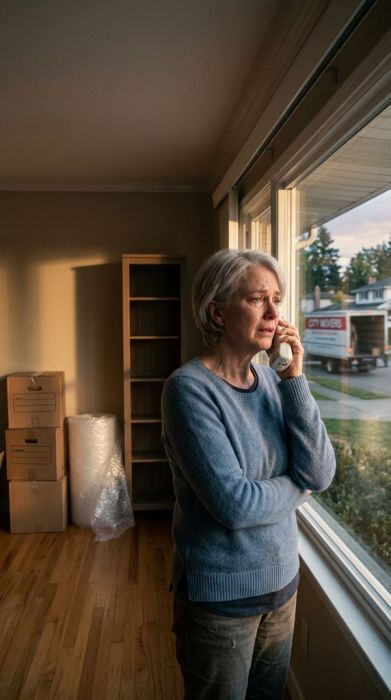
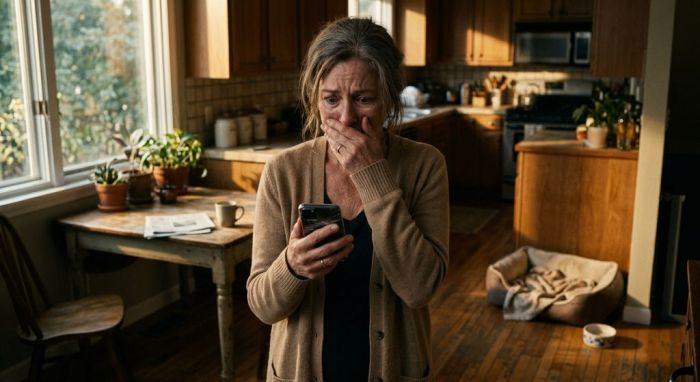
The bank declined the transfer at 9:14 on a Tuesday morning. Carolyn Beck stood in her Boise kitchen with one hand gripping the granite counter and the other holding her phone, watching the words swim on the screen: insufficient funds. Above the red error sat the message that had brought her there — a photo of a golden retriever puppy curled in a fleece blanket, and a text from Brenda that read: "One more payment, Mama C, and your little Grace will be on the plane tonight. I promise you, sweetheart. This is the last one."
It was not the last one. It had never been about one payment. And Carolyn, fifty-eight years old, fourteen months a widow, and too ashamed to tell a single soul what she had done, had just spent eleven thousand dollars on a dog that did not exist.
She had not meant to be lonely. That was the trick of grief — it did not announce itself. Tom had died of a heart attack in the driveway, kneeling beside his prize rose bushes, and for a year Carolyn had moved through the house like a ghost in her own life. The silence was the worst part. No boots on the back porch. No game on in the den. No Tom calling her from the garage to come look at some stubborn hinge he had finally fixed.
Megan called every Sunday. Her daughter was good about that, patient and warm, and Carolyn loved her more than anything. But Megan had her own life in Portland, her own husband, her own babies on the way. Carolyn refused to become the mother who clung. So she learned to fill the silence herself — puzzles, long walks, too much television.
Then one night, scrolling through old photos on her phone, she found a picture of Rusty, the golden retriever she had grown up with, tongue lolling, head resting on her father's knee. She had not thought about Rusty in forty years, and suddenly the ache of it was unbearable. What she needed was not another puzzle. She needed something alive in that house again.
The website was beautiful. Hidden Hollow Kennels, it called itself, out of Grants Pass, Oregon. The homepage was full of pictures of happy puppies tumbling over green grass, and a banner that read "Raised with love, shipped with care." Carolyn found a litter of golden retrievers with dark eyes and cream-colored fur, and one of them — the smallest, with a little white star on her chest — made her breath catch. She clicked the button that said Reserve before she could talk herself out of it.
Brenda Harmon replied within the hour, and she was everything a lonely woman could have hoped for. She sent videos of the puppies stumbling toward the camera, wrote long messages about her life on the farm, about her husband's bad back and her daughter's first year of college. She called Carolyn "Mama C" by the second day. She texted a photo of herself holding the little star-chested puppy and asked, "Isn't she a beauty? I've already named her Gracie, after my grandmother."
The payments started small, the way these things always do. Eight hundred and fifty dollars for the puppy herself, sent by wire transfer because, as Brenda explained, "the online payment system got hacked last year and I lost two litters to those thieves." Then there was the shipping cost — seven hundred, because the puppy needed a climate-controlled van, not a cargo hold. Then nine hundred for a travel crate with a health certificate. Then insurance, eight hundred, in case of a delay at the airport. Then a refundable transportation bond of twelve hundred that would be returned as soon as Gracie touched down in Boise.
Carolyn knew, on some quiet level, that real breeders did not ask for refundable bonds. But every time doubt scratched at her, Brenda sent another video. Gracie yawned. Gracie whimpered for her bottle. Gracie had Brenda's daughter's yellow hair clip in her mouth. And Brenda prayed with Carolyn over the phone — a short, sweet prayer, thanking God for bringing them together — and Carolyn, who had not prayed in years, found herself saying amen. It was that flood of belonging, more than the puppy itself, that she was paying for.
Then the emergencies started. Brenda's husband slipped on ice and needed a hospital visit; could Carolyn help with just four hundred until the insurance check came? The van's transmission died in Klamath Falls with Gracie on board; the mechanic would only take cash, seven hundred more. A customs form had been filled out wrong and there was a late fee, five hundred. Each time, Brenda was devastated, apologetic, furious at the world for making things so hard. Each time, she promised: "This is the very last thing. I would never ask you if it wasn't for the baby."
Carolyn did not tell Megan. That was the ugly truth at the center of it — the shame moved in before the doubt did. She had been the careful one all her life, the librarian who balanced the checkbook to the penny, the mother who taught her daughter to tear up those mailers that promised free vacations. How could she admit she had wired money to a stranger on the internet? So she said nothing when her credit card balance climbed. She said nothing when her neighbor Frank asked why she had stopped buying her good coffee. She told herself the puppy would arrive any day now, and then everything would make sense, and no one would ever have to know.
The day the card was declined, the total had reached eleven thousand, two hundred and sixty dollars. And when Carolyn called the number Brenda had given her — a number she had never actually used before, because Brenda always called her — a recording said the line was no longer in service.
Panic is a strange thing. It does not scream. It goes quiet and efficient. Carolyn sat down at her kitchen table and took out a spiral notebook, the same kind she had used for thirty years at the elementary school, and she wrote down every single payment: the dates, the amounts, the promises that had come with them. Eleven thousand dollars. Nearly everything Tom had left her beyond the house and his pension. She looked at the notebook and saw, for the first time, the pattern Brenda had built — the smallness of each request, the bigness of the sum.
She found the Facebook group that night, at two in the morning, because she could not sleep and because the grief and the shame had nowhere else to go. It was called Pet Scam Survivors, and it had nine thousand members. Carolyn scrolled for an hour, reading story after story that could have been her own — the same website template, the same wire transfers, the same soft voice on the phone. And then she found the post that changed everything.
A woman named Dana Whitfield, from Akron, Ohio, had posted the exact photograph of the star-chested golden retriever — the very same photo Brenda had sent — under the heading "THIS IS A SCAM." Dana wrote that she had lost six thousand dollars to the same breeder, same name, same story about the husband and the van. But Dana had fought back. Dana had gotten her money back, every cent, using a licensed recovery service that worked with the FBI.
Carolyn's heart slammed against her ribs. She did not hesitate. She typed a message to Dana in the middle of the night, and Dana replied within minutes: "Oh honey, I've been where you are. I am so sorry. But you are not alone anymore, and we are going to fix this."
Dana was everything Brenda had been, but better, because Dana was a victim too. She shared her own screenshots, her own bank statements with the numbers blurred, her own story of the night she thought she had lost everything. And she had a name: a licensed asset recovery firm called Federal Resolution Services, run by an attorney in Denver named Mark Ellison. "He's the real deal," Dana wrote. "The FBI works through him for civil cases. It costs a processing fee to open the file, but it's refundable the second they trace the wire."
Carolyn asked how much. Two thousand, four hundred for the disbursement clearance, which Dana said would come straight back once the trace was complete. And then, quietly, out of the kindness of her heart, Dana made an offer that made Carolyn cry: "I'll split it with you. You send twelve hundred, I'll send twelve hundred. We'll get our babies' money back together."
It was the together that undid her. Eleven thousand dollars gone, and here was a stranger in Ohio willing to share her own money to help. Carolyn drove to the bank the next morning and wired twelve hundred dollars from her IRA to an account under the name Federal Resolution Services. She called Megan that night and, for the first time in weeks, felt something close to hope.
Ten days passed. The trace, Dana explained, was moving through the international banking system. But the promises began to feel familiar in an awful way. The forms needed one final verification. The processing office was short-staffed because of the holiday. And then, one evening, an email from Mark Ellison's office — a real-looking PDF attachment with a seal on it — said there had been a complication, and one more payment of two thousand dollars would release everything.
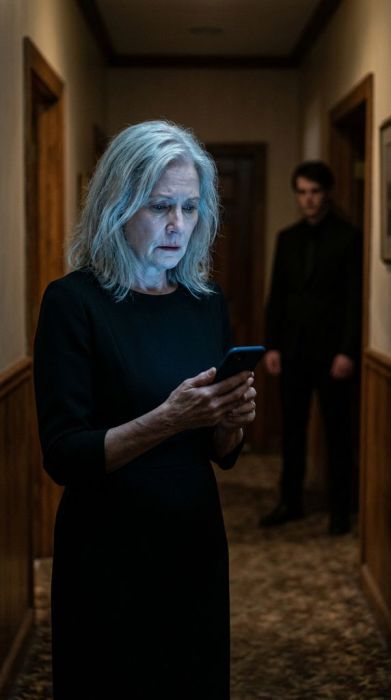
Carolyn sat in her dark living room, reading the email on her phone, and felt the floor tilt. This was the same shape as Brenda. The same incremental asks. The same warm promises. When she called the number on the PDF, a man with a patient, professional voice confirmed the fee. And when Carolyn, heart hammering, asked to speak to Dana, he said, with the straightest politeness: "Ma'am, I don't have a Dana on this file."
She called the Boise Police Department the next morning. Detective Rosa Delgado took her statement in a small interview room with a box of tissues on the table, and Carolyn told her everything — every wire, every dollar, every prayer. She waited for the detective to judge her. Delgado didn't. Delgado just wrote, and occasionally nodded, and asked the kind of questions that made Carolyn realize how many other people had sat in that same chair.
"Ma'am, I want you to understand something," Delgado said at last, pushing her notepad aside. "The people who do this are professionals. They run whole factories of lies. And the worst part is the second layer — the recovery scammers who read the first group's work like an instruction manual." She swiveled her laptop toward Carolyn and showed her the website for Federal Resolution Services. Archived, she said, but the registration date was eleven days before Carolyn had wired her money. "They bought the domain the same week you reported the loss to your bank."
Carolyn could not breathe. But worse was coming. Delgado had subpoenaed the phone records for the number Dana used. It was a VOIP line, she explained — a virtual number that could be routed anywhere on earth. And the records showed the same routing chain that the original Brenda Harmon number had used. Same exchange. Same provider. Same city, overseas. "The people who scammed you and the people who promised to save you," Delgado said gently, "are the same people. We see this pattern constantly. It's called a double-dip. They knew money was still in your accounts, so they sent you a friend."
The pieces clicked into place like a lock turning. Dana had found Carolyn within hours of her joining the group. Dana's photo, reverse-searched, belonged to a woman in California who had never heard of Akron. The grammar quirks Carolyn had noticed and ignored in Brenda's messages — the "we are needing" constructions, the dropped letters — were in Dana's messages too. It was not a coincidence. It was a signature.
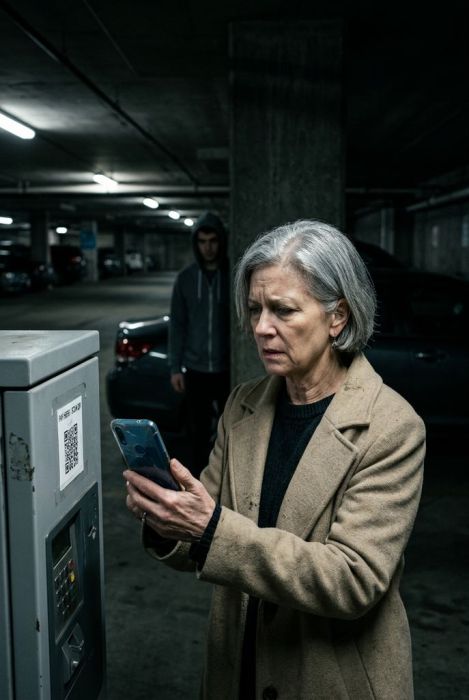
The confrontation did not happen in a courtroom or a showdown in a parking lot. It happened in the most American of places: a bank branch on Overland Road, where Carolyn stood at the service counter and demanded, with shaking hands, that the pending two-thousand-dollar transfer to Federal Resolution Services be stopped. The branch manager, a young man with kind eyes, told her it was too late — the wire had already cleared that morning. Carolyn watched the confirmation slip print, and something in her chest went quiet, the way it had gone quiet when Tom died. She had known. Some part of her had known since the email, and she had wired the money anyway, because admitting the truth meant admitting what she had become.
She did not remember driving home, but she remembered the car in her driveway: Megan's car, four hundred and twelve miles from Portland, with Frank the neighbor standing on the porch behind it, his hands in his pockets. Frank had called Megan. He had seen the bank papers on Carolyn's counter when she had asked him to water the plants. He had not understood them, but he had known enough to worry.
Megan did not yell. That was the part Carolyn would tell people later, at the support group she would eventually help lead — her daughter just held her, in the kitchen where the whole nightmare had started, while the empty dog bed Carolyn had bought in anticipation sat unopened in its box by the door. "We're going to be okay," Megan whispered. "Whatever happened, we're going to figure it out. You did not lose me. You did not lose you."
The money never came back. That is the honest ending, and Carolyn would tell that truth to everyone who would listen. She sold her good car. She took a part-time job at the county library, shelving books and helping children find their first chapter books, and she found she liked being useful again. She adopted a three-year-old golden retriever from the local shelter, a gentle soul with a white star on his chest, and she named him Trust, because she was learning to place her trust in the right hands again.
But the real rescue, the one she talks about now on the Facebook group she moderates, with eleven thousand members, is the rescue of trust. She tells them what she learned, in her own words, and the words are always the same. If they ask for money to hold the money, it is a lie. If they pray with you before they take your card, it is a lie with a warm voice. If they promise to recover what you lost, and the recovery costs one more fee, run to the police and not to the promise. And above all: tell someone. The shame is the scammer's best tool. The silence is where they live. The moment she spoke, out loud, to a detective and then to her daughter, the spell broke — too late to save her savings, but in time to save everything else that mattered.
Because Gracie never landed in Boise. But Carolyn did.