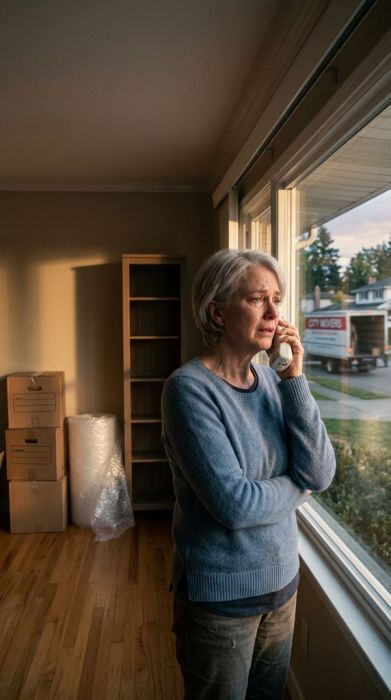

The listing vanished on a Tuesday afternoon, three hours after Marguerite Bell wired the final payment.
She sat in her dead husband's recliner, waiting for the page to reload, telling herself it was a glitch. When she called the number saved under "Carol Hutchinson," a woman picked up on the second ring — friendly, warm, the same voice that had charmed her for six weeks.
"Oh, honey," Carol said. "Don't you worry about that. My realtor must have taken it down because we're in contract. That's the best news."
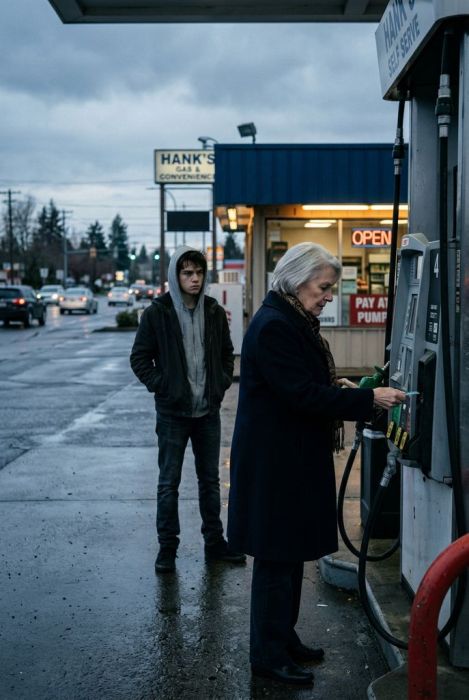
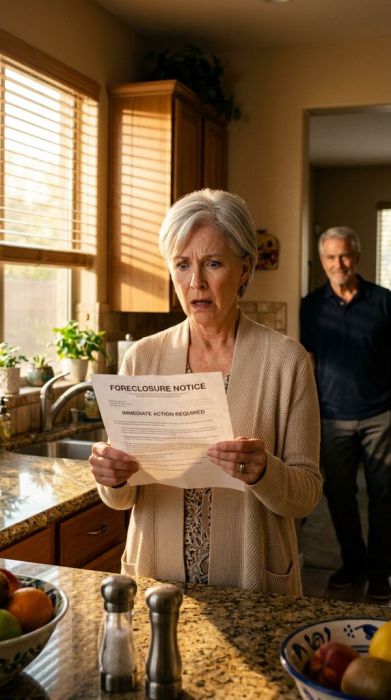
Marge Bell was sixty-three, a retired school librarian with a four-bedroom house that had felt like a museum since Roland died. Fourteen months, three weeks, and two days since her husband of thirty-eight years collapsed in the garden with a rake still in his hand. She had been a widow so long she counted time in stages: the crushing first months, the numb year, and now this strange, guilty season when she'd started wanting things again. She wanted a smaller kitchen. She wanted neighbors her own age. She wanted the two-bedroom condo at Willow Ridge that Carol Hutchinson was selling for sixty-two thousand dollars — thirty thousand below market — because Carol's mother had passed, Carol lived in Oregon now, and she "just wanted it done, clean and quick."
The price should have made her suspicious. Everyone said that later, as if the number should have glowed above the listing like a warning siren.
But Roland had always said Marge saw the best in people. He meant it as a compliment. After he was gone, she discovered it was also a liability.
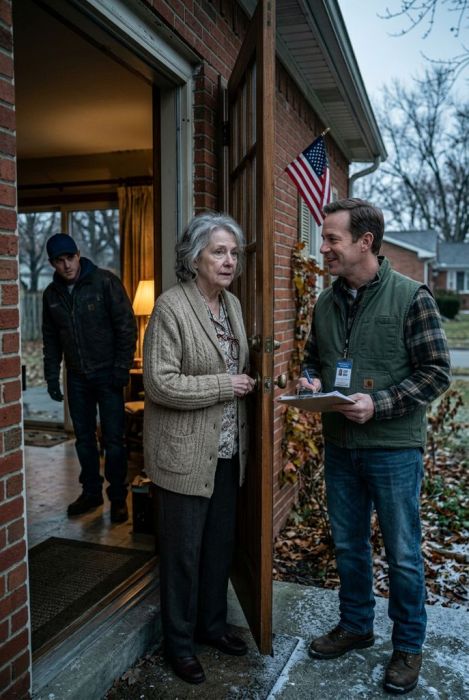
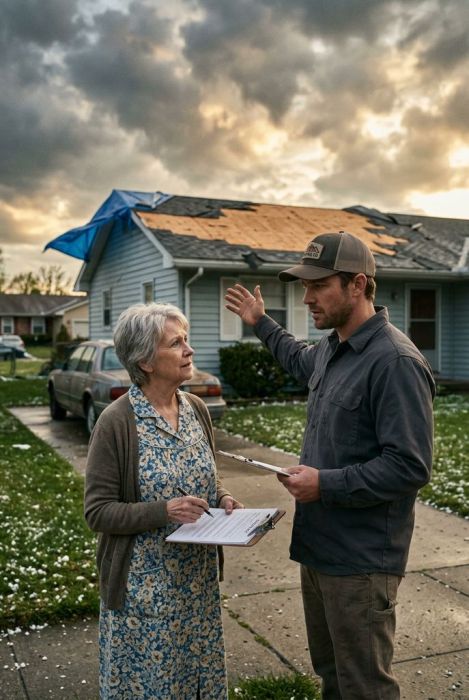
The house went on the market first, because even in grief Marge was practical. Her realtor was Shelly Vance, a brisk woman with a helmet of gray hair who had sold houses in Plano for twenty years. Shelly knew a widow with a heart condition couldn't manage the yard work, so she brought in a young man to help prepare the property: staging, minor repairs, a coat of paint where the walls had yellowed. His name was Tyler Brooks. He was twenty-eight, soft-spoken, with a nice smile and calloused hands, and he told Marge on the first day that he'd lost his own father two winters ago.
"We got through it," he said, adjusting a drop cloth. "You just keep moving. That's what my dad always said."
Marge liked him immediately. He reminded her of Danny, her son, who lived in Plano with his wife and a new baby and called every Sunday but couldn't be there in the weekday quiet. Tyler asked her questions while he worked — polite, curious questions. How long had she and Roland been married? Was she excited about the new chapter? Did the life insurance come through okay? When she lost her train of thought, he filled the silence with small talk about the market, about how seniors always got the short end of the stick, about a "golden opportunity" when you saw one.
Shelly didn't like him. "He's too smooth," she said once, watching Tyler haul paint cans toward the garage. "Don't give him the garage code, Marge. I mean it."
Marge laughed it off. Shelly had been divorced three times; she saw a con man behind every nice gesture.
The condo listing appeared on a Wednesday, in the middle of a sleepless night. Marge had been browsing 55-plus communities while eating ice cream straight from the carton, the way she'd sworn she never would. And there it was: two bedrooms, two baths, a sunroom with the kind of light that made her chest ache, priced at sixty-two thousand. The photos showed a kitchen with butcher-block counters and a window over the sink. The description mentioned "motivated seller, downsizing due to family circumstances, all offers considered."
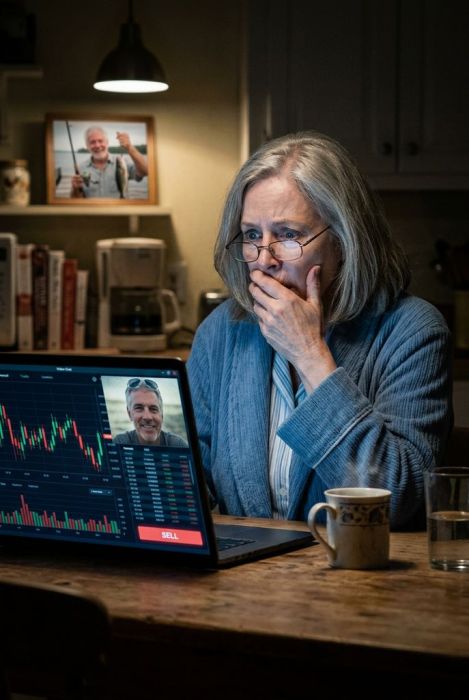
She sent an inquiry at 1:47 a.m. By sunrise, she had an answer from Carol Hutchinson herself, in a rambling, warm email that mentioned grandchildren, a garden she'd miss, and a mother's passing "that made me realize life is short, and I want someone to love this little home the way Mama did."
They exchanged emails for a week. Carol was never in a hurry. She asked about Marge's garden, her late husband, her favorite season. She sent more photos — the sunroom at dusk, the rose bush by the porch, the neighborhood pond with ducks. She mentioned that her mother's house had been appraised at ninety-two thousand, but she'd rather "sell it to someone kind than squeeze every dollar out of a stranger."
That sentence hooked Marge deeper than any contract could have.
When Carol said she'd left the paperwork to her family attorney, David Marsh of Marsh & Hollis in Grapevine, Marge looked him up. The firm was real. The address was real. There was a photo of a silver-haired man in a navy suit who looked exactly like a family attorney should look. Marge felt the last of her doubt dissolve like sugar in warm coffee.
"See?" she told Ruth on the phone. "He's a real lawyer in Grapevine. I checked."
Ruth McAllister had been her best friend since their teaching days, and Ruth had a nose for trouble honed by thirty years of watching parents lie about homework. "A real lawyer doesn't mean the email is from him. Call the firm. Call the number on their website."
Marge sighed. She was tired of being treated like a child. When she was a librarian, she'd had to stop three separate adults from giving their credit card numbers to people on the phone. She knew the scams. She was not some rube with a checkbook and a trusting heart.
She called the firm's public number. A receptionist confirmed that David Marsh existed and that "we handle all sorts of estate matters." Marge never asked to speak to him directly. She never read the email address closely enough to notice it was marsh-legalgrp.com, not marsh-hollis.com. One letter different. That was all it took.
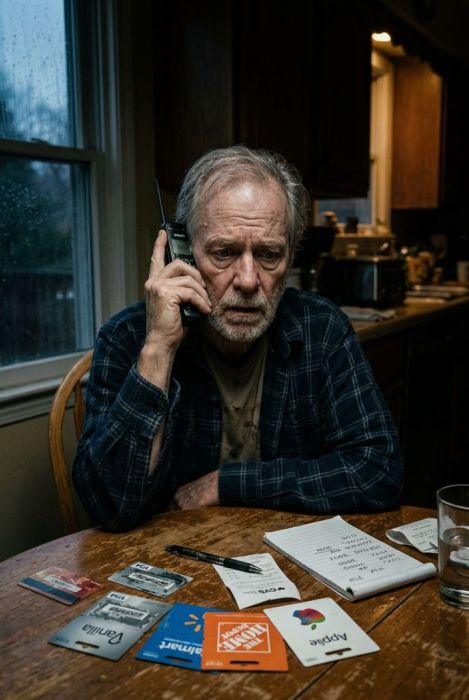
The first wire was for five thousand dollars — the "good faith deposit," per the instructions on letterhead that still sits in Marge's nightstand drawer. Carol apologized for the inconvenience of an electronic transfer, but "the escrow account is the cleanest way, and David insists on following protocol."
The second wire came four days later: $4,200 for "attorney fees and title research," because Carol's mother's estate had a small tax lien that needed clearing before closing. "I hate to ask," Carol wrote, "but you'll be reimbursed at closing, darling, and then the place is yours."
The third wire was $3,200 for "tax certification." The fourth, $3,000 for the "final inspection escrow," was the one she sent the morning the listing vanished.
Fifteen thousand four hundred dollars. Every piece of it gone the moment it hit an account in the name of a man who did not exist.
When the inspector never showed up that afternoon, Marge drove to Willow Ridge herself. She found unit 204 easily — a ground-floor condo with a rose bush by the porch, just like the pictures. The locks were new. A thin, white-haired man in a cardigan opened the door, frowning at her through the storm door.
"Can I help you?"
"I'm... I'm here for the final walkthrough," Marge said, her voice coming out small and strange. "For the closing. Carol Hutchinson's mother's place?"
The man stared at her. "I'm Howard Nilsson. I've lived here eleven years. I'm not selling anything." He paused, something flickering behind his glasses. "Honey, are you okay? You look like you've seen a ghost."
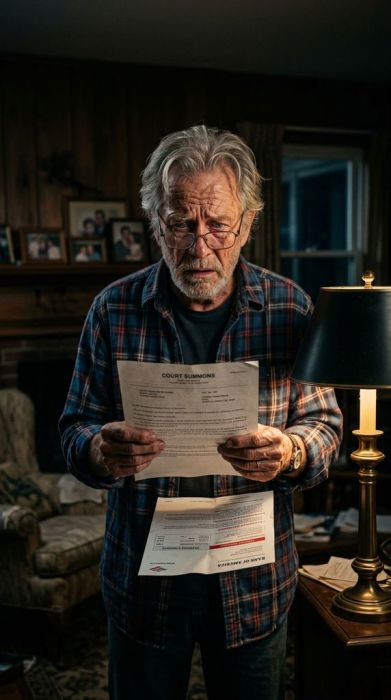
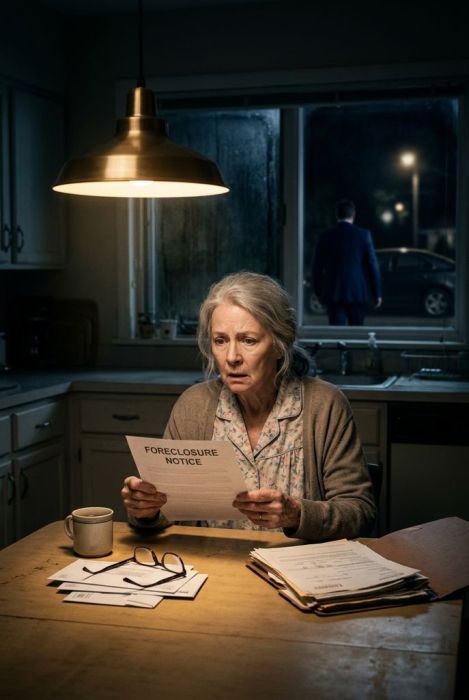
Marge didn't remember driving home. She remembered sitting in the recliner — Roland's recliner — with the phone in her lap, dialing Carol's number over and over, listening to a recording that said the number was no longer in service. She remembered calling Marsh & Hollis and hearing the receptionist's voice go sharp and careful. "Ma'am, we have no client named Hutchinson. And Mr. Marsh's email signature... that's not our domain. Are you sure you contacted us?"
She sat in the dark until the doorbell rang. It was Ruth, who had driven forty minutes because Marge had stopped answering her texts. Ruth took one look at her face and called the police.
Detective Frank Okafor of the Plano PD fraud unit was a patient man with tired eyes who had seen this exact grief too many times. He took her statement, noted every wire, every email, every date. "The account's at Chase, opened about two months ago," he said. "Withdrawals were made in person, small enough to stay under the radar. We'll pull the branches' cameras."
He said the words gently, the way you tell a child that a pet ran away: "Ma'am — I want you to prepare yourself. People who run these operations are rarely in the same state. Getting the money back..."
"I know," Marge said, and she was surprised how steady her voice was. "I know it's gone."
But a week later, Detective Okafor called her back. He sounded different — not gentler, but sharper, like a hound that had caught a scent.
"We compared your case to three others in Collin and Denton counties," he said. "Same structure, same fake firm, same escrow pattern. One of the victims identified a face. I'm sending you a link to the bank footage. Tell me if you recognize anyone."
The video was grainy, shot from above a Chase branch in Plano. A young man in a navy suit stood at the teller window, withdrawing cash. He wore a neat salt-and-pepper mustache and glasses, and he hunched his shoulders slightly, the way you do when you're pretending to be older than you are.
But the walk was wrong. And the way he adjusted his collar — two fingers, tugging once, always once — that was wrong too.
Marge's hand trembled as she texted the detective. Three words, then two more.
"It's Tyler. He's the one who staged my house."
Two days later, Tyler Brooks sent her a cheerful text: "Finishing the punch list at your place tomorrow morning — want me to pick up your mail while I'm there?"
Detective Okafor read it over her shoulder and nodded. "Tell him yes. Tell him you hurt your back and you need help moving a bookshelf. Keep it natural."
The next morning, Marge made coffee and arranged her face into something resembling calm. She set her phone on the counter, screen up, still recording, the way the detective had shown her. Then she sat at the kitchen table with two mugs, because that's what kind she was — she'd poured one for the man who stole her money.
Tyler came through the back door with his toolbox, all smiles. "Morning, Marge. You look nice today."
"I found the perfect condo, Tyler."
"Yeah?" He set the toolbox down, genuinely pleased. "That's great. Where at?"
"Willow Ridge. Unit 204."
His face did a strange, small thing — a flicker, like a lightbulb struggling in a storm. Then the smile came back, wider. "Oh yeah? That's a good area."
"You know the place," Marge said, keeping her voice light. "Old Mr. Nilsson lives there. Says he's never sold it."
The silence stretched. Tyler's smile thinned. He looked at the coffee, at her hands, at the phone on the counter — and understood.
"Marge." He laughed, a dry sound. "You're losing it. All alone in this big house, no one to talk to —"
"It was you," she said. And her voice did not shake. "The listing. Carol Hutchinson. The fake attorney. All of it."
Tyler took a step toward her, toolbox still in hand, and his voice dropped into something she had never heard from him — low, flat, dismissive. "You old people make it so easy. You trust anybody who's nice to you. I mean, seriously, sixty-two thousand for a condo at Willow Ridge? Come on."
From the hallway, very calm: "Plano PD. Hands where I can see them, Tyler."
Detective Okafor came out with his badge out, Sergeant Reyes right behind him. Tyler's face did the flickering thing again, and then his hands went up, and all the charm ran out of him like water draining from a sink. He was just a boy in a paint-stained shirt, standing in a widow's kitchen, the police reading him his rights about a scam that had stretched across three counties and seven victims.
Seven. Marge had been the fifth. There was a retired teacher in Denton who'd lost forty-one thousand to "Carol's mother's house" on a street that didn't exist. A widower in Allen who'd wired his wife's life insurance to a "realtor" with the same Rhode Island area code. Tyler Brooks had started with small stuff — flipping furniture, selling stolen tools — and discovered that lonely people, especially older ones, would hand him everything if he was just nice enough for long enough.
The restitution hearing months later was brief and bitter. The judge spoke about systematic exploitation of vulnerable adults. The district attorney described a predatory scheme built on manufactured trust. Tyler, in an orange jumpsuit, didn't look like the boy who had carried paint cans for her, and perhaps that was the point — he had never been that boy at all.
Marge did not cry in the courtroom. She had done her crying at Willow Ridge, in the dark, and in the weeks after, when the mail brought statements showing the wires, line by terrible line. But she learned things, too. She learned that banks will not reverse a wire once it's gone — that the money moves in minutes and the hope crawls back in months. She learned that county property records are public, and free, and that a ten-minute search would have shown her the name Howard Nilsson on unit 204 since 2014. She learned that a real attorney's real name means nothing if the email behind it carries a different domain, and that the only safe way to verify wire instructions is to call a number you already know — not the number in the email, not the number on the letterhead — the number on the firm's actual website, or better, the number on the actual firm's actual door.
But the deepest thing she learned had nothing to do with banks. It was this: grief had made her soft. Not stupid — she kept saying that, and Ruth kept agreeing loudly — but soft. Hungry for kindness. Ready to believe that the universe had sent her a warm voice and a sunroom and a second chance, because the universe owed her one. Scammers didn't prey on the gullible. They preyed on the hopeful. There was a difference, and Marge knew it now in her bones.
She sold the house anyway — with Shelly, who hugged her at the closing and said, "I should have fought you harder about that boy," and meant it. Six months later, Marge moved into a real two-bedroom at Willow Ridge. Unit 118. It had butcher-block counters and a window over the sink, and she had verified everything: the title company, the deed, the owner, the county records, and the name of every person who held any piece of paper connected to the sale. Ruth came to the closing with a folder of notes and a bottle of champagne. Howard Nilsson from unit 204 brought her a lemon loaf as a neighbor gift, and they sat on her porch watching the ducks on the pond, and he told her about his late wife's garden, and she told him about Roland's roses.
Sometimes the kindest face is the most dangerous lie. Marge still believes in the good in people — she just checks the county records first, calls the number she already knows, and never, ever gives anyone the garage code.
Roland would have told her she was being careful now. He would have said it was about time.