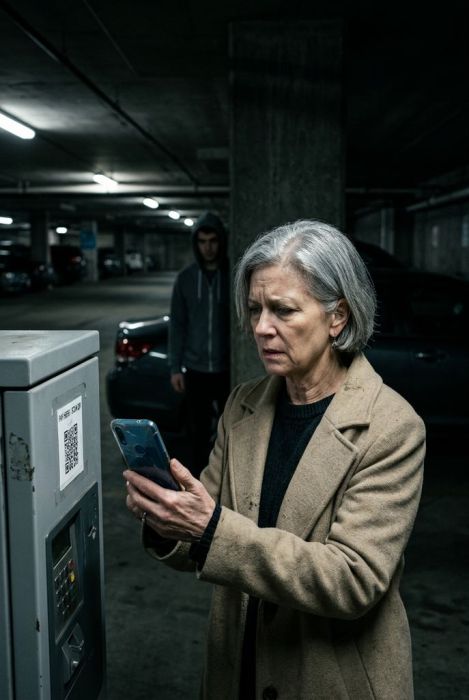
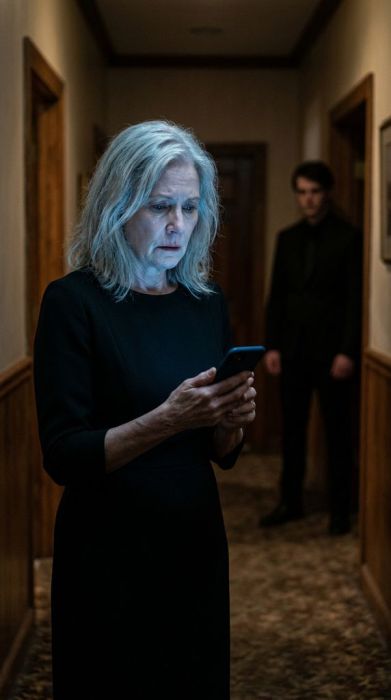
The text arrived at 9:47 on the morning of Tom's funeral, while Carol Whitfield stood in the receiving line with her daughter gripping her arm. Her phone buzzed against her hip like an impatient heartbeat. Heritage Hills: Final reminder. Activate your livestream access now to view today's service.
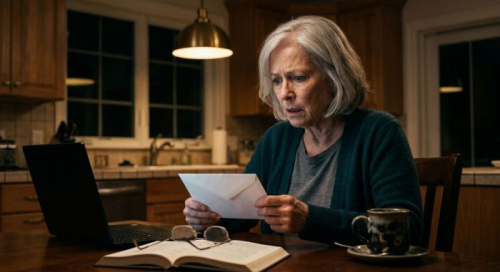
She had already paid. Nineteen dollars and ninety-five cents, charged to her Visa on the website her sister had forwarded two nights earlier. Carol thumbed the link one more time, a reflex now, the way she had refreshed Tom's hospital page for four straight days. The site loaded—the familiar oak-and-dove logo of Heritage Hills Funeral Home, a button that said STREAM READY, and a small countdown clock still ticking toward the eleven o'clock hour.
But the service had already started. The screen was still counting down.
She looked up. The minister had opened with a prayer. Jen squeezed her arm and whispered, "It's fine, Mom. Brian's watching."
Carol nodded, because that was what you did in the receiving line at your own husband's funeral. You nodded. You accepted tulip arrangements from neighbors. You did not stand at the chapel door pecking at a dead website when everyone you loved was waiting for you to be brave.
She slipped the phone into her pocket and went to sit in the front row, beside the casket, beside the man she had shared a bed with for forty-one years. For the next hour she smiled at every face that came through, and she did not think about the website again. Not until the limousine was carrying her to the cemetery, and Jen leaned over and said, "Mom—did the stream work? Brian texted. His link isn't loading."
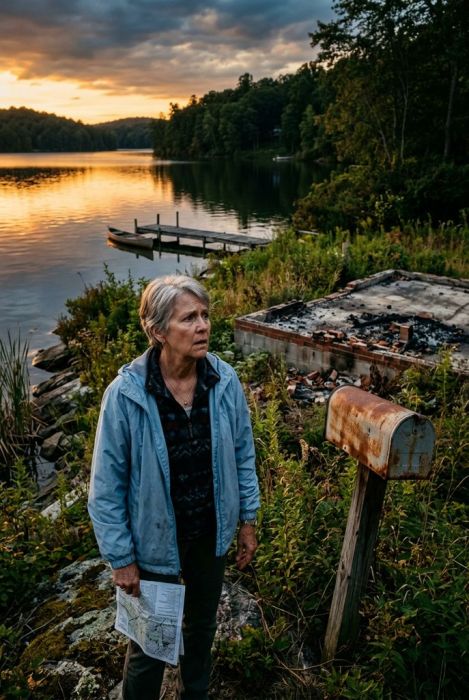
Tom had died on a Sunday, in the vegetable garden, with a trowel in his hand and dirt under his nails. An aortic aneurysm, the paramedic said, gentle as a librarian. It took Carol six hours to notice the garden had gone quiet, and by then the only sound in the whole house was the sprinkler ticking around the rose bed he had refused to let her dig up.
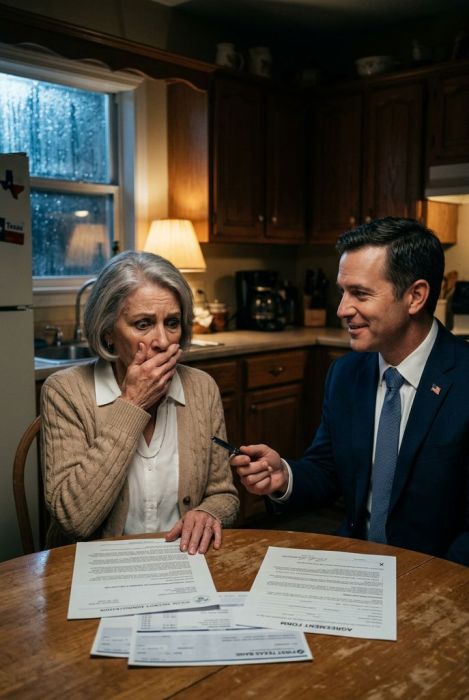
The arrangements happened in a blur of Kleenex and coffee. Heritage Hills on Fort Street had buried her mother, her father, and both of Tom's parents, so it was the only number she knew by heart. Harold Bennett, the director, was a heavy-shouldered man of seventy with a voice professionally lowered for grief. But it was the young man beside him who did most of the talking that first afternoon—Kyle, Harold called him, his new digital arrangements assistant, twenty-six years old, with a salesman's smile and the posture of someone who had recently learned to stand up straight.
"A lot of families like the streaming option," Kyle said, sliding a brochure across the table. "For relatives who can't travel. Nobody has to miss the service."
Carol smiled at that. Her son Brian was a chief in the Navy, stationed in Yokosuka, Japan; there was no way he was making it home in time. Her daughter Jen was thirty-four, eight months pregnant in Denver, and her doctor had flatly forbidden the flight. So yes, streaming. God, yes, streaming. Carol signed the paperwork without reading the price column, because that was the week of her life when every number went straight through her.
The text came the evening the obituary ran, while she was heating a single Lean Cuisine in the microwave. The sender ID read Heritage Hills Funeral Home. There was a logo, a link, and a message that made her chest ache with gratitude: Your family has been selected for complimentary HD streaming of the Whitfield service. Register each remote viewer to guarantee access.
She clicked. The website looked like the funeral home's own—same oak leaves, same dove, same motto about dignity and remembrance. It asked for her name, her relationship, and a credit card to confirm the one-time HD access fee of $19.95. She typed her Visa number in, because it was 7:12 at night, because the microwave was beeping, and because a website that said complimentary and dignity and remembrance would never hurt her.
Then she forwarded the link to Jen and to Maya, Brian's wife. She called her sister Gail in Dayton, Ohio, who had already received the same text and was thrilled. "Premium recording is only seventy-nine ninety-nine," Gail said. "That way we'll have it forever. You want me to do it?" Carol said yes, because a recording of Tom's voice—the laughing one, the one that had read The Hobbit to Jen in the summers—was worth ten times that. Maya paid for the HD pass from Japan with her own card, because Brian was on duty and unreachable, and because it was the least she could do for all those Sunday dinners.
By the night before the funeral, six members of the family had registered. Carol felt, in the strangest way, almost grateful for the technology. Tom would have hated it, she thought. He'd have said streaming was a fine way to watch football and a terrible way to say goodbye.
Then the service started. And the countdown clock kept counting.
She tried the link again at the cemetery, standing over the open grave with the November wind raking the tent flaps. STREAM READY, said the site. COUNTDOWN PAUSED. PLEASE STAND BY. She held the phone at arm's length, as if showing it to Tom, and said, "It's still buffering." The family around her made the sounds people make when they want to help and cannot.
The recording never arrived. By Monday morning, Gail was calling, not crying—Gail called when she was angry. "The video preservation charge hit my card," she said. "Four hundred ninety-nine dollars. Carol, did you authorize that?"
Carol hadn't. Nor had she authorized the $299 stream upgrade, or the $175 guest authentication fee, or the second $19.95 charge that appeared on her own statement like a splinter working its way out. She called Heritage Hills and got Harold Bennett's secretary, who said, in a voice gone thin and careful: "Mrs. Whitfield. We don't offer livestreaming. We never have."
Carol sat down on the kitchen floor. That was where Jen found her an hour later, through FaceTime, when she finally answered: on the linoleum, in her church shoes, surrounded by printouts of her own bank statement, with the sprinkler ticking in the garden and no sound in the whole world except a recording of Tom reading The Hobbit that she had started playing because it was the only proof left that his voice had ever existed.
The detective was a patient woman named Angela Ruiz, from Boise PD's financial crimes unit, and she had seen this before. "Grief fraud," she called it. "Thieves read the obituaries same as everybody else. They take the names, the funeral home, the dates—"
"Because they were already in the building," Carol said.
"Maybe," said Ruiz. "Or maybe they used public records. We'll see."
The fake site had been cloned from Heritage Hills' public pages. The domain was registered through a privacy service and paid for with a prepaid card bought at a pharmacy across town. The payment processor was legitimate, which is how the trail survived at all: every dollar routed to a personal account at a credit union in Garden City. Ruiz read the name on that account twice, out loud, the way you check a receipt in a parking lot.
"Kyle Hendricks," she said.
Carol remembered, then, a hundred small things at once. How Kyle had been the one to mention streaming before she even asked. How his eyes had lingered on the sign-in sheet at the visitation, where old friends wrote their names and phone numbers in careful cursive. How he had been so eager, so kind, so present, the way men are present when they are memorizing something. The brochure in his hand. The logo on the page. The way he had stood at the chapel door during the service, arms folded, watching the room like an undertaker, like a stage manager, like a man taking attendance.
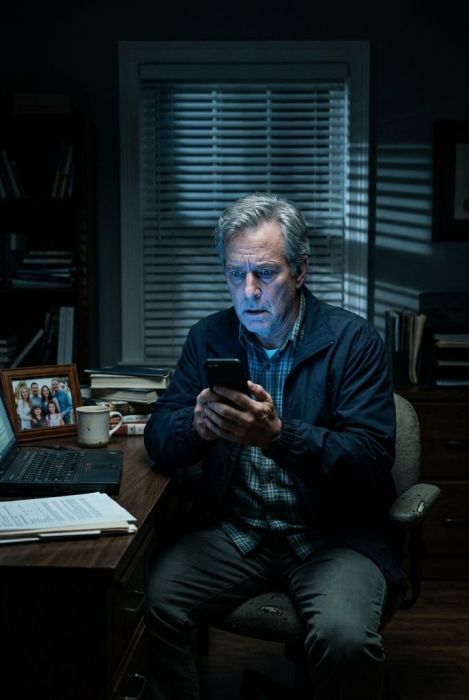
The confrontation happened on a Wednesday, three weeks later, in Harold Bennett's office above the chapel. Carol had insisted on being there. Kyle sat in a folding chair, still wearing his funeral-home smile, and denied everything until Detective Ruiz laid the credit union statement on the desk beside the domain registration and the pharmacy receipt and the phone records showing a text blast that had gone out to two hundred and eleven numbers, every one of them pulled from the guest books of three different funeral homes. His phone buzzed in his pocket during the silence—a fake verification code, Ruiz guessed, or another customer—and Kyle looked at it, and his smile finally cracked.
He was twenty-six. He had filmed the service. Not for the family—there was never any recording to sell—but to study the crowd, to see which faces belonged to the numbers on his list. Harold Bennett wept at his own desk, not for Kyle but for the families, for the trust that had been buried in his chapel like a second body. The funeral home settled with nine families out of court. The district attorney charged Kyle with wire fraud, identity theft, and a dozen counts of deceptive business practices. He pleaded guilty in February, and the judge gave him four years, which Carol thought was both too much and not enough.
She did not get her money back—most of it, anyway; the credit union restored a little, and Harold wrote a check that he called a gesture, and Carol cashed it because grief and pride could not both be buried that year. What she kept was something else. At the senior center on Hill Road, where the coffee is free and the hearing aids hum, she tells the story now, the whole thing, without flinching. She tells them that a real funeral home will never text you a payment link, that the only number to trust is the one you already have, that a website can wear a dead man's dignity like a costume. She tells them that grief is a wide-open door, and the worst people in the world are very, very good at walking through it.
"Call first," she says. "Call the number you know. If they say it's complimentary, it shouldn't need your card. And if someone is hurrying you—if they tell you the clock is running down—that's the moment to close the phone and stand still."
But the part she never tells at the senior center, the part she keeps for the garden, is this: some mornings she still opens the browser, out of habit, and looks for the countdown clock, as if it might finally reach zero and show her Tom's face—alive, laughing, reading the part about the dragon. The site is gone now, killed by a judge's order. Her phone is quiet. In April she plants marigolds over his grave, because they are stubborn and cheap and they come back every year, and because the man she married would have hated a fuss.
The sprinkler still ticks around the rose bed. She lets it.