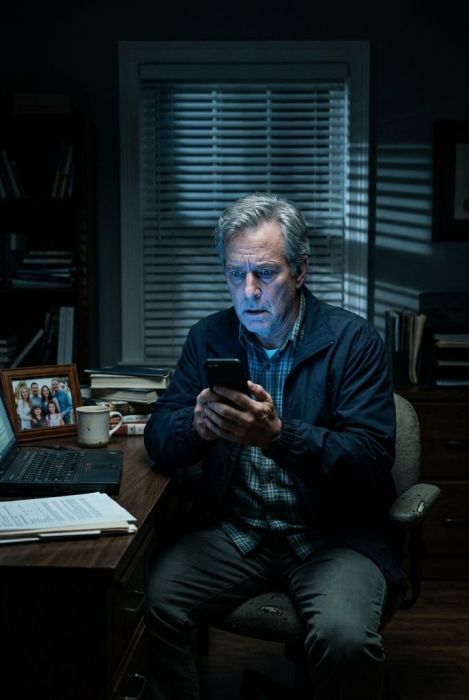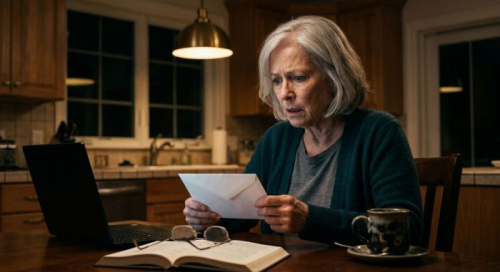

The email arrived on a Tuesday afternoon in March, buried between a grocery store flyer and a notice from the electric company. Dottie Vance almost deleted it. The subject line said simply: Re: Estate of Elsie May Hollis, Deceased. She didn't know anyone named Elsie May Hollis.
But the body of the email knew things. It mentioned her grandmother, Ruth, who had passed away in 1987. It mentioned a sister named Mavis who had married an Englishman and moved to the city of Bath in 1952. It said that Mavis's daughter, Elsie, had died the previous October, alone, and that after a search of her papers, the firm of Whitfield & Croft had found a handwritten will naming Dottie as a beneficiary.
"Please find enclosed a copy of the will and relevant documents," the email read. "We estimate the value of the estate at one hundred and eighty-seven thousand pounds."
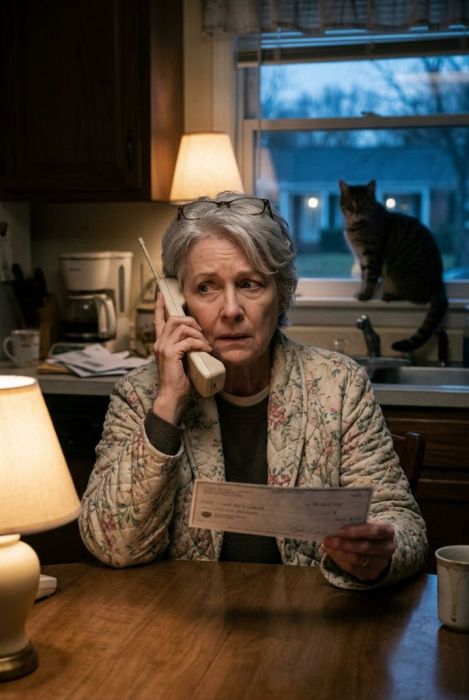
Dottie laughed out loud. Then she read it again. Then she printed it and read it a third time, standing at the kitchen counter with her coffee growing cold.
She was seventy-one years old, retired after thirty-two years as a school librarian in Bloomington, Indiana. She had been a widow for nine years. Her daughter, Rachel, taught high school math in Indianapolis and called every Sunday and worried too much. Dottie's life was small and tidy and predictable: the garden club, the church quilting circle, Thursday night movies with her friend Peggy. Nobody left her money. Especially not from another country.
And yet.
The email was signed by a man named Adam Whitfield, senior partner. His letterhead looked official. There was a phone number with a London code, a registration number, an address on Chancery Lane. When Dottie called the number, a woman with a crisp British accent answered, "Whitfield and Croft, how may I direct your call?" and transferred her to Mr. Whitfield himself, who was patient and kind and called her "Mrs. Vance" with a gentleness that made her sit down.
"It seems your cousin Elsie kept a scrapbook of the American family," he said. "There were photographs. Letters. She spoke of you often, though you never met. She was a very private woman."
Dottie found herself crying, and she wasn't sure why. Over a cousin she never knew. Over a life, a whole life, that had existed across the ocean carrying photographs of her grandmother's family.
"That's the thing about these emails, dear," her friend Peggy said over lunch at the diner a few days later. "They're always a prince or a lawyer, and they always need money."
"Not money," Dottie said. "He said the estate covers everything. He said there would be some administrative costs, standard practice, but they'd be deducted from the disbursement."
Peggy raised an eyebrow and said nothing, which was worse than if she'd argued.
The first fee was small. Two hundred and fifty dollars, labeled "estate administration and notarization." Dottie paid it by wire transfer from her savings account at First Prairie Bank, because Mr. Whitfield explained that international transfers required a correspondent bank, and the details he gave her looked exactly like the kind of details a bank would use. She had worked with numbers her whole life, cataloging and organizing. She checked the routing numbers twice.
The second fee came a week later: one thousand nine hundred dollars for "UK inheritance tax clearance." The third was four thousand five hundred dollars for a "good-faith bond required by HM Revenue & Customs, fully refundable upon completion."
By the end of the month, Dottie had sent eleven thousand dollars to a bank in London, and Mr. Whitfield was telling her the disbursement was only days away.
This is where Marcus Webb enters the story. Marcus was the young personal banker at the First Prairie branch on Ninth Street, and Dottie had been doing her banking with him for almost two years. He was the one who replaced her stolen debit card in the spring, the one who walked her through setting up online banking, the one who remembered that she liked her coffee with two creams and always had a cup waiting when she came in.
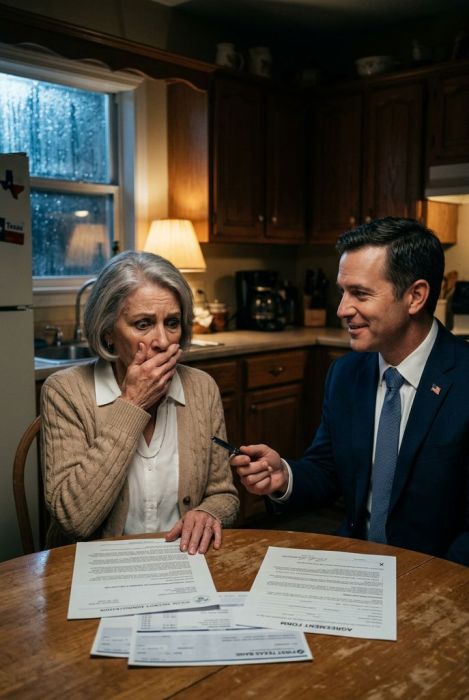
"International estate, huh?" Marcus said, glancing at the wire form she'd brought in, the fourth one. He smiled and leaned over the counter in his crisp blue suit. "You know, Mrs. Vance, I see this a lot. People inherit from relatives overseas and don't know the ropes. Whoever this firm is, they're doing it right, asking for the proper clearances."
"You think it's legitimate?" Dottie asked.
"I'd be more suspicious if they weren't asking questions," he said. "That's how scammers operate — they make it too easy. This looks by the book to me. You want me to double-check the account details? I can flag them for our fraud team, make sure everything's on the up and up."
He did. He called her two days later and told her, in his warm, reassuring voice, that First Prairie had looked into the correspondent account and found nothing suspicious. "You're good to go, Mrs. Vance. Your money's in good hands."
What Dottie could not have known — what she could not have seen from her side of the counter — was that Marcus Webb had opened a file on her the week he replaced her debit card. He had seen the steady pension deposits, the untouched certificate of deposit from her husband's life insurance, the fact that she never questioned a charge and never argued with a teller. He had seen that she was alone, and loneliness, in the right hands, is a thing you can harvest.
The whole operation was his. The London phone number was a voice-over-IP line he paid for with a prepaid card. The letterhead had been designed by a kid Marcus knew from high school who did freelance graphics. The scrapbook, the photographs, the handwritten will — all of it had been built from genealogy websites and a weekend of careful fabrication. And the emails, with their patient, kindly tone? Marcus wrote those himself, at night, in his apartment, sometimes laughing out loud at how easily the words came.
He had done it twice before, with two other customers, older women, smaller amounts. He had told himself it was victimless — they were rich enough to lose it, weren't they? He had almost stopped. Then Dottie Vance had smiled at him across the counter and asked about his weekend, and something in him had seen an easy target and refused to let go.
The wires continued. Each time Dottie felt a prickle of doubt — each time she nearly called Peggy, nearly told Rachel, nearly walked into a branch in a different town and asked a stranger whether this was normal — Marcus was there, smiling, patient, certain. He told her the estate was "complicated but close." He told her Mr. Whitfield had assured him personally, over the phone, that everything was progressing. He told her about his own grandmother, who had once inherited a farm in Ireland, to make Dottie feel that this was simply how these things went.
By the first week of May, Dottie had wired forty-one thousand dollars.
The call from the real fraud department came on a Thursday. A woman named Sheila Tran, from First Prairie's corporate security office in Indianapolis, left a message that made Dottie's stomach drop: "Mrs. Vance, this is regarding your international wires. Please call me back. It's important."
When Dottie called back, Sheila's first question was simple. "Did anyone at the branch ever advise you to wire money to an account for an inheritance?"
"Well — yes," Dottie said. "Marcus. Marcus Webb. He's been so helpful."
There was a long pause. Then Sheila said, very carefully, "Mrs. Vance, I need you to sit down."
The beneficiary account on all four wires belonged to a limited company called Whitfield Holdings Ltd, registered at an address that, when traced, turned out to be a mailbox store in Cincinnati. But that wasn't what stopped Marcus's heart when the police came to his apartment. It was the paper trail. Whitfield Holdings had been set up with a stack of documents, and every single signature on those documents had been notarized by a woman named Rosa Delgado — who just happened to be Marcus's aunt, and who just happened to have a notary stamp.
The London solicitor's office, when dialed from a police station, produced only a dead line. The scrapbook, found in Marcus's closet under a pile of sweaters, contained photographs of Dottie's grandmother's family — printed from the same genealogy forum where Dottie's cousin had posted them years ago.
Marcus Webb was arrested on a Wednesday in May, in the lobby of the branch where he had worked for four years, in front of customers who watched him being handcuffed with their mouths hanging open. Dottie was not there. She had asked Sheila Tran to let the police do it without her. She did not want to see his face one more time.
The confrontation came a week later, at the courthouse, where Marcus's lawyer tried to argue that his client had merely offered "financial services" to confused customers who should have known better. Dottie took the stand and looked at him — the young man who had brought her coffee with two creams, who had asked about her roses, who had told her about his grandmother's farm in Ireland — and she said, "I trusted you because you were kind to me. I want you to know that I understand now exactly what that meant."
He was convicted of wire fraud. The judge called the scheme "calculated cruelty" and gave him six years. First Prairie froze what remained of the Whitfield Holdings account — about eleven thousand dollars — and returned it to the victims. The other thirty thousand was gone, spent on a truck Marcus had bought and a vacation to Cancun and a wedding he had been planning with a woman who had no idea where the money came from.
Dottie did not get it all back. That is the part that makes her story worth telling, and it is the part she tells now, standing in front of folding chairs at the senior center, in front of the quilting circle, in front of her church congregation. She tells them about the email. About the scrapbook. About the kind voice on the phone and the kind face behind the counter.
"No legitimate inheritance ever asks you to pay money to receive money," she says. "No real bank employee will ever assure you that a wire to a random overseas account is 'by the book.' And the person most eager to help you with your money — the one who remembers your name and your coffee order and your late husband's insurance policy — may be the very person taking it."
She stopped banking at First Prairie. She opened an account at a credit union across town, where the tellers are brisk and businesslike and nobody brings her coffee. She still calls Peggy whenever an email feels too good to be true. She told Rachel everything — everything — and they spent a whole Saturday crying about it, and then a whole Sunday planning the class at the senior center, and Dottie discovered that telling the truth out loud was the one wire she would never regret.
Sometimes she still thinks about Elsie May Hollis — probably a real woman, somewhere, or maybe just a name Marcus found on a memorial page and polished into a hook. But Dottie has stopped wondering. She knows now that the fortune was invented, but the lesson was real, and if she cannot have her forty-one thousand dollars, she can at least be the reason some other widow keeps her savings.