The first Sunday of every month, Douglas Pemberton brought Miriam Halloran a plate of shortbread cookies, and it was that small kindness that made the lien notice so hard to believe.
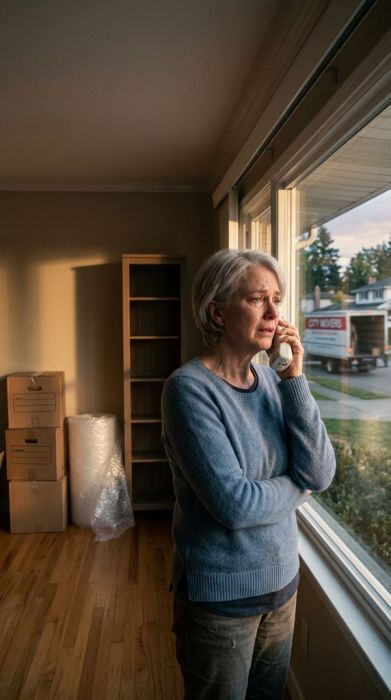
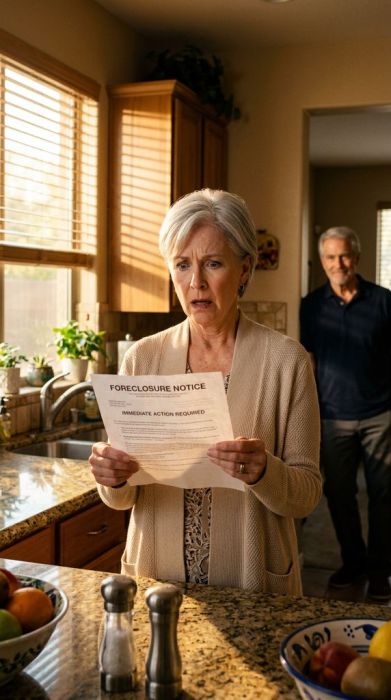
She found it tucked between the grocery circular and the electric bill, a crisp envelope stamped with the gold seal of the Hidden Canyon Estates Homeowners Association. Inside, the language was cold and legal. Notice of Assessment Lien and Intent to Foreclose. The amount owed was twelve thousand four hundred dollars. The reason given was forty-eight months of unpaid special assessments, plus fines for unauthorized exterior modifications, plus late fees, plus interest that had piled up like summer heat.
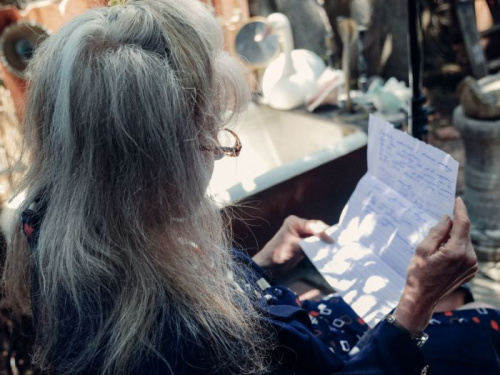
Miriam Halloran had lived at 1428 Saguaro Bend for eleven years. She had never missed a single payment in her life, not here, and not in the thirty years before that when she and Tom had paid off the little house in Flagstaff. When Tom died, every bill in her name was retired. She read the letter three times at the kitchen counter, then did exactly what it instructed. She called the HOA office.
"Miriam, my dear." Douglas Pemberton's voice was warm as honey. "I saw that flag on your account this morning and I told Carol, that cannot be right. That woman keeps this community running. Let me look into it personally."
He looked into it personally for two weeks.
In all that time, Miriam's automatic HOA payments kept leaving her bank account on the first of every month, exactly as they had for a decade. She had the statements to prove it. But when she called the management company in Scottsdale, a young woman named Priya told her, with obvious discomfort, that the community had switched to self-management three years earlier under Mr. Pemberton's leadership. The records, Priya said, no longer lived with them. They lived with the board.
"That's strange," Miriam said. "I was never notified."
There was a pause on the line. "You should probably ask Mr. Pemberton about that, ma'am."
The second letter arrived eleven days later. The fines had grown. A third charge had been added, this one for a violation of architectural standards, which Miriam found puzzling because she had not touched her home since Tom died. She had not replaced a shingle. She had not painted. She had not even changed the mailbox flag.
She went to Doug's house that evening the way her mother would have, carrying a polite question and a folder of bank statements. Doug met her on the porch with a glass of iced tea and a smile that never quite reached his eyes. "Computers, Miriam. They hate us." He patted her hand. "I've got a guy coming in from Phoenix next week to straighten the whole thing out. You won't hear another word about it."
She almost believed him. That was the part that haunted her later: how easy it was to believe him, because he was the man who remembered everyone's birthdays, who brought cookies to new widows, who fixed the leaky faucet at the clubhouse with his own tools. Douglas Pemberton was the kind of man the whole community trusted with its keys, its mail, and its checkbooks.
Her neighbor Rosa Delgado did not trust him. Rosa had grown up in Guadalajara and had a nose for men who smiled too much. "Did you get one of these?" Rosa asked one afternoon, holding out an envelope almost identical to Miriam's. Rosa's letter said she owed nine thousand dollars for the same phantom assessments. "They handed me this the day after I asked to see the budget."
The two women sat on Rosa's patio with the letters side by side. The wording was identical. The signatures were not. Miriam's letter was signed by Doug alone. Rosa's was signed by Doug and the treasurer, Arthur Vance. "Arthur's been dead two years," Rosa said quietly. "I sat in the third row at his funeral."
That was the moment Miriam stopped believing in computers.
With Rosa beside her, she asked to see the official records of the board. Doug refused, politely, citing confidentiality. He refused again when Miriam returned with her daughter Emily on speakerphone. Emily, a paralegal in Seattle, asked one very simple question. "Mr. Pemberton, can you provide the minutes from the assessment vote?"
The call went quiet. Then Doug said, "Of course. I'll have Carol email them right over."
The minutes never came.
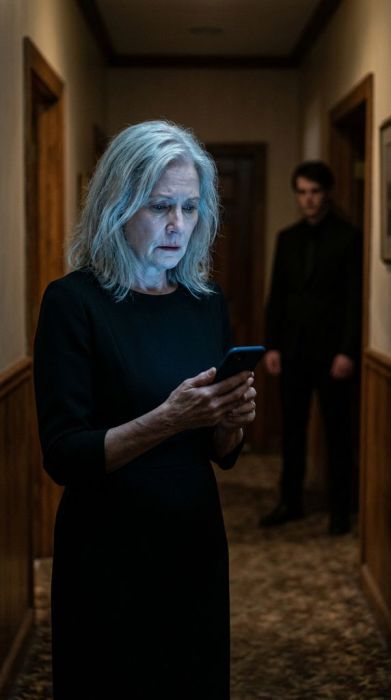
What came instead was a notice of a second lien, this one for seven thousand dollars, filed quietly in Pima County on a Tuesday morning. Miriam learned about it from a title search Emily ran from three states away. "Mom," Emily said, her voice thin, "this man is running a foreclosure play against you. You need a lawyer now."
Miriam hung up and stood in her silent living room, looking at the photographs of Tom and the grown children and the dog that had been gone six years. This house was not just property. It was where Tom had taught her to plant tomatoes. It was where Emily had learned to ride a bike. The idea that a man with a cookie plate could take it from her felt like something from a movie. Except the movie was happening in her own kitchen, one certified letter at a time.
She called the lawyer Emily recommended, a quiet woman named Dana Whitfield who handled predatory lending and real estate fraud in Tucson. Dana asked for every document Miriam had, every statement, every letter, every email. Then she asked a question nobody had asked yet. "Who is Desert Bloom Landscaping?"
The name was printed on the assessment invoices that had been mailed to residents who paid in paper. Miriam had one. She had always wondered why the community paid a landscaping company for work that, as far as she could tell, was performed by a crew of three teenagers with hedge trimmers. The invoices were enormous. Ten thousand dollars a month for a community with one greenbelt and a patch of desert grass.
The break came from an unexpected place. Marco Alvarez, the maintenance man who fixed the pool pumps and the gate motors, found Miriam crying in her car in the clubhouse parking lot. He sat with her until she could breathe, and then he told her something he had been carrying for months. "The invoices for Desert Bloom? They're paid every month. But I've never once seen them do work." He paused. "I've also seen Mr. Pemberton's truck parked at the address on their business license. It's a house off Oracle Road. It's his son's house."
It took Dana Whitfield three weeks to pull the threads. Desert Bloom Landscaping was a shell company registered to a young man named Tyler Pemberton, who had never filed a tax return and whose only listed address was a mailbox store. The monthly payments flowed from the HOA reserve account into Desert Bloom's account, and from there into a private account that paid out a mortgage on a second home in Sedona and a gambling account in Las Vegas. The signature of Arthur Vance, the dead treasurer, appeared on every single check. Arthur had been dead for two years, and his signature had not aged a day.
The final piece was the cruelest. Doug had not just been stealing from the community. He had been methodically weaponizing the HOA's own rules, filing liens against the homes of the residents most likely to pay quietly and least likely to fight: the widows. The elderly. The trusting. He had chosen Miriam because she was the most respected woman in the neighborhood, and he had brought her cookies for three years to make sure she would never question him.
The confrontation happened at the annual meeting, in the clubhouse where Doug had fixed the faucet. Two hundred residents packed the folding chairs. Doug stood at the front with his practiced smile, ready to run the meeting, but Dana Whitfield had already filed a criminal complaint with the Pima County Sheriff's Office, and she had brought a projector.
The minutes of the assessment vote were shown first, the ones that never existed. Then the Desert Bloom invoices, repeating like a heartbeat, month after month. Then the bank records with Arthur Vance's forged signature, and the ledger showing twelve thousand four hundred dollars in fabricated liens against 1428 Saguaro Bend. Doug tried to shout over the slide deck. He said it was all a misunderstanding. He said the lawyer was confused. Then the sheriff's deputy stepped through the side door, and Carol Sutter, the board secretary who had typed every one of those minutes, stood up and quietly admitted she had typed them all at Doug's direction, paid in cash, never asking why.
The room went silent as Doug Pemberton was led out in handcuffs. Nobody applauded. Nobody booed. They just sat there, two hundred ordinary people, realizing that the man who had brought cookies to their sick neighbors had spent four years stealing the roof over their heads through the fine print of their own community.
It took the community a year to recover what it could. The reserve fund had been drained of nearly four hundred thousand dollars. The mortgages Doug had taken out in the homeowners association's name were unwound, one by one, by lawyers who worked for months without full payment. The assessments went up, this time honestly, and every resident got a letter explaining exactly why.
Miriam was elected treasurer the following spring, and the first rule she pushed through was simple: two signatures on every check, a public financial statement every quarter, and a real audit every year by a firm nobody in the neighborhood was related to. She kept the shortbread cookie recipes in the drawer Tom had built, but she never took a plate of cookies from a board member again without checking the balance sheet first.
Sometimes the neighbors ask her if she misses the old days, when Doug was the friendly man with the cookies and none of them knew better. Miriam thinks about the question longer than she should. She tells them that trust is not the same as blindness, and that the people who do the most damage are rarely the ones who look like criminals. They are the ones who look like helpers. She locks her door at night, the same as ever, but now she also reads every document that comes with a seal on it, and she teaches the new widow on Saguaro Bend to do the same.
The lien notices stopped coming. The cookies, happily, did not stop coming either — Rosa Delgado started baking them, and they were better, and every time somebody asks for the recipe, Rosa tells them the same thing. Be kind to your neighbors. But read your mail.