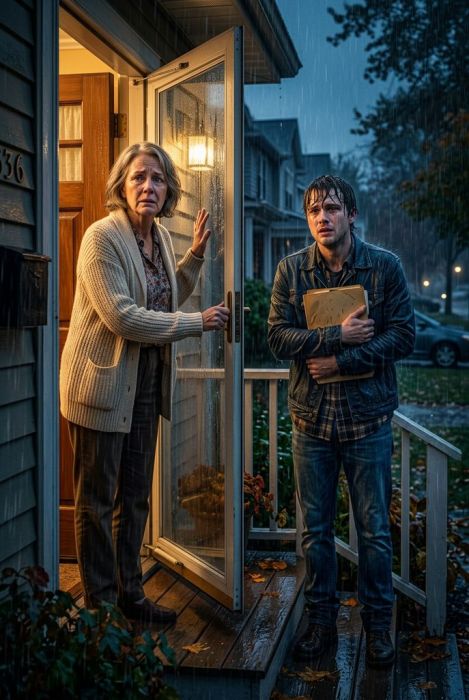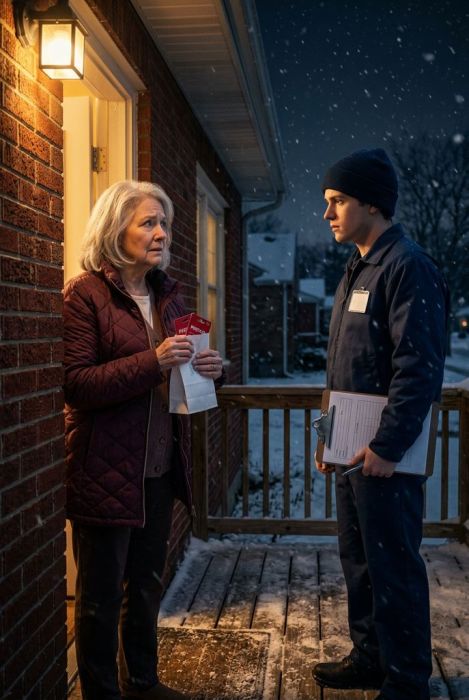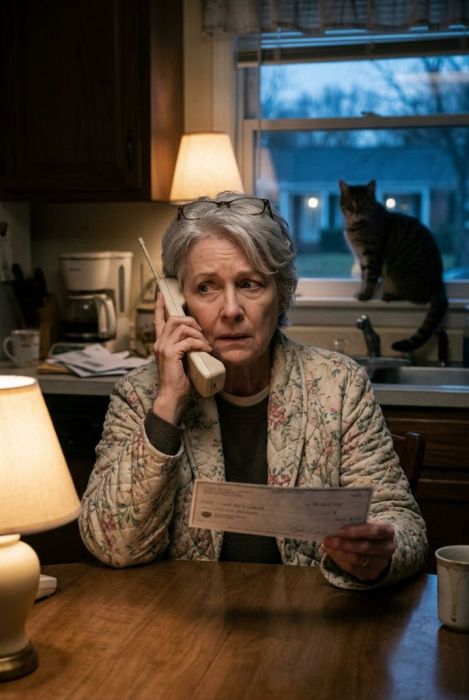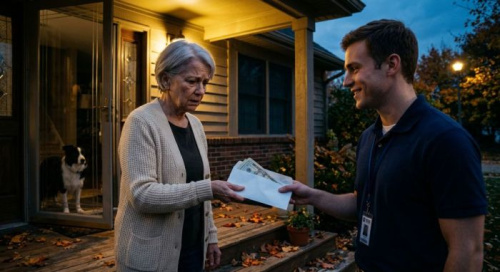
Diane Hartwell found the first warning as a slip of paper folded inside her tulips.
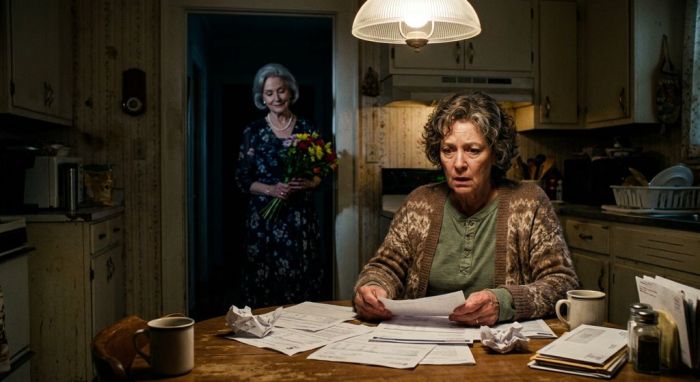
It was a warm Friday in Savannah, the kind of afternoon that made the azaleas blaze along Abercorn Street. Diane was seventy-one then, a retired school librarian whose entire world narrowed to her two daughters, her rose garden, and the woman she had called her best friend since they were nineteen years old in the same cramped freshman dorm. Margo Stevenson arrived that afternoon as she always did, her yellow Honda pulling into the driveway at exactly half past four, a bouquet of tulips pressed against her chest like a shield.
Margo had brought flowers every single Friday for forty years. That habit was so constant, so tender, that Diane never once questioned the shape of it. She did not question why Margo was always there when her husband passed. She did not question why Margo handled the paperwork for the small insurance policy, or why she gently steered Diane toward an investment club that only met in Margo's living room. She did not question any of it, because Margo was family. Family did not need to be questioned.
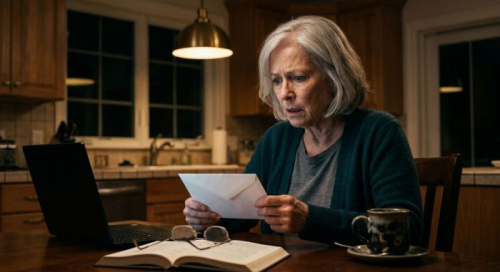
But that Friday, tucked between the stems of her tulips, Diane found a folded scrap of paper from the bank. It was a routine overdraft notice, the kind she had never seen in fifty years of careful bookkeeping. She turned it over, frowning, and read the words at the very bottom of the page.
Available balance: one hundred and twelve dollars.
Diane laughed. It was a nervous, hollow sound that echoed off her kitchen tiles. She set the notice aside and poured herself a glass of sweet tea, telling herself it was a mistake, a clerical error, the kind of thing that happened to other people. She had six figures in that account. She had watched it grow, month after patient month, ever since William's accident. A hundred dollars was impossible.
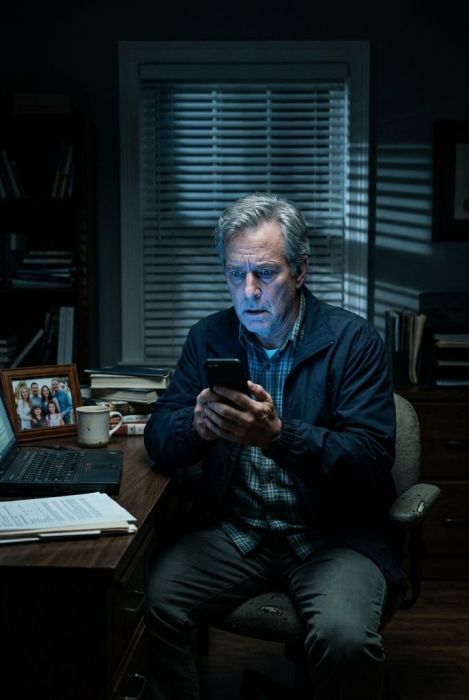
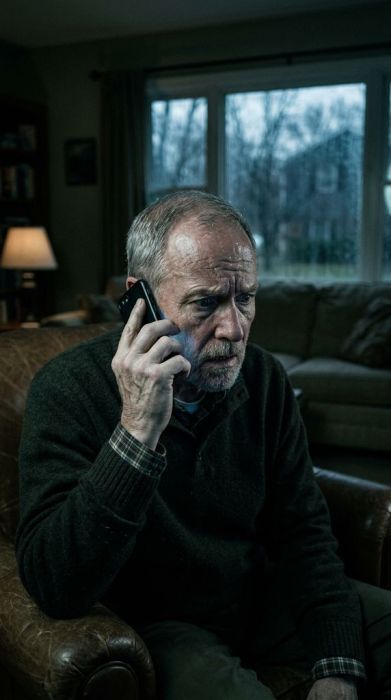
Yet the number scratched at her brain all evening. It followed her into her rose garden. It sat beside her through a quiet dinner of leftover meatloaf, and it was still there at two in the morning, a bright red gash in the dark, when she finally gave up on sleep and called the number on the back of her debit card.
The late-night representative was polite and unhurried. Diane could hear him typing, the quiet click of keys like the ticking of a clock. When he spoke again, his voice had changed. It had gone soft and careful, the way people's voices go when they have to tell you something terrible.
Ma'am, he said, could you confirm the last four digits of the account ending in 4021?
Diane's blood turned cold. I don't have an account ending in 4021, she said slowly. I have one ending in 8307.
The representative paused. Then he said he would transfer her to the fraud department.
Fraud. The word hung in the air, heavy and foreign. Diane had never once been defrauded in her life. She was careful. She was a librarian, for heaven's sake; she double-checked everything. But as she sat in the dark of her kitchen, listening to hold music that suddenly sounded like a warning, she understood that something had gone very, very wrong.
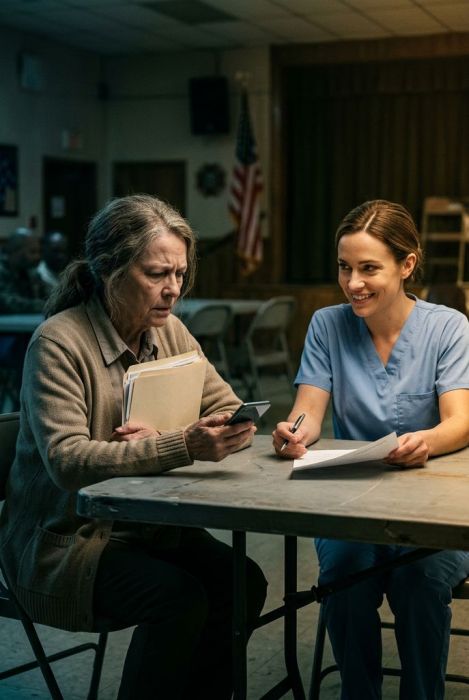
The next morning, a young woman named Detective Reyes met her at the downtown branch of SouthTrust Bank. She was perhaps thirty, with sharp eyes and a badge clipped low on her hip, and she asked Diane to walk her through her accounts. Diane unwound the whole map of her life for her: the checking account, the savings account, the certificate of deposit she had rolled over every year since 1992, the insurance payout, and the investment club that met at Margo's house.
Detective Reyes listened without interrupting. She wrote notes in a small leather pad. When Diane finally stopped talking, the detective set down her pen and looked at her with something approximating pity.
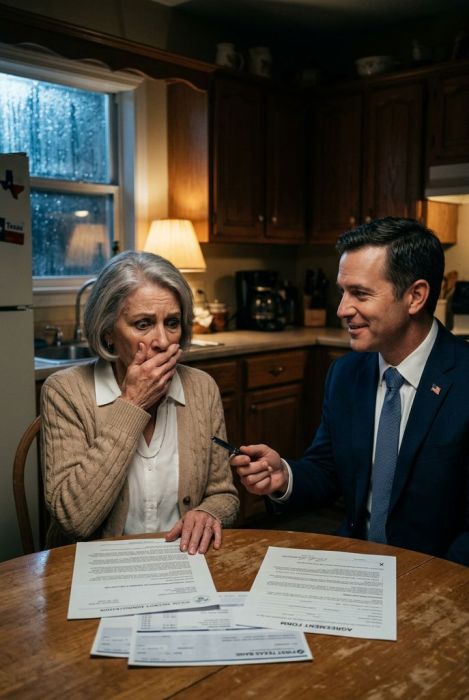
Let me show you something, Mrs. Hartwell. She slid a piece of paper across the desk. It was a power of attorney document, dated three years earlier, bearing a signature that looked, to Diane's untrained eye, exactly like her own. But she had never signed it. She had never seen it in her life.
The name at the bottom of the agent line was Margo Stevenson.
Diane's hand began to shake so badly she had to set the paper down. That's my best friend, she whispered. She's been my best friend for forty years. She brings me flowers every Friday. She wouldn't do this.
Detective Reyes said nothing. She only waited, letting the silence do its work, because she had seen this before. She had seen what it looked like when someone you trusted more than your own reflection decided to take everything.
The next two weeks were the most brutal of Diane's life. The banks unlocked accounts she had never opened, all bearing forged signatures and her social security number routed to a post office box that Margo kept. The investment club, it turned out, had been a shell. The quarterly statements were fabrications, carefully crafted on home software to look like real returns out of a real brokerage, complete with logos she recognized from actual firms. Every dollar Diane had put in had been quietly siphoned into accounts Margo controlled.
What stung worse than the money was the intimacy of it. Margo knew everything about Diane. She knew her coffee order, her church pew, the name of her first dog, the day she had buried William. She had used every single piece of that knowledge to craft the perfect forgery, to guess the answer to security questions, to move the money in amounts small enough that no one would sound an alarm. For three years, she had been emptying the soul of Diane's savings with the gentleness of someone folding laundry.
Diane lost the house on the day the foreclosure notice arrived. She lost her savings. She nearly lost her composure entirely when her youngest daughter, Claire, drove six hundred miles from Raleigh and found her mother sitting on the porch steps, staring at an empty driveway where the yellow Honda should have been. Claire dropped her bag and sat down beside her, and for a long time neither of them said a word. They just watched the azaleas sway in the warm wind, the same flowers Margo had brought a thousand times.
The arrest happened on a Thursday, at the branch of SouthTrust where Margo had opened the forged account. Diane watched from the parking lot as two officers led her best friend of forty years out in handcuffs, flanked by the small army of fans who had once seen her every Friday. Margo did not look at her. She did not look at anyone. She looked straight ahead, her face as smooth and unreadable as a closed door, and Diane waited, foolishly, for an explanation that never came.
At the trial, the truth finally surfaced. It was not a story about greed, though greed was certainly there, stacked in the embezzled totals that the prosecutor read aloud to a hushed courtroom. It was a story about a grudge forty years in the rotting.
Margo had a son once. A boy named Jeremy, who had drowned in a pond on a summer afternoon when Diane offered to watch him while Margo drove into town for groceries. The accident had been ruled exactly that, an accident, by every authority who examined it. But Margo had never believed the ruling. Alone in her grief, she had built an intricate story in which Diane was to blame, a story she polished like a jewel for four decades. She had not come to Diane's house out of love all those years. She had come to keep her enemy close, to map her life, to wait for the moment when she could finally make Diane feel the loss she had carried her whole life.
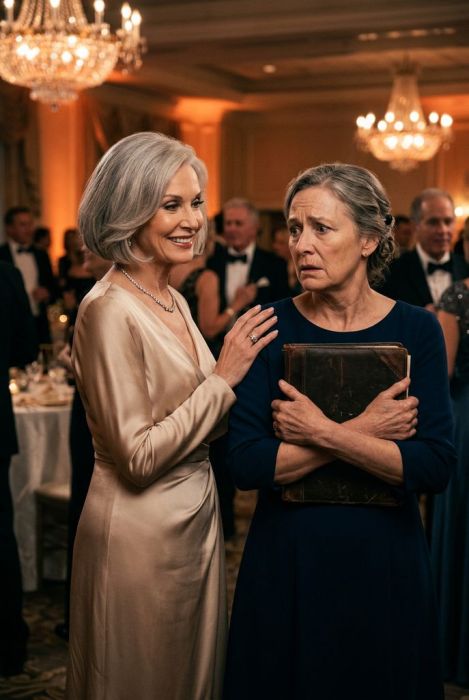
Diane's own lawyer had to steady her as she listened. She wept, not for the money, but for the image of a grieving mother who had chosen to spend her entire life nursing a wound instead of healing it. She thought of all the Friday afternoons, all the tulips, all the gentle questions about her grandchildren and her roses, and she understood that every single one of them had been a lie wearing the comforting clothes of friendship.
When the judge bound Margo over for sentencing, Diane watched her go and felt something strange and unwelcome: a flicker of pity, beneath the cold weight of her own ruin. It was harder than anger. Anger she could carry. Pity meant she still could not stop loving the woman the friendship had once been real, at least for her, and that was its own kind of grief.
It took Diane two years to put the pieces of her life back together. Her daughters moved her into a small apartment near Claire, a one-bedroom with a narrow balcony where she grew tomatoes in clay pots. She went back to work part-time at the middle school library, wearing the same cardigan she had worn the morning everything fell apart. People in Savannah talked, of course, in that particular way small cities talk, but Diane found she no longer cared. She had learned the most expensive lesson of her life, and she had paid for it in full, and there was a strange freedom in no longer owing anything to anyone's opinion.
The lesson that stayed with her was not about banks or documents or signatures, though she wished it were that simple. It was simpler, and far more painful, and it arrived one evening when she was pruning her tomatoes and realized she had not checked her accounts in months, not because she was careless, but because she finally trusted her own vigilance again. She had opened a credit-monitoring service Claire insisted on. She had turned on every alert her bank offered. She had learned to love the boring little notifications that once annoyed her, because each one was a tiny guard standing watch at the gate.
We like to believe that the people closest to us can never be our undoing. We hand them our keys, our passwords, our hearts, and we call it trust. But trust is not the same as surrender. It is a garden that must be tended, and even the kindest face in the world can be wearing a mask that has been polished for decades.
Diane still keeps flowers on her windowsill. But now she knows their real language. Some are given in love, and some are given to bury you. It takes a careful eye, a watchful heart, and a little bit of courage to tell the difference before it is too late. She tells this story to anyone who will listen, not to frighten them, but to remind them that the enemy does not always announce itself. Sometimes it arrives on a Friday afternoon, holding a bouquet of flowers, wearing the face of the person you trust most in the world.