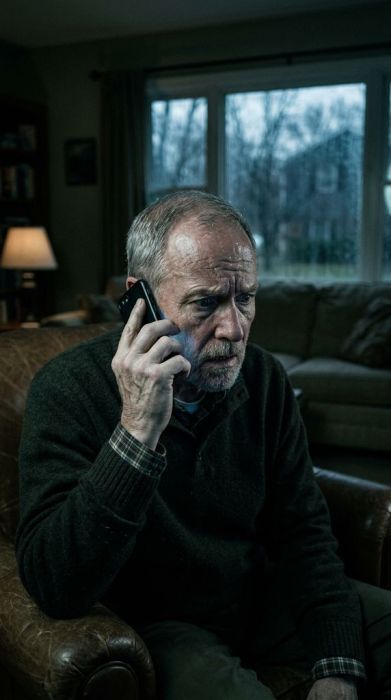
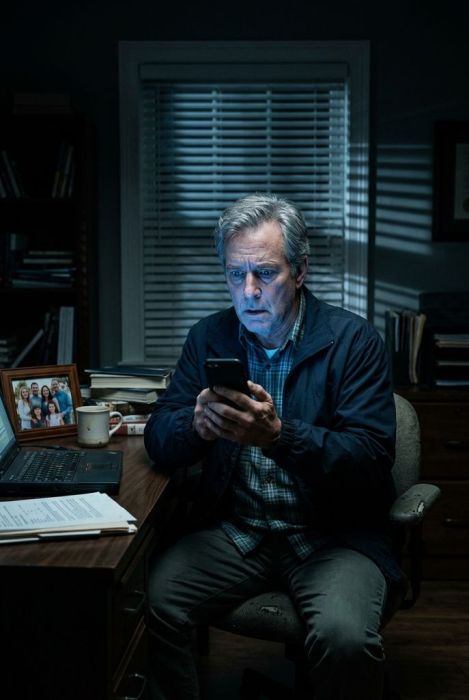
The message arrived at 11:47 on a Tuesday night, and Roy Hargrove almost dropped his phone on the flagstone floor of his mudroom. It came from the same number that had sent him good-morning texts for three weeks, the one he had saved in his contacts under a little red heart. "I didn't want to do this," the text read. "Four thousand five hundred dollars in Bitcoin, wallet address attached, by six a.m. Or this video goes to your daughter Sarah, your church, and every student who ever sat in your classroom." Under the words sat a preview thumbnail, grainy and familiar. It was his own face, lit by the blue glow of his office computer on the night he finally agreed to video call the woman he believed was the love of his life. Roy set the phone down, walked to the kitchen sink, and vomited.
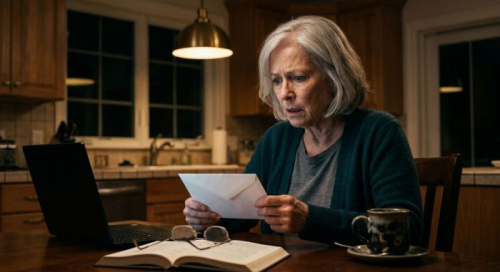
Three weeks earlier, Roy had been a retired civics teacher with a full calendar and an empty house. He was sixty-three. His wife Diane had been gone three years, taken by pancreatic cancer in ninety-one days, and the ranch house on Bexley Court in Charlotte had grown bigger with every season without her. His daughter Sarah lived in Chicago with her husband and two kids. His son Ben lived in Denver. Thursday nights belonged to phone calls, and on one of those calls Sarah said what she had been saying for a year: "Dad, you taught teenagers for thirty-four years. You're not shy. Try SilverSparks. It's the one for people our age." Roy laughed, then signed up out of loneliness and boredom, mostly boredom.
"Rita Calvert" liked his photograph within the hour, an old yard shot with Cooper, the golden retriever who had died two years earlier but still lived in Roy's favorite frames. Her profile said she was fifty-eight, a retired librarian from Winston-Salem, a widow, a fan of jazz, porch swings, and the Blue Ridge Parkway. Her first message came at 9:14 that night: "Your dog's face. That's a happy dog. That means you're a good man." Roy, who had never once in his life believed in love at first message, felt his chest do something it hadn't done in three years.
What followed was the most alive Roy had felt since Diane died. He and Rita traded messages constantly, good mornings at 6:40, dinner photographs, book recommendations that matched his taste suspiciously well. She sent voice notes, and her voice was soft and warm, a gentle Carolina drawl. She told him she had been married thirty-one years to a man named George, a contractor who dropped dead of a stroke in a Home Depot parking lot while loading mulch. Roy told her things he had never told anybody, not even Sarah: about Diane's last Christmas, about how he had held her hand and lied to her about how well the treatment was going, about the loneliness that had settled into his bones like weather.
He asked to video call three times. Each time she declined with the same gentle explanation. "My husband installed cameras in our house without telling me," she said. "I get sick to my stomach in front of a lens. Be patient with me, Roy." Patient he could be. Then, one night, after Roy sent a voice note about how quiet the kitchen was, she did something new. She called. Voice only. "Pretend I'm in the chair beside you," she said. "Close your eyes and tell me where I am." Roy closed his eyes, sat down in his recliner, and talked for an hour.
He told her about Sarah's wedding, about Ben's fishing boat, about the Sunday-morning argument he still had with himself over whether to visit Diane's grave every week or let her rest. He was not a man who cried easily anymore, but that night he cried a little, and her voice on the other end told him he was safe, he was loved, he was the kind of man who deserved a second chapter. When he fell asleep at one in the morning, he was already planning the drive to Winston-Salem.
The next night, she said she had thought about him all day. "Turn your camera on," she typed. "Just for me. Mine's broken, this old phone, but I need to see your face while we talk." Roy hesitated, then carried his laptop to the desk chair where his students had once come for conferences, angled the camera, loosened his collar, and let himself be seen. She typed while he talked: "You're beautiful." "I love your hands." "Don't ever be lonely again." He believed every word. He talked for forty-five minutes, and when he asked her finally, for the hundredth time, to show her face, she sent a single heart and said, "Soon, Roy. I promise. Soon." It was two in the morning when he went to bed, and he remembers thinking that Diane would have liked Rita.
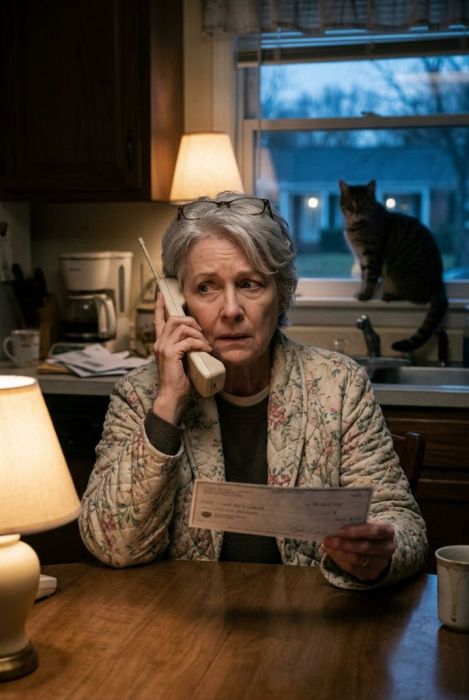
The next morning there was no good-morning text. By noon, nothing. By evening, a single line: "Talk tonight?" And then silence. Roy assumed she was busy, or sick, or having second thoughts about her sixty-three-year-old widower. Then Tuesday came, 11:47 PM, and the video preview, and the demand. The still image was cruel in the way only the truly desperate can be cruel: Roy's face, sharp and unmistakable, pasted onto a stranger's body in a cheap motel robe, the seam of the edit visible if you looked close. "We can do better," the message promised. "Your church's email is three clicks away. Ask yourself what people will believe."
Roy's first instinct was shame, and shame wanted to vanish. His second instinct was to pay. At 2:10 in the morning he drove to the 7-Eleven past Arrowood Road, put his debit card in, and bought four thousand five hundred dollars in Bitcoin from a kiosk that literally asked him, on its own screen: "WARNING: If a stranger is telling you to buy this, it is a scam." He clicked through the warning. A twenty-one-year-old clerk named Tyler Owens watched the old man in the navy windbreaker feed hundred-dollar bills into the machine at two a.m. and, because he was young and had seen a video about this exact thing, he wrote the license plate on his hand.
The money vanished in minutes. And the messages did not stop. "That was the deposit," they wrote Thursday. "Now we need twelve thousand by Friday, or your daughter's life becomes our weekend project." A photograph came with the text: a soccer field, an elementary school sign soft in the background, and a caption with his granddaughter's full name and the name of her school. Roy had told "Rita" all of it during the hour he talked with his eyes closed, her name, her school, her sport, her birthday. He had trusted a voice in the dark with everything a blackmailer could ever want.
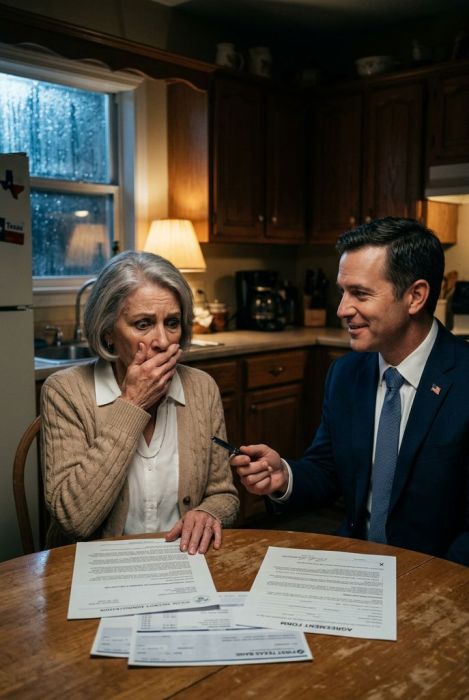
On Friday he went to the bank, withdrew twelve thousand dollars from his brokerage account, and told the teller it was for foundation work when she asked if he was sure. He bought more Bitcoin from a different kiosk across the county line, because the first clerk had looked at him strangely. The withdrawals were the only footprints he had left, and he had left them everywhere.
That night Sarah called, and she was not fooled. Thirty-four years in a classroom had made Roy a terrible liar at close range. Something in his voice was wrong, too bright, too fast, too carefully cheerful, and she heard it the way only a daughter can. She booked a flight from Chicago and showed up Saturday morning with a suitcase and a sharp look that found the kiosk receipts in his jacket pocket by noon. By Saturday evening she had the whole story, the kind of story she read about in her news feed and never once imagined inside her own family. "We are going to the police," she said. Roy said no. "Dad," she said, "they don't stop. They never stop. You paid. Now they know you'll pay, and the price only goes up."
Detective Maribel Soto of the Charlotte-Mecklenburg financial crimes unit had seen forty cases like this in the past year. She took the texts, the receipts, the voice notes, and the kiosk store numbers, and she filed a report with the FBI's Internet Crime Complaint Center the same afternoon. The next day a clerk named Tyler Owens called the nonemergency line with a license plate he had written on his hand at two in the morning, and the kiosk's own camera did the rest. Within nine days the trail led where older victims almost never expect it to lead: not overseas, not to a call center in another country, but to an exchange account verified with a real driver's license. The account belonged to Gerald Hargrove of Greensboro, North Carolina.
Soto called Roy back to the station with a file that made no sense to her and every sense to him. The Bitcoin, she said, had been moved in a pattern an exchange flagged and tied to that verified account. And sitting in the folder was a still from the 7-Eleven's camera: a man in a navy windbreaker and a ball cap, buying Bitcoin at 2:17 in the morning with the patient posture of someone doing a familiar chore. Roy's hands began to shake before the detective finished her sentence. "That's my jacket," he said. "I gave that to Gerald for his birthday three years ago. That's my brother." He said the name twice, as if saying it would change the picture. "Gerald doesn't even own a computer. Gerald can't set a thermostat." But the detective had pulled another image, and in it the man in the navy windbreaker was holding the kiosk receipt up to the lens the way people do without thinking. "It's him," Roy said. "Jesus. It's him."
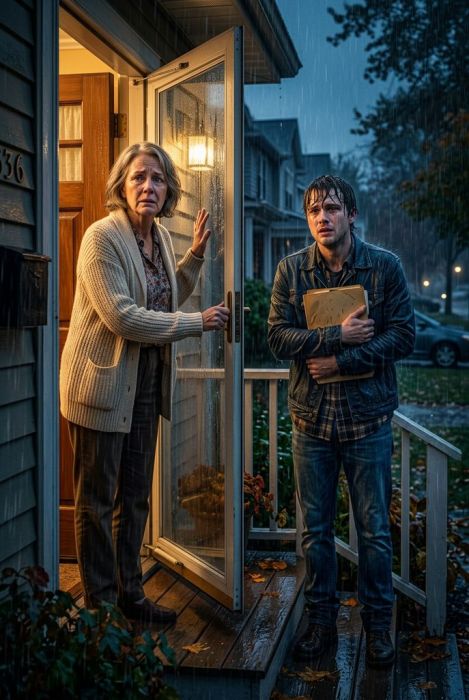
They drove to Greensboro on a gray Thursday, Roy, Sarah, and Detective Soto in an unmarked car. Gerald's house was a small brick rancher on a quiet street, with a foreclosure notice taped inside the front window and a lawn the neighbors clearly mowed for him. He opened the door in the same navy windbreaker and stood there with his face already wet. "Roy," he said. "Roy, I'm sorry." And then he told them everything, sitting at his kitchen table under a pile of racing forms, and the truth was worse than anybody's guess.
Gerald Hargrove was sixty-eight, a retired claims adjuster, and he had a gambling problem he had been hiding for fifteen years. Not the casino kind, the quiet kind: a private card room behind a laundromat in Burlington, offshore betting apps he learned about from a guy at the bar, parlays sold to him like lottery tickets. He owed a bookie named Sal thirty-eight thousand dollars, and the foreclosure notice on his window had arrived the week before Thanksgiving. At that same Thanksgiving, Roy had sat across from him, glassy-eyed with hope, and told him about the new dating app where actual women talked to him. Gerald watched his little brother light up like a Christmas tree, and in the darkest hour of a desperate life, he had a thought that shames him still: I know that man better than anyone on earth. I could be anyone to him.
He built "Rita Calvert" in a single weekend. He used a photograph of a real widow he found on a grief forum, chosen because she was beautiful and she never posted new pictures. He used a free online voice generator he had seen advertised between car insurance commercials, and it gave him a soft Carolina drawl that turned out to be the most persuasive tool he had ever owned. He invented George, the husband who died in the Home Depot parking lot, out of the wreckage of his own failed marriage. And because he was Roy's brother, because they had shared a bedroom for seventeen years, he knew everything he needed: Diane's name for the security questions, Sarah's married name, the church, the school, the granddaughter's soccer schedule. Roy told "Rita" the rest himself, at one in the morning with his eyes closed, the way he used to tell Gerald everything before the gambling and the lies got between them.
"I thought I'd pay Sal and stop," Gerald said, his voice cracking. "Then you paid, and I saw the number, and I couldn't stop. I kept telling myself I'd pay you back. I drove a hundred miles to that kiosk so nobody would see me. I wore the jacket you gave me, because it was the only thing that still felt like us." He looked at Roy across the table, and Roy saw his own face in his brother's, twenty years older and twenty years sadder. "You'd have given me anything if I had asked," Gerald whispered. "That's what I couldn't face. Asking."
Gerald was arrested that afternoon. He pleaded guilty to wire fraud in federal court, and the judge gave him twenty-four months, with restitution Roy tells people he will never actually see. Roy sat in the front row of the courtroom and listened to the prosecutor describe the blackmail campaign, and he felt something stranger than anger, the weight of every Christmas morning they had shared standing in the same room as the confession. Sarah held his hand. His son Ben flew in from Denver and said almost nothing, which Roy understood, because there was nothing to say.
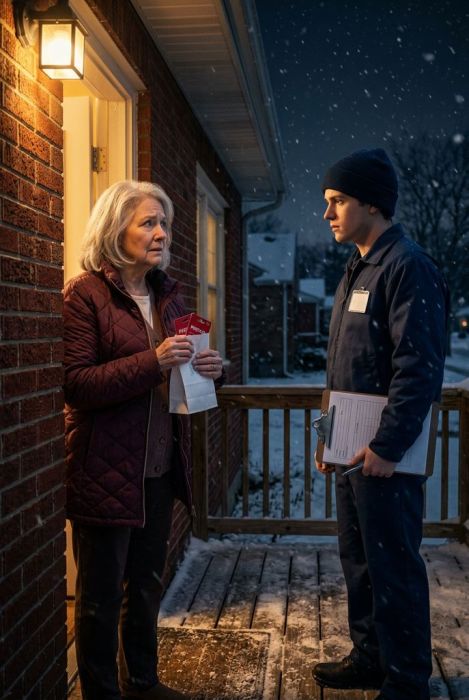
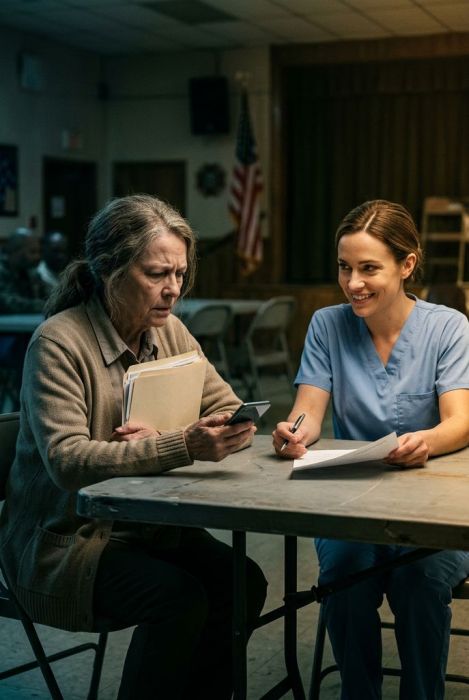
What Roy did next is the part that changed him. A detective from the fraud unit asked if he would speak to a group of seniors downtown, and Roy, who had spent his life in front of classrooms, said yes because he didn't know what else to do with the shame. He stood in the community room of a senior center and told sixty strangers everything: the woman who never showed her face, the voice notes in the dark, the kiosk that warned him, the brother whose love and whose ruin wore the same face. He kept it simple, the way he kept things simple for high schoolers. No legitimate business takes gift cards or cryptocurrency, not once, not ever. A romantic interest who can never show you their face is not a romantic interest. Blackmailers never stop, so the only wrong payment is the first one; report to the FBI at ic3.gov and to your local police, and let their power evaporate in the light. And the hardest lesson of all: desperation wears a familiar face more often than a stranger's. Trust is not the same as proof, and for a man who spent his whole life trusting, that was the most expensive education he ever received.
He still lives in Charlotte. He adopted a rescue dog, a mutt he named Cooper, after the old one. Sarah calls every Thursday, and Roy answers with the truth these days, how he's feeling, what he's afraid of, whether he's lonely. And sometimes, at night, when his phone buzzes with a number he doesn't know, he lets it ring, and he looks at the name he once saved under a little red heart, and he lets the memory sit where it belongs, in the past. The woman who broke her camera was never real. The man who pointed the lens at Roy Hargrove was the last person on earth Roy expected. And that, he tells anyone who will listen, is the first thing trust should teach you: it is not the same thing as proof, and it never has been.