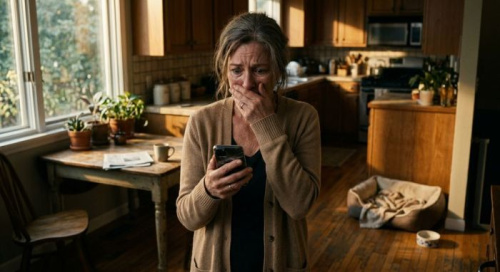
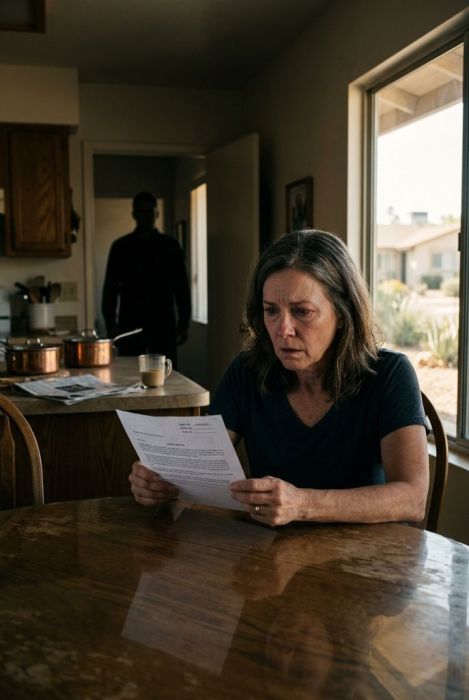
Diane Patterson found the papers in the bottom of her husband's briefcase on a Tuesday morning in late October.
She was not snooping. She was looking for the insurance card because she had an appointment with her rheumatologist at eleven. The briefcase had been sitting on the kitchen counter since Mark left for his morning meeting, and she knew he kept backup copies of their documents in the side pocket. She unzipped the main compartment instead. She still could not explain why.
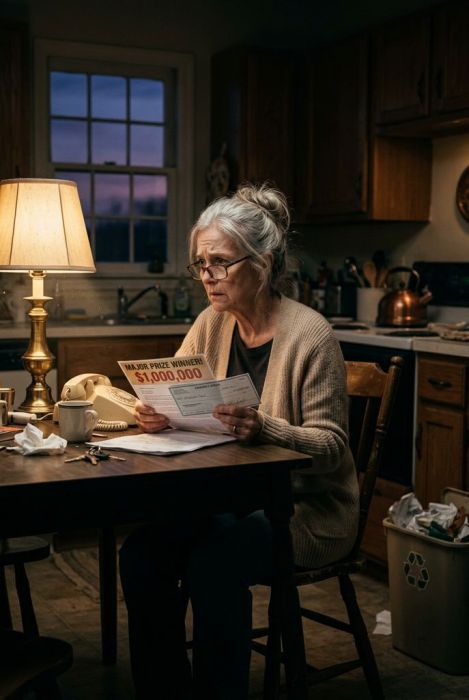
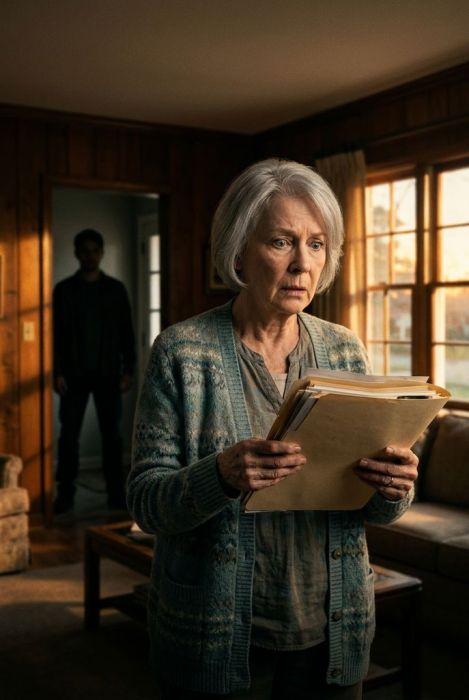
The first thing she saw was a manila folder with her name on it. Not "Diane" or "Diane and Mark." Just "DIANE PATTERSON" in bold black marker. She pulled it out, her arthritic fingers fumbling with the metal clasp. Inside were five documents, each one crisp and official-looking. Each one bearing her signature.
The problem was simple. She had never signed any of them.
The first document was a limited power of attorney, dated six months earlier. It granted Mark full authority over her personal bank accounts, her individual retirement account, and her small investment portfolio. The signature at the bottom looked exactly like hers — the same slant, the same loop on the capital D, the same way she dotted her i's with a tiny circle. It was perfect. It was also a forgery.
Diane sat down at the kitchen table, the papers spread before her like accusations. The second document was a transfer of deed on a small property she had inherited from her mother — a cottage in Sedona that had been in her family for three generations. The property was valued at nearly four hundred thousand dollars. According to this document, she had sold it to a holding company six weeks ago. She had no memory of this. She had never signed this. And she had certainly never received a dime of that money.
Her hands began to shake.
She thought about the headaches she had been having for the past year — the migraines that came and went without warning, the dizzy spells that her doctor had attributed to stress and perimenopause. She thought about how Mark had started accompanying her to every medical appointment, holding her hand in the waiting room, speaking for her when the doctor asked questions. She thought about how he had gently suggested she see a neurologist, how he had mentioned memory loss with such tender concern in his voice.
"Sometimes I'll tell you something, and you'll forget it ten minutes later," he had said last month, stroking her hair. "It scares me, Diane. I think we need to make sure your affairs are in order while you're still sharp."
She had cried that night. She had cried because she believed him. She believed she was losing her mind.
That was the part that destroyed her most of all, in the days that followed — not the theft of her money, not the forged signatures, not the betrayal of a thirty-two-year marriage. It was the realization that she had spent two years doubting herself while he had been methodically, patiently, systematically taking everything she had.
She called Dr. Sarah Chen that afternoon. Sarah had been her best friend since their first year teaching at Camelback High School in 1992. They had graded papers together, mourned their parents together, watched each other's children grow up. Sarah was the only person Diane trusted without question.
"Something is wrong," Diane said into the phone, her voice barely above a whisper. "Something is very, very wrong."
Sarah arrived within the hour. She found Diane still sitting at the kitchen table, the forged documents spread out like a crime scene. The November sun had shifted across the floor, casting long shadows that made the kitchen feel smaller than it was.
"Have you confronted him?" Sarah asked, her voice steady.
"Not yet. I needed someone to tell me I'm not crazy first."
Sarah examined each document carefully. She had seen Diane's signature thousands of times — on birthday cards, on permission slips, on the retirement card they had all signed for Principal Morrison in 2019. She knew Diane's handwriting as well as she knew her own.
"These are good forgeries," Sarah said finally. "But they're forgeries. The capital D has a slightly different angle, and look here — the loop is tighter. A handwriting expert would catch this in seconds."
Diane felt something loosen in her chest. She was not losing her mind. She was not forgetting things. She was being lied to.
The next forty-eight hours were a blur of phone calls and bank visits and quiet, desperate research. Diane contacted a lawyer recommended by Sarah — a woman named Rebecca Torres who specialized in elder financial abuse cases. Rebecca was in her early forties, sharp-eyed and direct, with a no-nonsense manner that Diane found deeply reassuring.
"He's been planning this for a long time," Rebecca said after reviewing the documents. "The power of attorney, the property transfer, the changes to your IRA beneficiary designations — these didn't happen overnight. This is a pattern of systematic financial exploitation."
"But he's my husband," Diane said. "We've been married for thirty-two years."
"Mrs. Patterson, the people who commit this kind of fraud are almost always trusted family members. Spouses are statistically the most common perpetrators of financial abuse against aging partners. It's a hard truth, but it's the truth."
Rebecca recommended a private investigator named Marcus Webb, a former Phoenix police detective who had spent fifteen years in the fraud division. Marcus was a large man with a quiet voice and soft eyes, the kind of man who looked like he would be a better therapist than a cop. But when he started talking, Diane understood why Sarah had recommended him.
"I'm going to need access to everything," Marcus said. "Bank accounts, credit cards, property records, business filings. I need to trace the money. And I need you to act completely normal around your husband. Don't confront him. Don't let him know you found anything."
"Isn't that dangerous?"
"It's the only way to build a case that will hold up in court."
For two weeks, Diane lived a double life. She went to dinner with Mark. She watched television with him. She let him hold her hand at the grocery store and kiss her forehead goodnight. She smiled when he mentioned their upcoming thirty-second anniversary dinner, which he had planned as a surprise at a French restaurant in Scottsdale.
All the while, Marcus was building a case.
What he found was worse than even Rebecca had anticipated. The property in Sedona had been sold for three hundred and seventy-five thousand dollars. The money had been deposited into an account Diane had never seen, at a bank she had never used. From there, it had been transferred in increments to a brokerage account in Mark's name only. The IRA beneficiary change had been made fourteen months earlier, removing Diane's sister Margaret and replacing her with Mark's brother. The limited power of attorney had been used to liquidate a certificate of deposit worth eighty-two thousand dollars.
The total amount Mark had taken or redirected was just over seven hundred and thirty thousand dollars.
But the financial evidence was only part of it. Marcus had also obtained security footage from the bank where the Sedona property funds had been deposited. The video showed a man who was clearly Mark Patterson presenting a forged ID and signing Diane's name on the deposit slip. The smile on his face, according to Marcus, was "almost casual."
"He's not a desperate man," Marcus told Diane during their final meeting. "He's a man who believed he would never get caught."
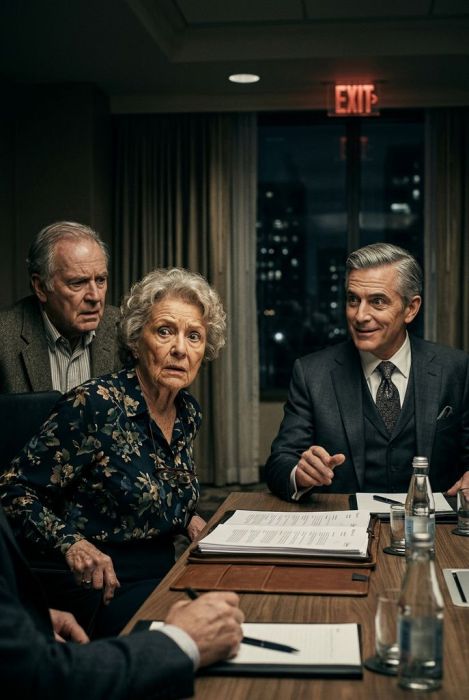
The anniversary dinner was on a Saturday evening in November. Diane wore a navy blue dress that Mark had always liked. She put on her mother's pearls. She let Mark help her into the passenger seat of his Mercedes and drive her to the restaurant in Scottsdale. She smiled when the waiter brought champagne. She listened as Mark talked about a new development project he was working on, a luxury condominium complex that he said would be "the biggest deal of my career."
Their daughter Emily flew in from San Diego for the occasion. Their son Thomas came down from Flagstaff. Mark had insisted on making it a family affair.
"Thirty-two years," Mark said, raising his glass. "To the most incredible woman I know."
Diane raised her glass. She looked at her children, at their trusting faces. She thought about the forged signatures, the emptied accounts, the stolen cottage, the two years of gaslighting and manipulation. She thought about how close she had come to believing she was losing her mind.
"Thank you," she said quietly. "For thirty-two years."
She set down her glass and reached into her handbag. She pulled out a thick manila envelope and placed it on the table in front of her.
"Before we eat, I have something I need to share with all of you."
Mark's smile flickered. Emily looked curious. Thomas set down his fork.
Diane opened the envelope and pulled out the copies Marcus had prepared. She handed one set to each of her children. She watched Mark's face as she did it — the slow drain of color, the tightening of his jaw, the thing that flickered behind his eyes that was not quite fear but something close to it.
"I found these documents in your briefcase three weeks ago," Diane said, her voice steady. "They're forged. All of them. The handwriting expert has already verified this. The bank security footage has already identified you at the teller window. The private investigator has already traced every dollar you've stolen."
Emily's face went white. Thomas stared at the documents in his hands, his expression shifting from confusion to horror.
"Mom, what is this?" Thomas whispered.
"This is your father's plan. He's been systematically bankrupting me for two years. He forged my signature. He sold my mother's cottage. He changed my beneficiaries. He emptied my CD. And for the last two years, he's been telling me I was losing my memory so that when I finally found out, no one would believe me."
Mark set down his champagne glass. His hand was trembling, but his voice was remarkably calm.
"This is absurd," he said. "Diane, you know you've been having memory issues. The doctors said — "
"The doctors said nothing wrong with my memory, Mark. I have copies of every medical report. Your attempts to convince my doctors that I was showing signs of cognitive decline are documented. They flagged your behavior to their ethics committee."
The silence at the table was absolute. Diane could hear the clinking of glasses from the other tables, the distant laughter of strangers who had no idea that a life was being dismantled right in front of them.
"Dad?" Emily's voice cracked. "Dad, tell me this isn't true."
Mark looked at his daughter. For a moment, just a moment, something like regret flickered across his face. But then it was gone, replaced by a coldness Diane had never seen before, or perhaps had never allowed herself to see.
"You don't understand," he said. "The real estate market is collapsing. I've been underwater for three years. I was going to lose everything. I needed — "
"You needed seven hundred thousand dollars," Diane interrupted. "You needed it so badly that you were willing to destroy me. You were willing to make me believe I was going insane. You were willing to steal my inheritance from my mother."
Thomas pushed back from the table. His chair scraped against the floor, loud in the sudden quiet. He looked at his father with an expression that Diane would never forget — the look of a son realizing that the man who had taught him how to throw a baseball and tie a tie was capable of something truly monstrous.
"I took you fishing," Thomas said, his voice raw. "I took you fishing for thirty years, and you — you were stealing from mom the whole time?"
"It wasn't stealing, it was — "
"The police will decide what it was," Diane said. She stood up. "I've already filed a report. The DA's office will be serving you with papers on Monday morning. I've also filed for divorce. And I've retained a forensic accountant to examine every transaction you've made in the last five years, because I suspect this is not the first time you've done something like this."
Mark stared at her. For the first time in thirty-two years, Diane saw something in his eyes that she had never seen before. It was not remorse. It was not shame. It was fear.
"You can't do this," he said. "We're married. We share everything."
"You shared nothing, Mark. You took everything. And now you're going to lose everything."
The restaurant manager approached the table, sensing the tension. Diane apologized to him with practiced composure, explaining that there had been a family emergency. She gathered her purse, her envelope, her coat. She walked out of the restaurant with her head held high, her children following behind her.
In the parking lot, under the harsh glow of the streetlights, Emily broke down. Diane held her daughter and felt the tears finally come — not for the money, not for the betrayal, but for the lost years, the stolen trust, the cruel and patient erosion of a woman's confidence in her own mind.
"I didn't see it," Diane whispered. "I lived with him for thirty-two years, and I didn't see any of it."
"Neither did we, Mom," Thomas said. "Neither did we."
The divorce proceedings lasted eight months. In the end, Diane recovered most of her assets. The Sedona cottage was returned to her after a lengthy legal battle. The IRA was reinstated. Mark was charged with forgery, identity theft, and financial exploitation of a vulnerable adult. He avoided prison by agreeing to restitution and surrendering his real estate license, but the public record of his conviction followed him into retirement.
The marriage ended not with a bang but with a stack of legal documents, each one signed honestly by shaking hands.
Diane moved back into the Sedona cottage in the spring of the following year. She planted a garden. She joined a book club. She started painting again, something she had not done since her twenties. The mountains outside her window changed color with the seasons, and she found herself watching them with a quiet, cautious peace.
But she never stopped thinking about the lesson. About how easy it had been for someone who loved her to make her doubt her own reality. About how financial abuse did not leave bruises, but it broke bones just the same. About how the most dangerous predator was not a stranger in a dark alley, but the person who sat across from you at the dinner table, smiling, holding your hand, while quietly erasing your life one forged document at a time.
She told this story to anyone who would listen — at church, at her book club, at community center workshops. She learned to speak about it without crying, without shaking, without the shame that had once weighed so heavily on her shoulders.
"Check your accounts," she would tell the women who gathered to listen, their faces wary and uncertain. "Check your husband's briefcase. Check your mother's mail. Check your own signature against the one on the documents you never signed. And if someone tells you that you are losing your mind, ask yourself one question before you believe them — who benefits when you stop trusting yourself?"
The Sedona sunsets painted her cottage in shades of orange and gold. In the quiet of the evening, Diane would sit on her porch and watch the light change over the red rocks. She was still learning to trust herself again. It was slow work. But it was honest work.
And she was no longer afraid of what she might find in the dark.