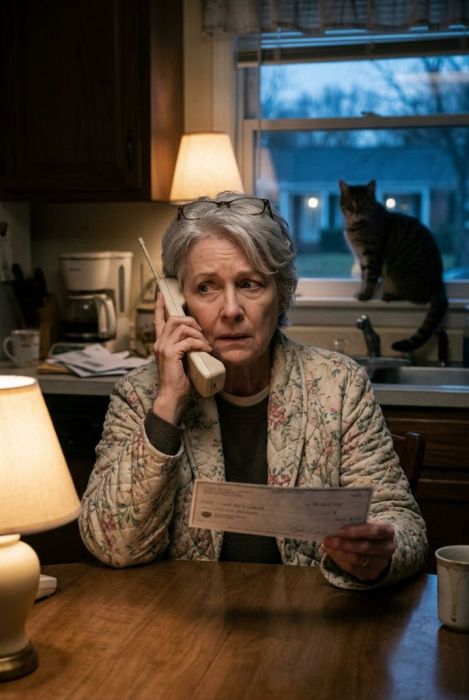
Dorothy Vance, sixty-seven, had spent thirty-one years teaching fourth grade at Fremont Elementary in Tacoma, Washington, and she had never once broken a law. Not a single traffic ticket. Not one overdue library book. She was proud of that fact the way other people were proud of gardens or grandchildren. Rules were the scaffolding of a decent life, and Dorothy believed in scaffolding with all her heart.
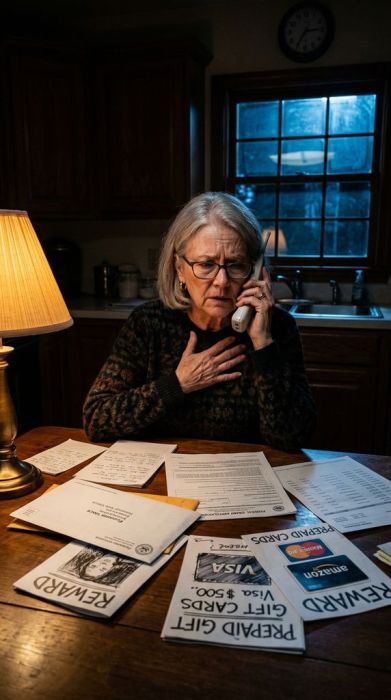
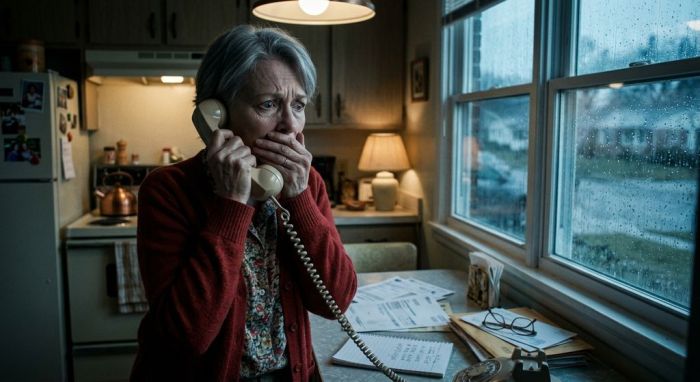
So when the telephone rang that rainy Tuesday morning and the man on the other end identified himself as Special Agent Marcus Webb of the Federal Bureau of Investigation, her first emotion was not fear. It was confusion. The kettle was boiling. Rain streaked down the kitchen window. Her hands were full of Earl Grey tea bags, and nothing about her orderly world had prepared her for the voice that was about to dismantle it.
"I'm calling because your Social Security number has been flagged in connection with a money-laundering operation out of Nevada," the man said. His tone was flat, official, the way she imagined a badge might sound if it could speak. "There's a warrant out for your arrest. It can be executed as early as this afternoon unless we get this resolved quickly."
Dorothy set down the tea. "I think there's been a mistake."
"That's what they all say, ma'am." He sighed, and she heard the faint clack of a keyboard in the background. "But I have your file right here in front of me. You've lived at 1890 Sycamore Lane for twenty-two years. You taught at Fremont Elementary, retired back in 2018. Widowed in 2020. Your late husband was Raymond, a high school history teacher."
Her breath caught in her throat. He knew all of it. Every detail. How could a complete stranger on the telephone know the name of her dead husband and the exact year she retired? That single impossible question was the hinge upon which everything else would turn, and she did not yet know it.
This is a story about the most dangerous instrument in any criminal's toolbox. It is not a gun or a knife. It is fear, wrapped in a voice of authority, armed with private details that make a person feel exposed and hunted. It is about how quickly a rational, law-abiding woman can be marched to the brink of ruin by nothing more than a phone call — and about the heartbreaking truth behind the voice that nearly destroyed her.
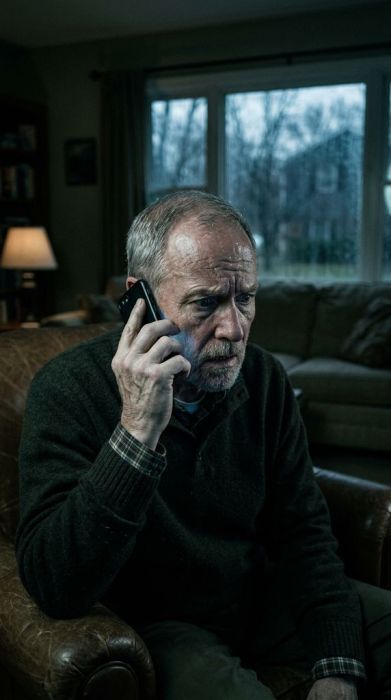
Over the next several minutes, Marcus Webb's calm deepened into something more urgent. He transferred her to a woman who identified herself as Agent Denise Ramirez of the FBI's fraud division. Agent Ramirez's voice was sharp and sympathetic at once, a combination designed to make a frightened person feel both guilty and grateful.
"Mrs. Vance, I need to be honest with you," Agent Ramirez said. "This is a very serious situation. Your accounts have been linked to a criminal enterprise, and if we don't act, the courts will treat you as a co-conspirator. Do you understand what that means?"
Dorothy's hands trembled around the phone. "I've never done anything wrong in my life."
"I believe you," the agent said gently. "That's why I'm trying to help. But the people who've used your information are watching you. They may even be watching your house. That's why you cannot tell anyone about this call. Not your daughter. Not your neighbors. Not the bank teller. If the criminals catch wind that we're freezing your assets, they'll disappear with everything, and you'll be left holding the charges."
Dot's daughter, Karen, called that evening, and Dorothy lied. It was the first lie she had told Karen in forty years of motherhood, and it burned in her mouth like hot gravel. No, everything was fine. Yes, she'd taken her blood pressure medicine. No, she wasn't coming to Sunday dinner because she wasn't feeling well.
She hung up and stared at her own reflection in the dark kitchen window. She felt watched. Foolish. Terrified. The seed of the scam had taken root, and like all good scams, it grew by feeding on the very virtues that had defined her life — her honesty, her respect for authority, her fear of ever appearing guilty.
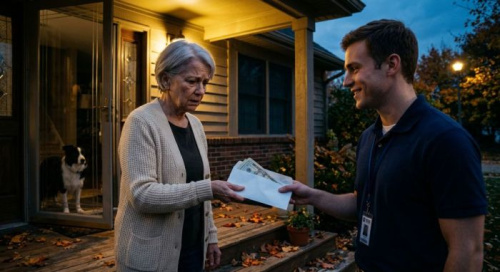
The next morning, Agent Ramirez laid out the plan. To protect Dorothy's savings from the criminals who had compromised her accounts, the government needed to take temporary custody of her funds. She would withdraw the money in cash and deposit it into a secure federal holding account. It was just a precaution. She would get every cent back once the investigation cleared her name.
Dorothy drove to the bank and withdrew eleven thousand dollars, then wired it to an account number the agent recited over the phone. When the teller asked if everything was all right, Dorothy forced a smile and said it was for a home repair. Her heart was pounding so hard she thought the woman could hear it.
Over the next five days, the withdrawals grew larger. Thirteen thousand from one account. Nine from another. Then came the loan. Agent Ramirez explained that the criminals might try to refinance Dorothy's house and drain her equity, so the government needed her to act first. She authorized a home equity loan of thirty-two thousand dollars, and the money disappeared into the same anonymous account.
Each time, the voice on the phone praised her for being cooperative. Each time, Dorothy felt sicker. She stopped sleeping. She stopped eating. She began to believe that criminals were hiding in the hedges across the street, and she checked the locks on her doors every ten minutes.
Then, on the sixth day, the voice on the line changed. Agent Ramirez began to mention her grandson.
"You have a grandson, Anthony, is that right? He's twenty-two years old," the agent said. "I'm afraid we've discovered his name on some documents connected to the case. I'm sorry, Mrs. Vance. It looks like Anthony may be involved."
Dorothy's world tilted. Anthony. Her sweet boy, who had visited her every summer, who had helped her plant tomatoes after Raymond died, who had cried at his grandfather's funeral. The idea that Anthony could be tangled up in anything criminal was absurd — and yet, the voice said his name with such certainty that the seeds of doubt clawed at her heart.
That was the moment the story changed. Because Special Agent Marcus Webb and Agent Denise Ramirez were not FBI agents at all. They were not even in Nevada. They were the smooth operators of a boiler-room scam ring operating out of a rented office in a strip mall, and they had never once laid eyes on Dorothy Vance. Every terrifying detail they recited had been handed to them on a piece of paper.
The police understood all of this far sooner than Dorothy did. It was the bank manager, a sharp-eyed woman named Mrs. Okafor, who had quietly flagged the unusual withdrawals and the enormous home equity loan from a retired schoolteacher who had banked with them for two decades. When Dorothy came in on the seventh day to authorize yet another transfer, two Tacoma police officers were waiting for her in the lobby.
"The good news," the detective told her gently, "is that you're not under arrest. The bad news, Mrs. Vance, is that these people you've been wiring money to are not with the government. They never were."
Dorothy sat in the back room of the bank, her hands folded in her lap, and wept. Forty-four thousand dollars. A home equity loan she would owe on for the rest of her life. All because she had been too ashamed, too frightened, and too trusting to hang up the phone on a voice that claimed to wear a badge.
But the real twist had not yet surfaced. As the investigation unfolded over the following weeks, her daughter Karen stood beside her through every humiliating meeting with bankers and lawyers and detectives. The FBI, who were genuinely involved by then, traced the call routing to a call center overseas and a web of money mules here at home. It was during that tracing that the heartbreaking truth emerged.
The private details that had convinced Dorothy — her address, her retirement year, Raymond's name, Anthony's age — had not come from a data breach. They had not been stolen from a hospital computer or an insurance database. They had been provided to the scammers by a young man who had been desperate, manipulated, and in over his head.
Anthony had fallen for a "remote data entry job" advertised online. It paid well for simple work: photocopying personal records, compiling family information, making sure names and addresses were accurate. He had no idea that the family information he was organizing — the documents he was told came from a "market research company" — were being used to destroy his own grandmother. By the time he understood what he had done, he was too ashamed to say a word. He thought if he stopped, the truth would simply go away.
Dorothy learned all of this at the police station, standing in a stark hallway, watching through a glass partition as her grandson was led into an interview room in handcuffs. Anthony looked up and saw her. His face crumpled. He was not a monster. He was a frightened twenty-two-year-old who had made one terrible, naive mistake and then compounded it with silence.
"Gram," he whispered against the glass, his voice breaking. "I'm so sorry. I didn't know. I swear I didn't know what they were doing with it."
Dorothy pressed her palm to the window. She wanted to be furious. She wanted to scream. But all she felt was a profound, aching sorrow — for her lost savings, for her grandson's shattered future, and for the plain and terrible truth that the people who had robbed them were the faceless ones on the other end of the ocean, unreachable, while the victims stood here and bled.
In the end, there was no clean justice. The overseas call center could not be touched. But Anthony cooperated fully with federal investigators, and his testimony helped dismantle a money-laundering network that had victimized dozens of elderly people across five states. For that, his sentence was light — probation and community service. Dorothy's bank, moved by the documentation of the fraud, recovered nearly all of the funds through federal consumer protections.
The scars, of course, did not disappear with the money. Dorothy sold the car she no longer wanted to drive. She canceled the landline that had become a source of terror. And every time the phone rang, no matter who it was, her heart seized for a single terrible beat before she checked the caller ID.
She learned, in the quiet months that followed, that the real predators never wear masks. They wear voices of authority and the quiet confidence of people who know too much. They prey not on the careless, but on the conscientious — on good people who are too afraid of appearing guilty to ask for help.
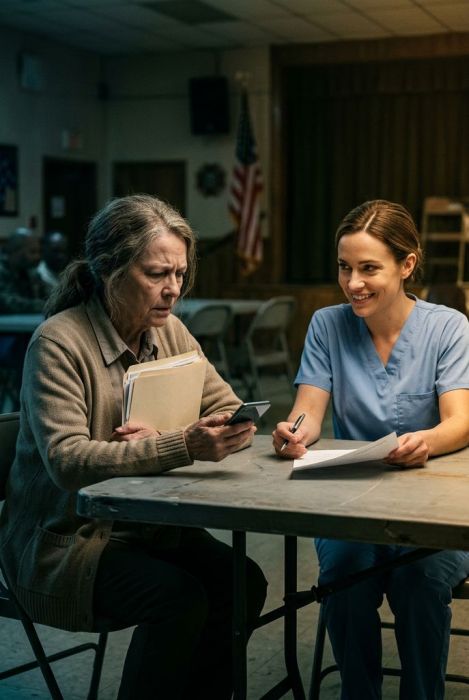
Today Dorothy speaks to retirement communities and church groups about what happened to her. She tells them the story of the voice that knew her birthday, and she teaches them one simple, lifesaving rule she wished she had known that rainy Tuesday morning: no government agency will ever call you, demand secrecy, and ask you to wire or withdraw your money. Ever. The moment authority asks for money and silence, it is not authority at all.
"It's not about intelligence," she tells the quiet rooms full of nodding silver heads. "It's about fear. And the only way to beat it is the one thing they tell you never to do — tell someone. Hang up. Call a person you trust. If they were really trying to save you, they would never be afraid of you asking for help."
Her grandson comes to her talks now, sitting in the back row, and Dorothy always says his name in her story. Not as a villain, but as a warning — proof that these crimes don't arrive through locked doors or strangers in the dark. They arrive through love itself, through the people we trust, and through the silence we mistake for safety.