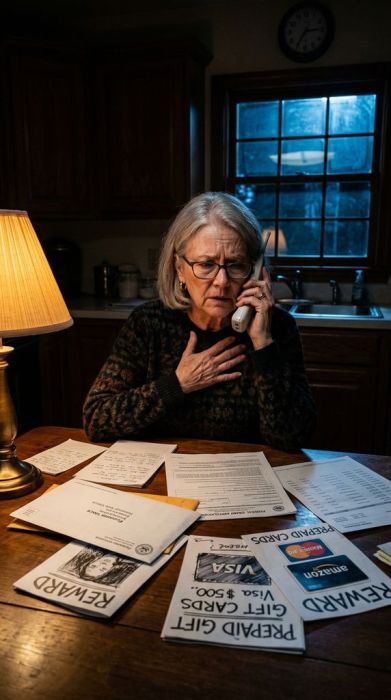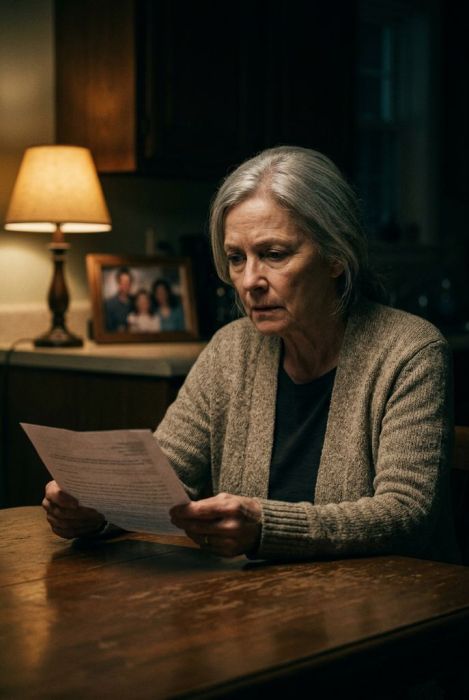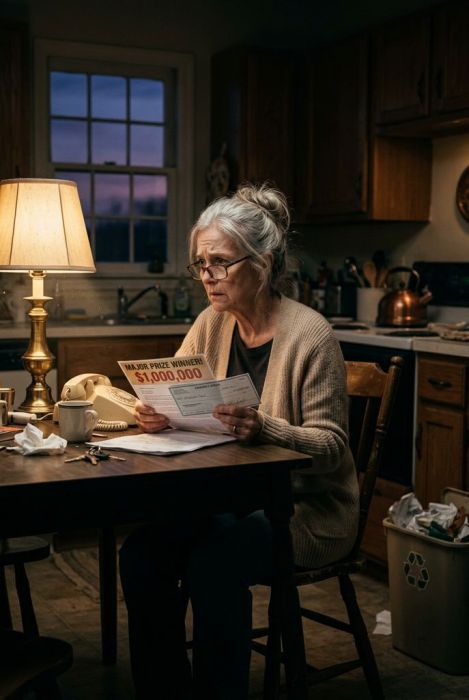
The fire on Birchwood Lane looked like an accident. That was the first thing the investigators said, the first thing the neighbors whispered, and the first thing Dorothy Vance herself wanted to believe as she stood in her thin robe at the end of her own driveway, clutching her cat, watching thirty years of her life go up in smoke before dawn broke over Roanoke.
The call had come at 3:47 in the morning, a dispatcher's calm voice telling her to get out of the house. She had smelled nothing, heard nothing. But by the time she stumbled onto the lawn, the upstairs windows were already glowing orange, and the old oak tree her husband Frank had planted the week they moved in cast wild, dancing shadows against the collapsing siding.
It was Richard, her son-in-law, who showed up before the fire trucks had even finished. His truck skidded to a stop at the curb, headlights still on, and he ran toward her in his work boots and a jacket thrown over his pajamas. He wrapped his arms around her and told her over and over that everything would be all right, that the important thing was that she was safe, that he had already called their insurance company, that he would handle everything.
Dorothy had never once doubted Richard. Why would she? He had been a constant presence ever since her daughter Melissa married him twelve years earlier. He fixed the gutters. He mowed the lawn she could no longer manage. He came over every Sunday for pot roast and sat at the kitchen table helping her read the mail, patiently explaining each bill, each statement, each official-looking document she received without ever making her feel foolish.
And in the year since Frank passed, Dorothy had leaned on Richard more than anyone. She signed the papers he set in front of her without truly reading them, telling herself it was better to trust family than to bother anyone with her confusion. He had taken over her finances after Frank's heart attack, and she had been grateful for it, grateful for a steady man to hold onto when the whole world felt sideways.
The fire consumed nearly everything. The living room, the kitchen, the bedroom where she had slept beside Frank for forty-one years. The fire department ruled it an electrical fault at first, a frayed wire in the attic that had finally caught. Dorothy's heart broke, but at least it made sense. At least it was not something she could have prevented.
But the insurance adjuster was not so quick to close the file. A man named Gerald Whitfield, calm and precise, came by the little motel room where Dorothy had been staying with the milk-and-sugar politeness of a bank teller and the eyes of a man who had seen every kind of lie. He asked his questions gently. About the smoke detectors. About when she had last replaced the wiring. About who had access to the house.
About the receipts.
Dorothy did not understand at first what he was driving at. When he finally laid the photographs on the motel table — a charred plastic gas canister, the remnants of a second one beneath the deck, traces of an accelerant that had absolutely no business being in an attic — her hands began to tremble.
The fire was not an accident, Gerald said plainly. Someone had wanted that house gone.
At first the suspicion fell on Dorothy, and it nearly did her in. For a while she was the one being followed around by detectives, the grieving widow whose husband's life insurance payout had conveniently cleared the week before the fire, the woman whose most valuable possessions — her wedding rings, her mother's silver, Frank's old coin collection — had mysteriously found their way to the safety deposit box Richard had insisted she open. People talked. The neighbors who had once brought casseroles stopped meeting her eye.
Dorothy was grateful, then, for Richard. He hired a lawyer to shield her. He sat beside her through every interview, holding her hand when the questions got sharp. He told her she was too trusting, that some people would take advantage of a woman in her position, and she believed him.
What she did not know was that the insurance company had already begun to suspect him. What she did not know was that Gerald Whitfield, quiet and patient, had been pulling threads for weeks — financial records, bank statements, a trail that led again and again to Richard's name on accounts Dorothy had never once been shown.
The twist arrived at a meeting in the adjuster's office, three months after the fire, when Dorothy believed she was there only to sign the final claim papers and close the saddest chapter of her life.
Gerald brought a folder. Inside were copies of documents that made Dorothy's blood run cold — paperwork she had signed when her reading glasses were out of reach, papers Richard had set in front of her with a pen and a smile and a story about refinancing, papers that had quietly converted ownership of her paid-off home into a loan in her name and a stream of cash into Richard's pockets. He had been siphoning her equity for years, long before Frank died, and she had never seen a penny of it.
And when she had begun to question the mail — letters from the bank she did not recognize, calls about payments she was supposedly behind on — Richard had known the truth would eventually surface. So he had planned the fire to burn the evidence, and to collect enough insurance money to bury his debt before anyone looked too closely.
Dorothy sat very still in that office, her hands folded in her lap, listening to a recording of a voice that sounded exactly like her grandson.
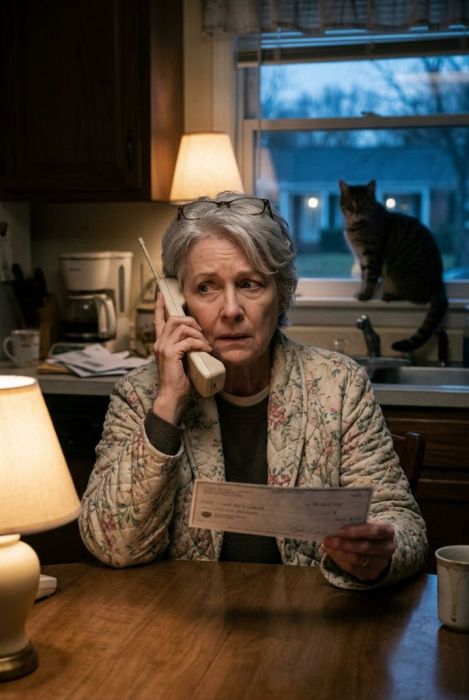
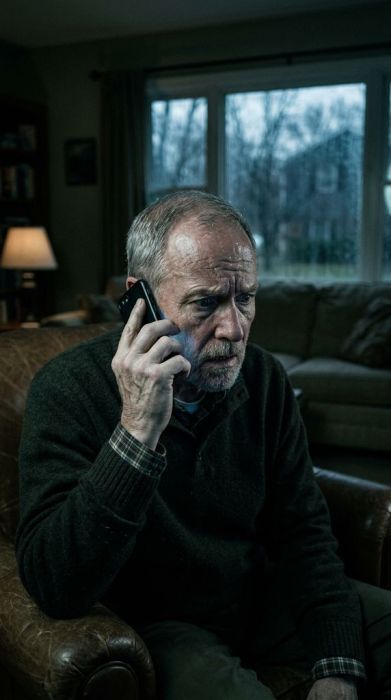
That was the other thread. Because the fire was not the only crime Richard had committed that year. Months earlier there had been a frantic call on Dorothy's landline — a boy's voice sobbing, claiming to be her grandson Derek, calling from a "broken phone" because he had been in a terrible accident, begging her not to tell anyone, begging her to wire money to a stranger so he could be freed. The voice had been uncanny. It had sounded exactly like him.
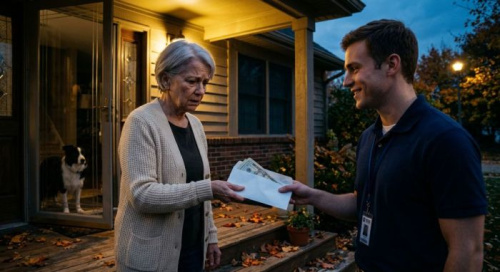
Dorothy had actually wired the money. She had told no one, ashamed and frightened, keeping the secret the way the voice had begged her to. Only now, in Gerald's office, listening to recorded calls investigators had pulled from Richard's devices, did she understand. Her grandson had never been in danger. Richard had paid someone to replicate the boy's voice from videos Derek's mother posted online — a cheap trick that had taken Dorothy for nearly the entire contents of her savings.
The recording went quiet. Dorothy's hands shook so badly she had to grip the arms of the chair.
The confrontation came at the police station, not a courtroom, because Richard, on learning that a warrant had been issued, tried to flee. Detectives found him at the airport with a boarding pass in one hand, a bag of cash and the safety deposit box keys she had trusted him with in the other. When they sat him across the table from Dorothy, he would not look at her. He stared at his hands — the same hands that had fixed her gutters, the same hands that had held hers at her husband's funeral.
"Why?" she whispered, her voice cracking.
And for the first time, Richard's composure broke. He talked about gambling, about debts hidden from Melissa, about the pressure of keeping up appearances — a long, rambling confession that turned Dorothy's stomach. He had spent years positioning himself as her protector so he could bleed her dry, and he would have burned her house, her history, everything, to keep it hidden.
Melissa stood in the hallway of the station that night with tears streaming down her face, and Dorothy looked at her daughter and felt the whole world tilt. Because in that moment she finally saw it clearly. The gentle man who had brought her meals. The steady hands guiding her signature. The devoted son-in-law everyone loved. It had all been a performance — a patient, loving performance years in the making, designed to make one lonely widow trust the man who was robbing her.
Richard went to prison. The insurance company paid nothing on the house, and Dorothy lost the home she had loved, a loss no dollar figure could ever measure. But she was not ruined, because the lawyer Richard himself had hired to "protect" her worked with the prosecutors to unwind the forged documents, and slowly, painfully, Dorothy began to recover what was left.
It was months before she could sit in her daughter's kitchen without staring at the spot where Richard used to stand. Months before she stopped second-guessing every kindness, every signature, every unexpected visitor at her door. The hardest part, she once admitted to Melissa, was not losing the house. It was realizing she had handed the keys of her own life to a man who had seen her as nothing more than a vault to be emptied.
Melissa found her mother a financial counselor, a woman her own age who taught her to read every single document, to ask every single question, to listen to the small voice that said something felt off. Dorothy learned what equity stripping meant, what wire fraud meant, what a fiduciary was and was not. She learned that the voice on the phone could belong to anyone now, and that trust and love, beautiful as they are, could be weaponized by people who had spent years earning them.
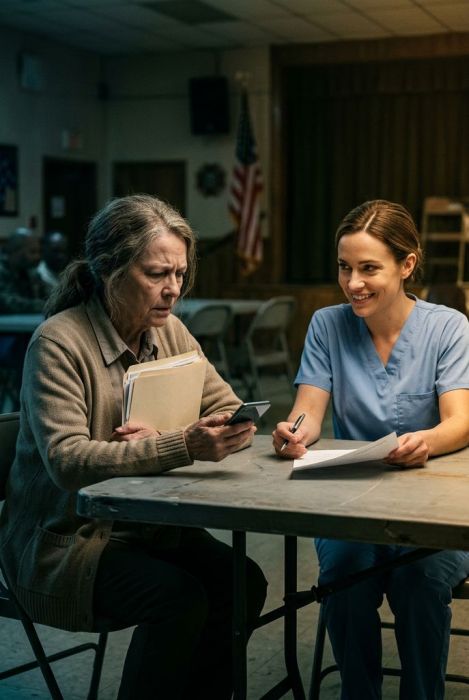
Today Dorothy volunteers at a senior center in Roanoke, teaching a class she never imagined she would be qualified to teach. She sits across a folding table from older men and women and holds up example after example: a forged deed, a fake invoice, a text from a "grandson" in trouble, a friendly financial advisor offering to take over their accounts. She tells them the same thing she tells herself every single morning.
Trust is not a weakness. But it must be earned on paper, in ink, with eyes wide open.
And she tells them this. The fire on Birchwood Lane was not an accident. Neither was the kindness of the man who set it. Some dangers wear your family's voice. Some betrayals arrive holding your hand.
Dorothy keeps her own papers now in a safe deposit box at two different banks. She reads everything twice. And every night before she locks her door, she repeats a lesson that cost her everything she owned to learn.
No one who truly loves you ever minds a question.