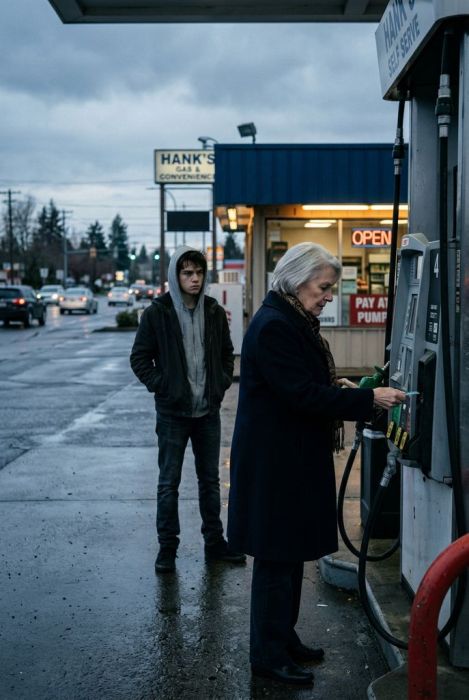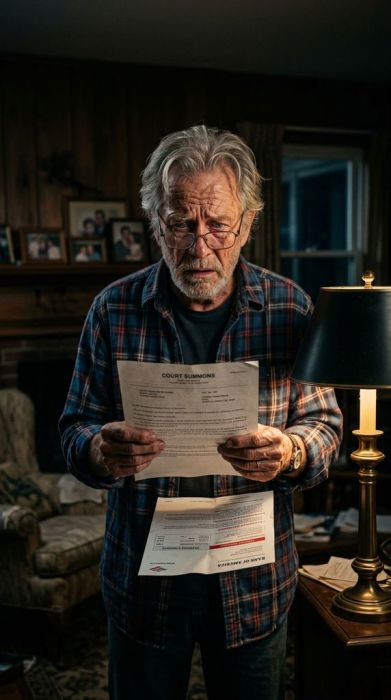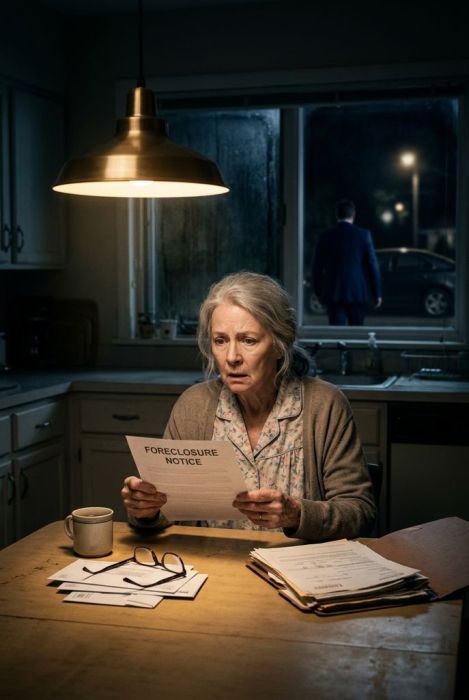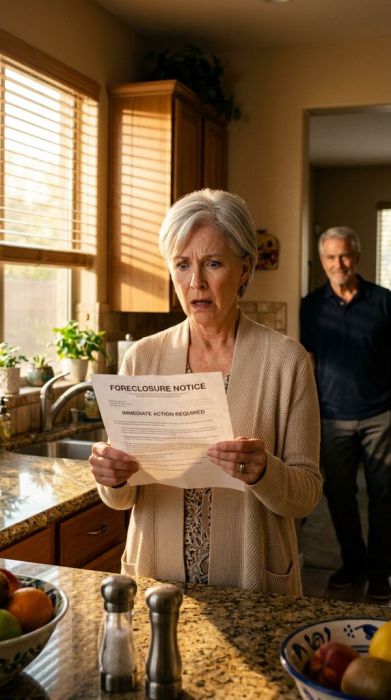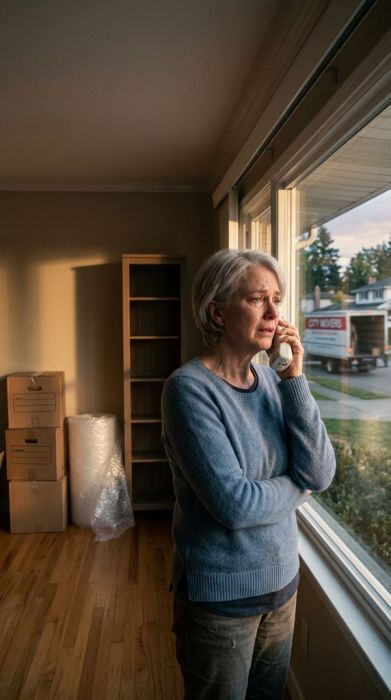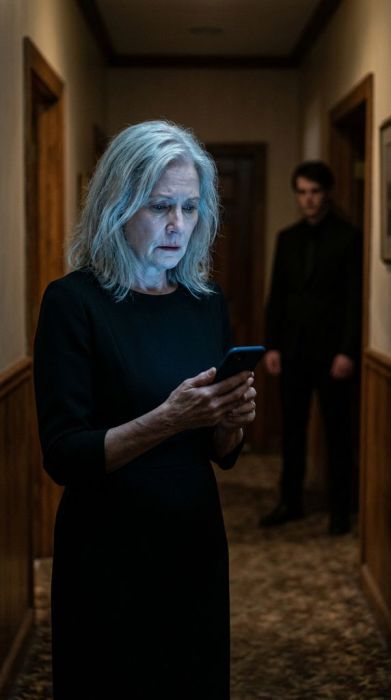
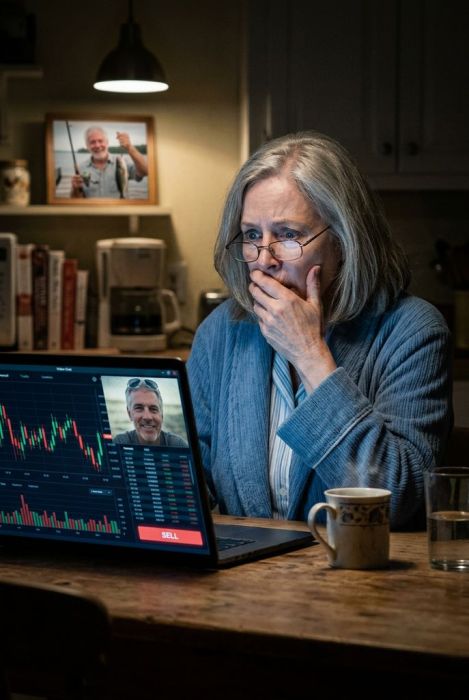
The notification arrived at 7:14 on a Tuesday morning, and for one brief, stupid second, Ruth Buckner actually smiled. Meridian Capital had finally replied to her withdrawal request. Then she read the rest of the message, and the smile died on her face.
Your funds are pending mandatory tax verification. Please remit $8,423.88 to our compliance desk to release your available balance of $41,882.15.
Her coffee cup stopped halfway to her mouth. She read the words a second time, then a third, because the first two readings had to be wrong. Eight thousand, four hundred twenty-three dollars and eighty-eight cents. A tax on money that was already hers. She scrolled the message for a signature, for a phone number, for anything human. There was only a link promising "secure payment options" and a WhatsApp contact with a country code she did not recognize.
Ruth did not panic. That was the most frightening part. She set the cup down, wiped her palms on her bathrobe, and repeated the sentence Jonathan had fed her a hundred times over four months. This is standard with international brokers, sunshine. It's a withholding, not a fee. They refund it the moment your funds release.
She almost believed it. She had believed everything he said. And believing him had been the loneliest, most beautiful mistake of her sixty-six years.
It had started in March, when her daughter Emily — in that gentle voice she used when she was worried — suggested Ruth get out of the house. "You're not grieving anymore, Mom. You're hiding." Ruth had laughed and said the difference was news to her. But that night, alone with a frozen lasagna and the sound of Tom's favorite chair not creaking, she found herself on Facebook, thumb hovering over a group called Golden Horizons: Widows and Widowers of New Mexico.
She joined on a whim. She posted once — a photograph of Tom's old fishing hat hanging on a hook by the back door, with a caption she deleted three times: Four years and I still can't move this. The likes came in by the dozens. So did the messages. Most were kind. One was different.
My name is Jonathan Avery. I lost my Ellen to cancer in 2019. When I saw your post about the hat, I had to write. My Ellen had a thing for old hats too. She'd have liked you.
There was a photo attached: a silver-haired man in his late fifties, aviator sunglasses pushed up on his head, a small plane gleaming behind him. Ruth studied his face the way she had studied nothing in years.
They talked that first night until past midnight.
Jonathan was patient in a way that felt almost old-fashioned. He asked about Tom — about the kind of man he was, the jokes he told, the way he argued with the thermostat. He remembered details she mentioned once, the way you remember a good book. He told her he had been a commercial airline captain for thirty-two years, that he had retired to Scottsdale, Arizona, and that flying private planes had become "the hobby that saved my life after Ellen."
He never asked for money. That was the thing she kept coming back to later, when the detective asked her to explain how it happened. Jonathan had never once asked for a dime. He had told her, almost sternly, that no one should ever pressure a lady about her finances. He taught her instead. "Investing is like flying, Ruth," he said one night, his voice soft through the phone speaker. "You don't chase the horizon. You trust your instruments and you let the plane do the work."
She told him about her pension, about the life insurance payout sitting in a certificate of deposit because she was too afraid to do anything with it. He listened. He said the word "portfolio" the way other men said "bless you." And when she asked, tentatively, if he could help her understand even a little of it, he sighed as if he had been waiting for permission.
"I can show you what I use," he said. "It's called Meridian Capital. I've traded on their platform for ten years. They're registered overseas, which scares people, but honestly? It's why the returns are better. Less regulation, more opportunity. I'd never recommend anything I don't use myself."
He sent her a link. She clicked it. And somewhere in that click, Ruth Buckner crossed a line she would spend the rest of the year trying to explain.
The first deposit was three thousand dollars, pulled from her savings. She had told herself it was tuition — that was the only way she could press the button. Jonathan walked her through the app on a video call that was a little grainy, a little dark. "Cell service at the hangar is terrible," he apologized, and she waved it off. She could see him well enough: kind eyes, a face that had lived, a smile that crinkled the corners. When he talked about compound interest, he sounded like a man describing a sunset.
Ten days later, her dashboard showed $4,150.
She nearly fell out of her chair. Jonathan laughed, delighted, and suggested she test the system. "Withdraw two hundred dollars. Just to feel it work." She did. The money appeared in her checking account in forty-eight hours, and Ruth felt something she had not felt in four years: capable. She was not just surviving. She was participating in the world again.
She took Emily to dinner that week and let her daughter think the new lightness in her eyes was just happiness. The truth was a secret she was saving, a surprise she planned to unwrap at Thanksgiving. Emily and her husband Nathan were trying for a baby — their second round of IVF had just been scheduled, and the clinic had quoted them twenty-one thousand dollars. Ruth could not stop thinking about that number. She had told Jonathan about it the night before, and he had gone quiet in that gentle way of his.
"I know what you're thinking, sunshine," he said finally. "Let me help you get there the right way. Slow. Steady."
But the market, as it turned out, was not slow. By June, her balance had climbed to $8,900. By July, Jonathan's nightly calls had become the best part of her day. He would send her a good-morning text with a photo of the desert sunrise. She would send him pictures of her garden. He would say "my garden is my living room," and she would laugh, and for a few hours each evening, the house on Avenida del Sol did not feel so empty.
Then, on a hot August night, Jonathan called with urgency in his voice for the first time.
"There's a correction coming Tuesday," he said. "This is one of those once-a-decade windows, Ruth. Meridian's telling me to move aggressively. I'm putting sixty thousand of my own money in tomorrow morning. And I'll tell you the same thing I told my sister: if you can free up anything at all, you will not regret it."
Ruth thought about the CD. Thirty-one thousand dollars — Tom's insurance money, untouched for four years. She had promised herself she would never spend it. She had promised him, at the funeral, in a whisper so small no one heard, that she would be careful.
That night she lay awake until three, and at eight the next morning, she drove to the bank and closed the CD.
The dashboard sang. $34,600. Then $38,100. Then, on the first Tuesday of September, $41,882.15. Ruth printed the statement and kept it folded in her underwear drawer, like a love letter. She started pricing IVF packages online. She started planning her announcement speech for Thanksgiving — she would wait until the turkey was carved, then slide the statement across the table and watch Emily cry.
But Emily called first, on a rainy Tuesday, already crying.
"The second cycle failed, Mom. I'm so sorry. I didn't want to tell you like this." Ruth's heart cracked down the middle. "The clinic says we have one more window before my insurance changes. We need nine thousand dollars by Friday. And we just — we don't have it, Mom. I'm so tired."
Ruth did not hesitate. Her investment was earning money while she slept. She could take ten thousand, help her daughter, and still have thirty-one thousand growing. She sat down at the kitchen table that very night, opened the Meridian app, and pressed Withdraw.
The button spun. "Your request is being reviewed."
She checked the app every hour until midnight. Nothing. She messaged Jonathan, and for the first time in four months, his reply did not come within minutes. It came at 6:52 the next morning, brief and bright, as if she had imagined the tension.
"International brokers do audits on Fridays, sunshine. Don't worry. I'll call you tonight."
Then, at 7:14, the notification arrived. And the smile died on her face.
The withholding. $8,423.88. To "release" her own money. Jonathan, when she finally reached him, was calm — infuriatingly calm, the calm of a pilot in turbulence. "It's a withholding, not a fee," he said again. "Happens to me twice a year. They refund it in the same transaction. Ruth, if you want your money by Friday for Emily, you pay the tax now and it clears tomorrow."
Her gut — the same gut that had told her not to marry Bobby Carver at twenty-two, the gut she had learned to trust over a lifetime — stirred. Something was wrong. Something was badly, quietly wrong.
She hung up and started looking.
The WhatsApp number on the app had a +63 country code. The website was meridian-capital.co, and when she searched for it, nothing came up. Not a review, not a forum post, not a single mention of a trading platform with "ten years of history." She searched Jonathan's name. Nothing. She searched his photo — his pilot photo, the one with the plane — and the internet gave her the answer in four seconds flat.
Stock photography. "Businessman with aviator sunglasses, studio." The same face. The same smile. For sale, worldwide, for eleven dollars.
Ruth stood up from the computer so fast the chair tipped over. Her heart was pounding so hard she could feel it in her teeth. And then, like a door opening in a room she had forgotten she had, she remembered the seminar.
She had given it in January. At the senior center, in front of forty people. "Protect Your Heart, Protect Your Wallet." She had made the slides herself, spent a week on them. Slide twelve had been about a type of fraud she had read about in an FBI bulletin: pig butchering. They fatten you with fake profits, the bulletin said. Then they butcher you with fake fees. The warning signs were in her own handwriting: an overseas platform, a too-handsome stranger, a withdrawal that never comes, a tax that must be paid in cryptocurrency through a private chat.
She had written that sentence. She had written it in January.
The next morning, Ruth Buckner walked into the Albuquerque Police Department and asked to speak to someone about fraud. She got Detective Alma Reyes, a round-faced woman in her forties with tired eyes and a voice like a slow river. Reyes listened to the whole story without interruption, writing nothing, and when Ruth finished, she asked one question.
"Do you know the name Gerald Tork?"
Ruth's blood went cold. She knew it. She had put Gerald Tork on slide fourteen — a convicted romance fraudster from Georgia, released from federal prison in 2021, reported to target widows in their sixties through online grief groups. She had spent an hour of her life warning strangers about him.
She had taught her seminar with his booking photo on the screen. And he had spent the summer calling her sunshine.
Reyes pulled up his current mugshot on her phone: a heavier man, narrowed eyes, a graying beard. Ruth shook her head. "That's not him. Jonathan is trim. Clean-shaven. His face—" Reyes set the phone down gently. "Ma'am, he puts on sixty pounds when he's out, grows a beard, and he has gotten very good at face-altering filters on video calls. Calls always a little grainy, right? Bad light? He blames the hangar." Ruth's hands were shaking. "He files your husband's obituary, researches you for months, and joins widow groups in the states where you live. He has been doing this for six years out of an RV park near Las Cruces. He has got two associates running the platform from overseas. The profits you saw — they weren't real, and they weren't yours. They were new deposits from new victims, passed around to look like earnings."
"The two hundred dollars," Ruth whispered. "The withdrawal that worked—"
"Was bait," Reyes said. "Fresh money from the next victim. It's always the first one that works."
Ruth sat in the plastic chair for a long time, listening to the station's fluorescent lights hum. She had warned her church. She had warned the senior center. She had quoted the FBI statistics at dinner with Emily. She had read the signs so clearly that she had built a PowerPoint about them — and she had still typed her password into the thief's machine, because the thief had made her feel seen.
Detective Reyes asked if she would help them try to catch him. One more video call, with the line traced, with officers listening. Ruth said yes before she could think about it.
She called Jonathan that night, and he answered on the second ring, all warmth and worry. "Sunshine. How are you holding up, sweetheart?"
"I need to know you're real, Jonathan." Her voice was steady. She was proud of that. "Show me the hangar. Please."
He laughed, easy as ever, and panned his camera — a blur of dim shapes, a suggestion of a lobby. "See? Told you I live here."
The green screen fringed around his shoulders. It blinked, just at the edges, like a secret.
"Do you remember my Tom's hat?" Ruth asked.
"Of course, sweetheart." His voice was gentle, patient. "The red one. You wore it to the lake every summer."
Tom's hat was gray. It had been gray for thirty years. Ruth stared at the smiling stranger on her screen and felt the last four months of her life collapse into a single, astonishing silence.
The line went dead.
Forty minutes later, state troopers arrested Gerald Tork outside a rented RV in Las Cruces, New Mexico, with fourteen thousand dollars in cash, three laptops, and a suitcase half-packed. Ruth watched it on the news, curled on her couch, and did not recognize the heavy, bearded man in handcuffs at all.
The money was gone. All of it — the thirty-four thousand, the fake profits, the dream of the IVF fund. The FBI said there might be pennies on the dollar one day, in some distant recovery. Ruth did not argue. She had stopped arguing with the dark.
Emily came home on the first flight she could get and held her mother for a long, long time, and when she finally pulled back, her eyes were red but her voice was steady. "The only thing I need from you," she said, "is you. That's the whole account. That's the entire portfolio."
Ruth cried at that — at the mercy of it, at the size of what she still had.
A year later, she runs Coffee & Caution out of the church basement on the second Tuesday of every month. She serves the good coffee, the kind Tom liked, and she tells her story without shame. She shows the stock photo, the green screen fringe, the notification with the exact cruel number. She teaches slide twelve to whoever will sit still, and every few months, someone in the room goes pale and puts down their phone.
Her wallet still holds a crumpled printout of the reverse image search. Not to punish herself — she has done enough of that — but to remind herself, every time she reaches for a stranger's hand across a glowing screen, that a face can be borrowed, a voice can be manufactured, and the only investment worth making is with the people who let you see them eye to eye.
Emily and Nathan are expecting a baby in the spring. Ruth has already bought the bassinet. She paid for it with her own checking account, slowly and carefully, one layaway payment at a time — because some things, she finally understands, are worth the wait, and every dollar she spends now is real.