The knock came at 6:47 on a Tuesday morning.
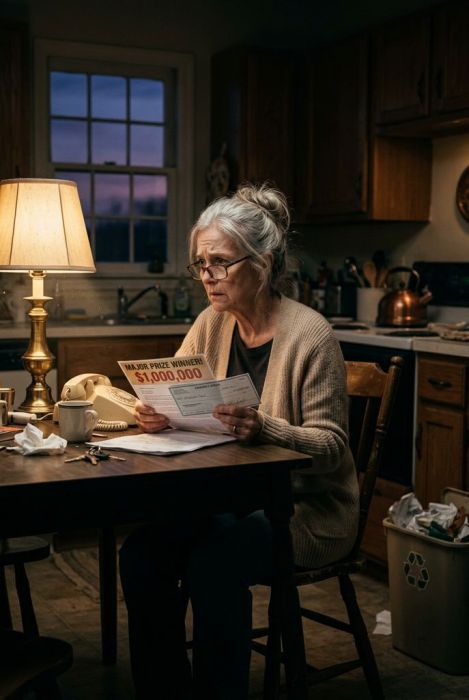
Margaret Collins had been awake for over an hour, as she always was at seventy-one. She was sitting at her kitchen table in Albany, New York, sipping her second cup of decaf and watching the cardinals flutter around the bird feeder her late husband Frank had installed twenty-three years ago. The knock was sharp, insistent — not the hesitant tap of a neighbor or the cheerful rap of a delivery driver.
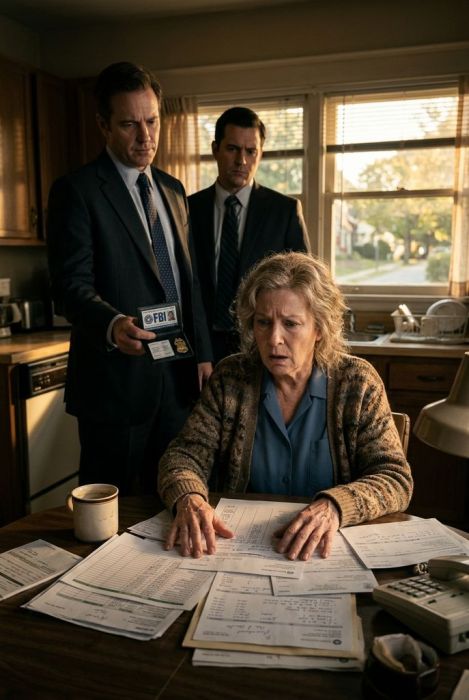
When she opened the door, she found two people who did not look like they belonged on her quiet tree-lined street. A man and a woman, both in dark suits, both wearing expressions that made her stomach drop before they even spoke.
"Margaret Collins?" the woman asked.
"Yes."
"I'm Special Agent Torres with the Federal Bureau of Investigation. This is Special Agent Harmon. We need to ask you some questions about the Emerald Legacy Investment Group."
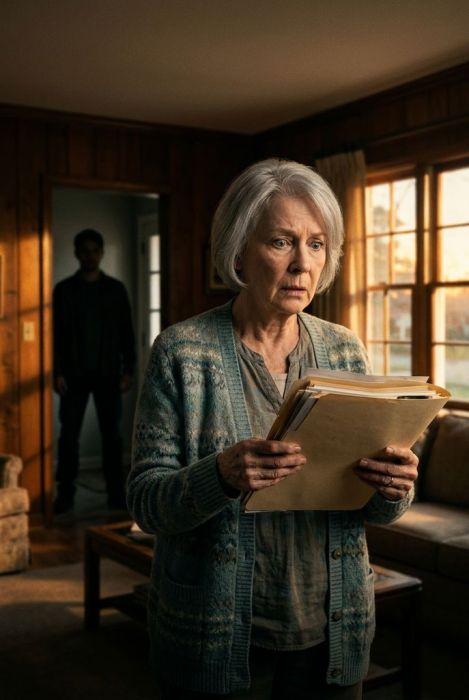
The name hit her like a physical blow. That was the investment club her friend Diane had introduced her to. The one that had promised her a comfortable retirement, that had given her a folder full of glossy brochures and testimonials from happy members. The one she had poured her entire savings into.
"I don't understand," Margaret whispered. "Is something wrong?"
Agent Torres exchanged a glance with her partner. "Ma'am, I think you'd better sit down."
The story began eight months earlier, at a coffee shop on Lark Street.
Margaret had been retired for six years from the Albany public school system, where she had taught fourth grade for thirty-eight years. She had a modest pension, a paid-off house, and a savings account that Frank had built carefully over four decades of working as a mechanic. When he passed away from a heart attack in 2019, he had left her with enough to live comfortably, if not extravagantly.
But comfortable was starting to feel tight. Inflation had crept into everything. Her property taxes had gone up. The furnace needed replacing. And she had begun to worry, in the quiet hours of the night, whether her money would last as long as she would.
Diane Morrison had been her best friend for thirty-two years. They had met when their daughters were in the same Girl Scout troop, and their friendship had survived moves, divorces, grandchildren, and the loss of Margaret's husband. Diane was a retired nurse with a sharp wit and a warm heart, and when she called Margaret in early March, her voice was electric with excitement.
"Maggie, you have to come with me to this thing," Diane said. "It's an investment club. A retirement planning group. They're showing people how to grow their savings without the stock market nonsense."
Margaret had been skeptical. She had always been careful with money, perhaps overly so. Frank used to tease her about the way she clipped coupons and saved jars. But Diane was persistent, and eventually, Margaret agreed to attend a meeting.
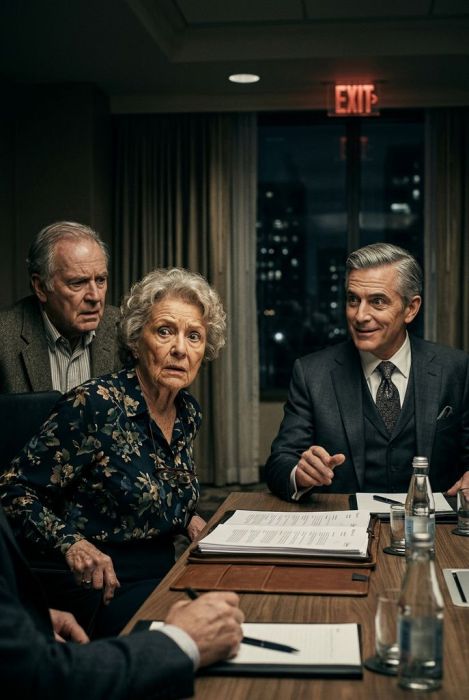
The meeting was held in a conference room at a Marriott off Interstate 90. There were about forty people in attendance, mostly white-haired, mostly retired, all of them listening intently to a man named Jason Croft. Jason was in his early forties, with a confident smile, an expensive watch, and a way of speaking that made complex financial concepts sound simple. He wore a charcoal suit and spoke with the warmth of a favorite nephew.
"This is not a get-rich-quick scheme," Jason told the room, his hands open, his expression earnest. "This is a get-rich-steady plan. We pool our resources. We invest in real estate, in private equity, in opportunities that the big banks don't want you to know about. And most importantly, we take care of each other."
He showed them charts. He showed them testimonials. He showed them a video of a couple from Syracuse who had tripled their retirement savings in just eighteen months. The woman in the video was crying tears of joy. The man was holding a check.
Margaret was impressed. She was also cautious. She asked questions. She asked about licenses, about regulatory oversight, about what would happen if the market turned. Jason answered every question with patience and detail. He gave her a business card that read "Senior Wealth Strategist." He offered to run a personal financial analysis for her, free of charge.
She took him up on it.
Over the next three weeks, Jason Croft became a regular presence in Margaret's life. He came to her house. He brought coffee and danishes. He listened to her worries about the furnace, about property taxes, about the nagging fear that she would outlive her money. He told her about something called the Emerald Legacy Retirement Club, a members-only investment group that required a minimum buy-in of forty thousand dollars.
"Think of it as a family," Jason said, sitting across from her at the same kitchen table where she now sat across from FBI agents. "We're all in this together. Your money isn't sitting in some anonymous account on Wall Street. It's invested in real things — real estate, small businesses, projects you can see and touch."
He showed her photographs of a strip mall in Rochester that the group had purchased. He showed her a certificate of ownership. He showed her monthly statements that showed consistent, steady returns.
In April, Margaret wrote a check for forty thousand dollars. It was the largest check she had ever written, and her hand trembled as she handed it over. But Jason hugged her and told her she had made the smartest decision of her retirement.
In May, she received her first monthly statement. It showed a return of three point seven percent. She nearly cried with relief.
In June, she received another statement. Another return. She began to relax.
In July, Diane told her about a special opportunity. The group was acquiring a senior living facility in Schenectady, and existing members were being given priority access. The minimum investment was thirty thousand dollars, but the projected returns were even higher. Margaret hesitated for a full week. She talked to her daughter, who lived in Boston and knew nothing about the club. Her daughter said it sounded risky. But her daughter was thirty-eight and had never had to worry about running out of money at seventy.
Margaret wrote another check.
In August, she received a call from someone named Brenda, who identified herself as a member services coordinator. She told Margaret about a "gold tier" membership that would give her priority access to future investments. The cost was fifteen thousand dollars, but it came with a guaranteed minimum annual return of twelve percent.
Margaret wrote the check.
By September, she had invested eighty-five thousand dollars — nearly everything she had saved beyond her pension and the equity in her house.
The first sign of trouble came in October.
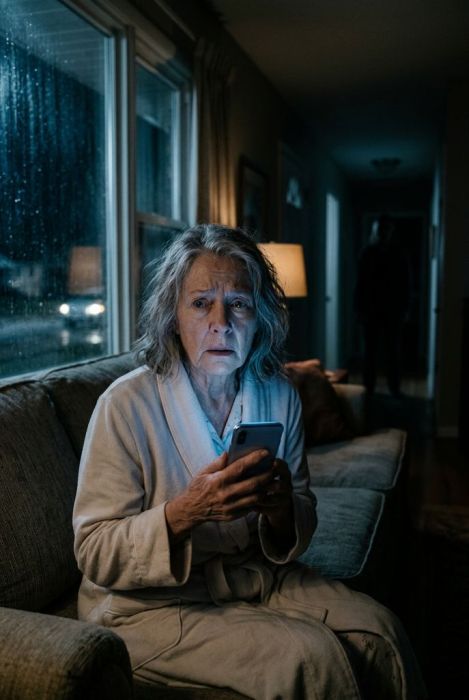
Margaret called the Emerald Legacy office to ask a question about her quarterly statement. The number went to voicemail. She left a message. No one called back. She called again the next day. Same result. She tried Jason Croft's direct line. It rang and rang.
She called Diane, who was equally confused. "I'm sure it's fine," Diane said, but her voice had lost its usual confidence. "They're probably just busy with the new acquisition."
The following week, Margaret received an email from the Emerald Legacy group. It was addressed to all members and signed by a man named Charles Whitfield, who identified himself as the chief operating officer. The email was long and full of financial jargon, but the message was clear: the company was restructuring, and all withdrawals would be temporarily suspended.
Margaret's hands began to shake as she read it.
She called her daughter. She called a lawyer. She called the New York State Attorney General's office. She was transferred from department to department, leaving messages that were never returned.
And then, on a Tuesday morning in November, the FBI knocked on her door.
"It's a Ponzi scheme," Agent Torres said, sitting across from Margaret in her own kitchen. Her voice was professional but not unkind. "The largest one targeting seniors in upstate New York that we've seen in fifteen years. Jason Croft, Charles Whitfield, the Emerald Legacy Investment Group — it's all fabricated. The strip mall doesn't exist. The senior living facility doesn't exist. The returns you were seeing were paid out using money from new investors."
Margaret stared at her. "That's impossible. I saw the certificates. I saw the photographs."
"All forged," Agent Harmon said. "We found a graphic designer in Troy who was making them. She thought she was working for a legitimate marketing firm."
"How many victims?" Margaret whispered.
"Over three hundred that we've identified so far," Torres said. "Total losses estimated at eighteen million dollars. The average victim is seventy-two years old. Most of them are retired teachers, nurses, and civil servants."
Margaret thought about the check she had written in April. She thought about Jason Croft's warm smile and his expensive watch. She thought about the way he had called her "Maggie" after the second meeting, the way he had asked about her grandchildren, the way he had sent her a birthday card in September.
"How much can I get back?" she asked.
The agents exchanged another glance. This one was different from the first. This one was worse.
"Jason Croft was arrested yesterday at JFK Airport trying to board a flight to Dubai," Torres said. "He had a suitcase full of cash and a fake passport. We've frozen the accounts we can identify, but the truth is, ma'am, most of the money is gone. He lived well. He paid off early investors to keep the scheme going. We'll recover what we can, but it won't be anywhere near what you put in."
Margaret did not cry. She had spent her entire adult life teaching children how to handle disappointment, how to be brave when things did not go their way. She sat up straight, the way she had done for thirty-eight years in front of thirty-five students at a time.
"Will there be a trial?" she asked.
"Yes," Torres said. "We're going to need you to testify."
"Will he go to prison?"
"Almost certainly. For a long time."
Margaret nodded. She looked out the window at the bird feeder, where a cardinal was cracking a sunflower seed. Frank had loved cardinals. He used to say they were a sign from heaven.
"I should have known better," she said quietly.
"Mrs. Collins," Agent Harmon said, leaning forward, "Jason Croft has been running this scheme for seven years. He has a degree in finance from a legitimate university. He has a team of people who helped him forge documents, create fake websites, and manufacture testimonials. The only reason he was caught is that he got greedy. He started spending faster than he could recruit new investors. This is not your fault."
"Then why does it feel like it is?" Margaret asked.
Neither agent had an answer for that.
The trial began eighteen months later in federal court in Albany.
Margaret testified for three hours. She described the coffee shop meeting, the Marriott conference room, the home visits, the certificates, the monthly statements, the sinking feeling when the phone calls stopped being answered. She looked Jason Croft in the eye as she spoke. He did not look away. He had lost weight in prison. His expensive watch was gone. He looked like a man who had been caught, and that was the only comfort Margaret had.
Jason Croft was convicted on thirty-seven counts of wire fraud, money laundering, and securities fraud. He was sentenced to twenty-two years in federal prison.
The court recovered approximately three million dollars of the eighteen million that had been stolen. Margaret received a check for just over fourteen thousand dollars.
She framed it and hung it on her wall, next to the photograph of Frank holding a fish the size of his arm.
It would be easy to say that Margaret learned a valuable lesson about trusting strangers with her money. But the truth was more complicated. She had not trusted a stranger. She had trusted her best friend, who had trusted someone else. The scheme had worked because it had built a network of trust, person by person, relationship by relationship.
Diane never forgave herself. She had been the one to bring Margaret to that first meeting. She had been the one who vouched for Jason Croft. She had lost her own retirement savings, too, but that was not what haunted her. What haunted her was the look in Margaret's eyes when the FBI agents left the kitchen.
The two women remained friends, but something had shifted. There was a new awareness between them, a quiet understanding that even the closest bonds could be exploited by someone who knew how to weaponize trust.
Margaret started a small support group for other victims of financial fraud. They met at the senior center on the first Tuesday of every month. She learned to spot the warning signs — the urgency, the secrecy, the promises of returns that were too good to be true. She began speaking at community centers and churches, telling her story so that others might avoid the same fate.
"You think it can't happen to you," she would tell the audiences, mostly older men and women who nodded along with uncomfortable recognition. "You think you're too smart, too careful, too experienced. But the people who do this aren't stupid. They're professionals. They study you. They learn what you're afraid of and what you hope for. And they use those things against you."
She never got her money back. But she got something else — a purpose, a voice, a way to turn the worst thing that had ever happened to her into something that might help someone else.
And every time she walked past the framed check on her wall, she remembered something Frank used to say: "The only thing you can really own is your own story. Make sure it's one worth telling."