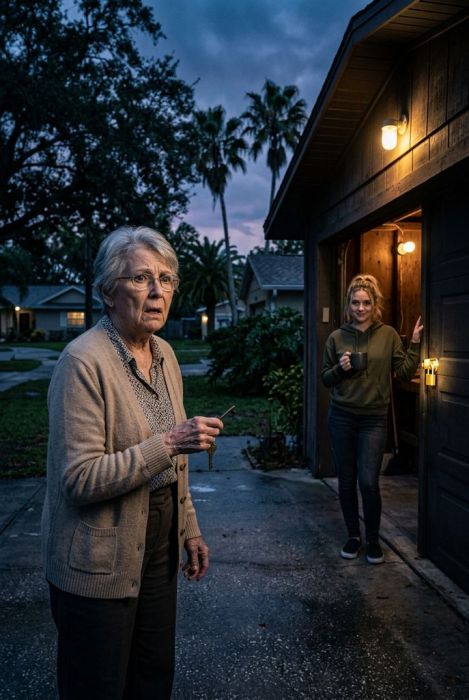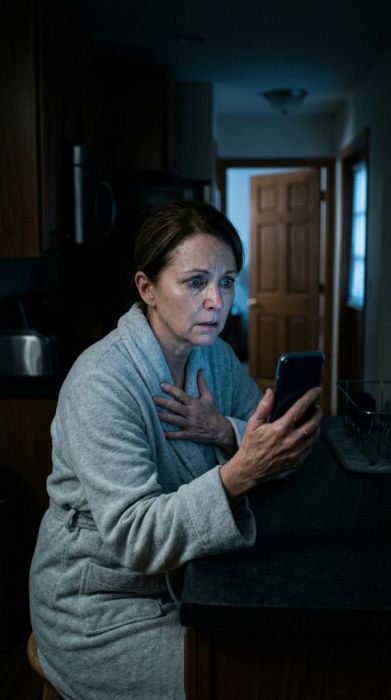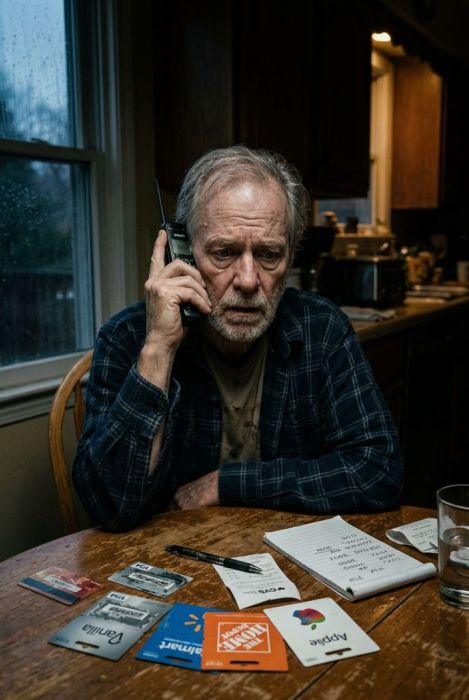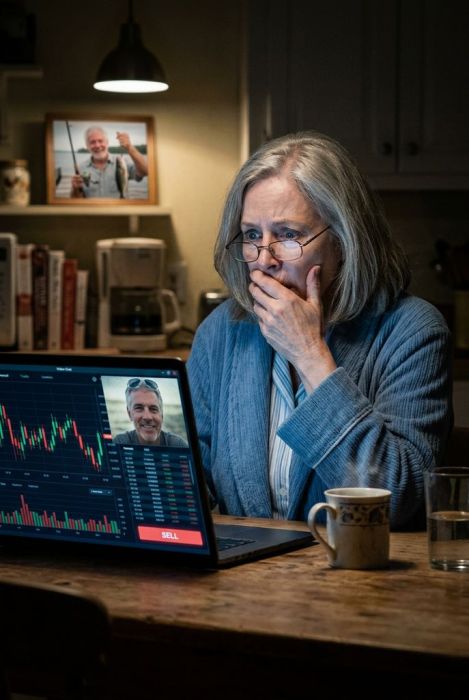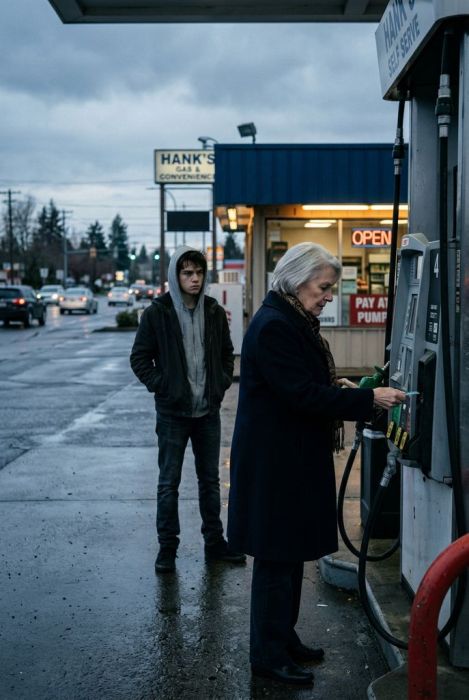
The call came at 6:14 on a Tuesday morning, and for a moment Evelyn O'Connor thought it was her alarm. She had been dreaming of the old house on Grant Street, the one with the creaky porch swing, and Ray was in the dream, laughing at something she could not quite hear. The phone rang through the dream like a distant ship's horn, and when she finally reached for it, her hand found the cold plastic of the receiver — not Ray's warm shoulder, which was the trick her mind still played on her after all these years.
"Is this Evelyn O'Connor?" The voice was a woman's, professional and careful. "Ma'am, my name is Dr. Alicia Fuentes. I'm calling from St. Mary's Hospital in Tucson, Arizona."
Evelyn sat up in bed, her heart suddenly loud. She had spent twenty-two years bracing for calls that began with a stranger saying her name — the call that Ray was dead, found in a ravine off Interstate 57; the call that he was alive in Florida under another name; even the cruelest call of all, telling her he had been down the road the whole time and chosen not to come home. Nothing had prepared her for what Dr. Fuentes said next.
"We have a patient here who has been with us for three days," the doctor said carefully. "He was brought in by police after wandering into a convenience store disoriented. He couldn't tell us his address, but he has been very consistent about one thing. He says his name is Ray O'Connor. He says he has been gone a long time, and he needs to find his wife, Evelyn."
The silence that followed was so complete that Evelyn could hear her own pulse. She gripped the bed frame with her free hand, the way you grip the armrest during turbulence.
"My medical power of attorney," Evelyn whispered, which was not the right thing to say at all. "I've kept it current for twenty-two years. Just in case. God forgive me, I always kept it current." The doctor was quiet for a moment. "Mrs. O'Connor, I'd like you to come to Tucson. There are some things about this case that I think you should see for yourself."
Evelyn's hands shook as she hung up. On the nightstand sat the only photograph she kept in the bedroom: Ray in his trucker's cap, squinting into the sun, one arm draped over the grille of his Kenworth. He had worked the Midwest routes for thirty years — Chicago to Milwaukee, Des Moines to St. Louis, always home by Friday with a pint of chocolate milk and a lottery ticket for her in the cab. She had kept every ticket in a shoebox, because they were the only things he ever carried home for her.
The morning Ray disappeared, in April of 2002, had been ordinary in every way that mattered. He kissed her goodbye at 4 a.m., told her he would be back Saturday, and mentioned he was thinking about taking a different route through Effingham to avoid construction. His rig was found two days later at a rest stop off Interstate 57, engine cold, wallet and phone still in the cab, jacket folded on the seat like he had just stepped out for a minute. His wedding ring was on the dashboard.
The search lasted months — helicopters over the cornfields, dogs through the ditches, three hundred volunteers from four counties. The theories shifted like weather: an accident, a heart attack, a walk-off, a crime. But no body was ever found, and the case went cold, and Evelyn was left with two daughters, a truck still in the yard, and a question she would carry for the rest of her life.
She called her daughter Karen first, the eldest, who lived in Bloomington and worked as a paralegal. Karen arrived within the hour, already on the phone with her sister Claire, a nurse in Cincinnati, who was already looking up flights.
"Mom, you don't have to go," Karen said gently, watching her mother pack a small bag with the fierce precision of a woman who had packed for too many vigils. "Let me call the hospital first."
"He says his name is Ray," Evelyn said, folding a sweater she would never wear in the Arizona heat. "He knows my name." "That's public record, Mom. It's been in the papers for twenty years." "I know," Evelyn said quietly. "I know it's probably not him. But Karen — what if it is?"
The flight to Tucson was four hours, and Evelyn spent all of them looking out the window at the brown, endless ground, remembering the way Ray had described the desert once, on a layover: "Too much sky," he had said. "A man could get lost in all that sky and never find his way back." She remembered it so clearly it made her chest ache.
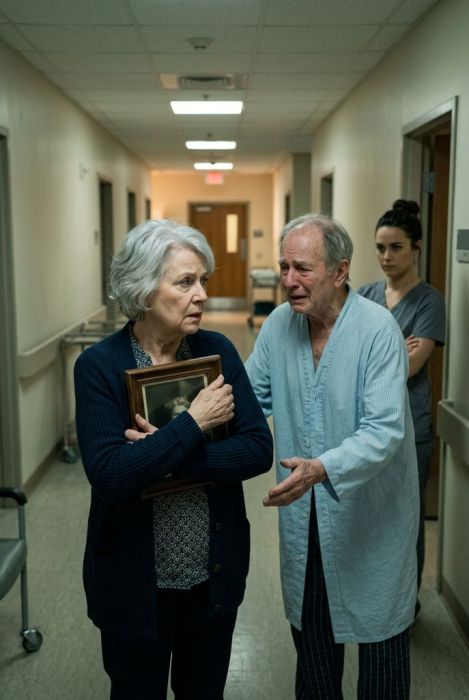
The hospital was modern and bright, all pale yellow walls and the smell of cleaning solution. A doctor with kind eyes — Alicia Fuentes — met them at the reception desk and walked them down a long corridor, speaking in the careful, measured tones of someone delivering news they had delivered many times before.
"Your husband — if he is your husband — has early-stage dementia," Dr. Fuentes said. "He has been living rough for some time, possibly years. When he became confused, a passerby called 911, and he gave the paramedics your name and your old address on Grant Street. He was very upset when they told him the house has been sold."
Evelyn stopped walking. "He asked for the house on Grant Street?" "Yes, ma'am. He said it had a creaky porch swing and a maple tree in the front yard." Claire caught her breath. Karen was quiet, watching her mother's face.
The room they led her to was at the end of the hall. Through a glass panel, Evelyn could see an old man sitting in a chair by the window, thin and gray, wearing a hospital gown and staring out at the desert light. On his left wrist, she could see the pale line of an old scar — the one Ray had gotten in 1987, changing a tire outside of Joliet, his "remembrance of breakdowns past."
Evelyn put her hand on the door handle, and her knees went weak. "Mom, we can wait out here if you want," Claire said softly. "No," Evelyn said. "I've been waiting twenty-two years. That's enough waiting."
She opened the door. The man turned when he heard her, and the look that crossed his face was so raw, so nakedly full of hope and fear, that Evelyn nearly broke down right there. He stood up slowly, unsteadily, his thin hands reaching for her.
"Evie," he said. And the word was like a key turning in a lock she had thought was rusted shut forever. Nobody called her Evie. Not her daughters, not her sisters, not the few friends who remained. Only Ray had ever called her Evie, and hearing it out loud for the first time in twenty-two years, from the mouth of a man who might be her husband, undid her completely.
"Oh, sweetheart," he said, and his voice broke. "I'm sorry. I'm so sorry I didn't come home. I remember leaving. I remember thinking I'd be right back. And then I was old, and you were gone, and everything was different." Evelyn stood frozen in the doorway, every instinct wanting to run to him, hold him, feel whether his bones were the same bones. But something held her back — something small and cold and watchful, the part of her that had spent twenty-two years learning to survive hope.
"Where were you, Ray?" she asked. Her voice was steadier than she felt. He shook his head, tears rolling down his weathered cheeks. "I don't know, Evie. I truly don't. I lost —" he tapped his temple, "— I lost whole years." The doctor had told her to expect this: memory loss, gaps, confusion. People with dementia often hold onto the oldest memories best — the marriage, the house, the name of the town — while the recent past dissolves like sugar in water.
Karen appeared in the doorway behind her. "Mom, I found an email from the county. They have his old records. We can verify his identity through dental—" "Not now, Karen," Evelyn said, but she saw the look that passed between her daughters — the silent conversation that said she was not thinking clearly and needed protecting.
For five days, the man grew stronger with meals and rest, and he remembered astonishing things. He remembered that Evelyn's mother had hated him. He remembered the diner in Terre Haute where they had eaten a fifty-cent pie on their first date. He remembered the way she took her coffee, black with two sugars, the way she hummed off-key when she was happy.
But there were cracks. Little fissures that Evelyn tried to ignore and could not. He did not remember their wedding song. When she asked what had played while they danced at the reception, he smiled his uncertain smile and said, "Oh, Evie, all I remember is that you were the prettiest thing I ever saw." It was sweet — and entirely wrong. Their song was "Unchained Melody," and she had played it at every anniversary for forty years.
He did not remember the shoebox of lottery tickets, or the campground in Michigan where a raccoon ate their steaks, or a hundred other small specificities that make a marriage a marriage.
And then there was the ring. When she asked to see his wedding band — the one he was not wearing when they found him — he told her, with perfect, rehearsed-sounding patience, that he had sold it years ago during a hard winter, and he was sorry. Ray would never have sold that ring. It was engraved inside with "R&E — always," and he had never once taken it off, even to wash the rig. That ring had been on the dashboard of his truck the morning he disappeared. It was in a velvet box in Evelyn's nightstand drawer right now.
She lay awake her fourth night in the hotel, staring at the ceiling, and she knew. She knew the way she had known, twenty-two years ago, that she was looking at a vanished life and not a dead one. This man was not her husband. He had been taught her story, fed it in pieces like medicine, and swallowed it so completely that he believed it himself. But he was not Ray, and someone had gone to a great deal of trouble to make her believe he was.
The thought made her skin crawl. Then the door of the hotel room opened and Karen came in, white-faced, holding her phone. "Mom, you need to see this."
Karen had done what a paralegal does: pulled the police report, the missing persons file, the cold-case records. In the fine print of the 2002 report was a detail that had never made the news — the man who filed the first tip about Ray's abandoned truck had given a name the investigators could never verify. Karen ran that name against current records and found something.
Dana Whitlock, fifty-eight, of Tucson. A former nurse who had been investigated twice, in two different states, for financial exploitation of elderly patients. Neither case went to trial. And her specialty, Karen said, her voice shaking, was volunteering with organizations that reunited missing persons with their families.
The man in the hospital bed — the man who said he was Evelyn's husband — had been discharged into Dana Whitlock's care three days before the hospital called Evelyn. The hospital thought Dana was a family friend. Dana had given them the name "Ray O'Connor." Dana had fed him the story — every detail in the public record, and enough that was not that she must have studied the case like a script for months.
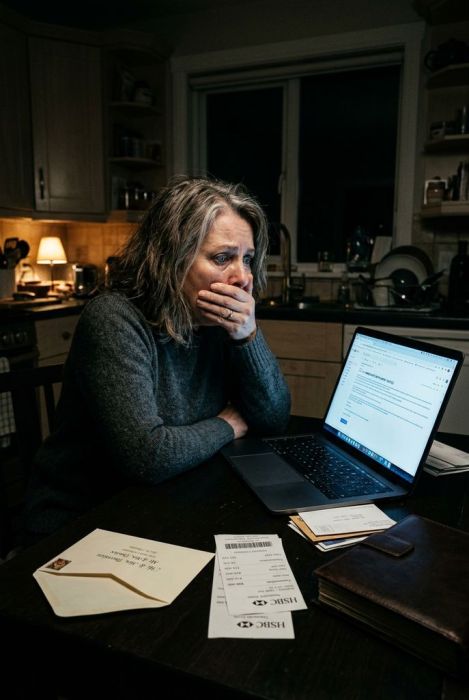
The second call came that night, while Evelyn sat in the dark with her daughters and the truth clicked into place like a bullet into a chamber. The bank manager in Bloomington, sounding apologetic and hurried: someone had presented a signed note — a notarized power of attorney, apparently executed in Arizona — attempting to access the safety deposit box that held Ray's union papers and the small life insurance policy that had matured untouched for two decades. The note was signed "Raymond T. O'Connor," and the notary, the bank manager said, was affiliated with a document preparation service in Tucson.
Evelyn had told the man, on day two, that there was nothing left to take — the pension suspended pending proof of death, the house sold, the savings modest and hard-won. And still, quietly, the wheel had been turning. Someone had always been planning the harvest.
They called the FBI's cold case unit the next morning. Evelyn sat in the hospital atrium with a calm female agent named Foster and told her everything: the wedding song he did not know, the ring he had "sold," the way his kindness felt like a mirror held up to a script. Agent Foster listened without taking notes, and when Evelyn finished, she said something Evelyn would repeat for the rest of her life.
"Mrs. O'Connor, you are looking at a very old crime wearing a brand-new face. Missing persons are worth money. A person who vanished decades ago, who was never declared legally dead — that is a life without a watcher. Passport, pension, benefits, credit, insurance. In the right hands, your husband's name is a license to borrow your grief."
There was no dramatic arrest, no television moment. The man who said he was Ray was collected quietly by a nurse and two officers, who read him his rights in a voice too low for Evelyn to hear. He did not understand. He kept repeating, "Evie? Evie, why are they doing this?" and the sound of her name in a voice so close to the one she had loved broke something in her she did not know she had left to break.
As they led him past her, he stopped, and for one clear moment his confusion seemed to lift like fog off a field. He looked at her — really looked at her — and said, quietly: "I'm sorry, ma'am. I should have known I wasn't him. But Dana told me I was, and I wanted to be. I wanted to be someone's somebody so bad."
Evelyn never saw him again. Dana Whitlock was arrested at her apartment in Tucson, where investigators found a filing cabinet full of cold-case files: two more missing persons, two more rehearsed families, eighteen years of scripted grief. The power of attorney was voided. The bank was notified before a single lock was turned. And Evelyn learned that she had raised her daughters alone for twenty-two years, and then almost lost everything else to a woman who had written her husband's life like a novel and cast an old, broken man as the leading man.
Today, Evelyn keeps the velvet box with Ray's ring in her nightstand, where it has always been. She tells her story at the senior center in Bloomington, and she always ends it the same way, without drama, without poetry.
"Love remembers," she says. "That's the beautiful part, and that's the dangerous part. When someone comes back to you claiming to be a person you lost, let your heart answer — and then check everything your heart can't see. Because grief is not a password. It never was."
Somewhere, maybe, the real Ray O'Connor is still out there, walking through the too-much sky of a place she will never find. But wherever he is, she knows one thing for certain now: his name is safe. His name is hers. And no stranger will ever wear it again.