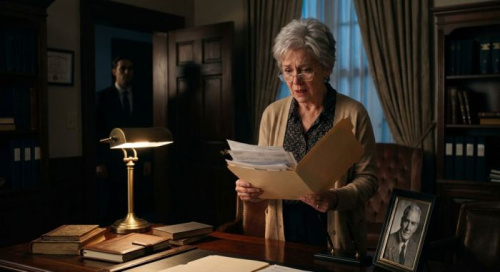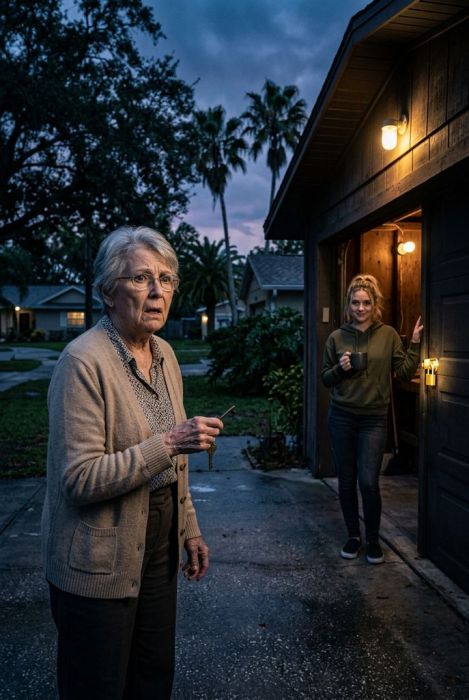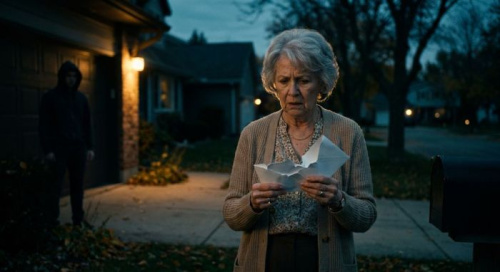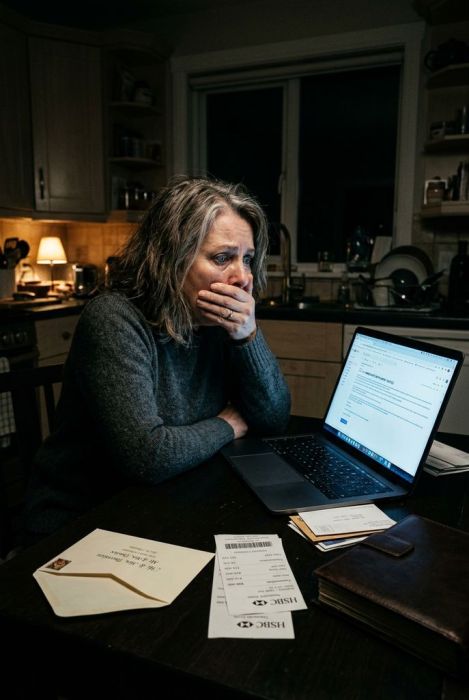
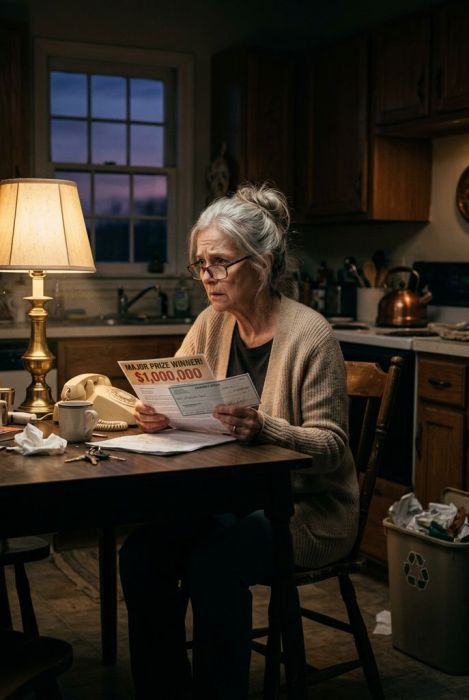
The envelope had no return address — just a glossy fold and a postmark from Clearwater, Florida — and Ruth Callahan almost tossed it into the recycling bin with the pizza coupons. But something made her open it. Maybe it was the way her name was printed in dark blue ink across the top: Ruth Ann Callahan, 2143 Mesquite Road, Phoenix, Arizona. Spelled exactly right, down to the middle name she only used on legal documents.
Inside was a letter on heavy cream paper, and a check. The check was a cashier's check printed on genuine bank stock, drawn on a Wells Fargo branch in Tampa, in the amount of eight thousand seven hundred and fifty dollars. And at the bottom of the letter, in bold letters: FINAL NOTICE — PRIZE OF $2,400,000 — VERIFICATION REQUIRED BY FRIDAY.
Ruth sat down at the kitchen table and laughed. Then she stopped laughing.
She had been alone for three years, ever since Frank died of a heart attack in the produce aisle of the Fry's on Bell Road, clutching a bag of oranges he would never eat. Her daughter Kelly lived in Denver with two kids and a husband who changed jobs more often than the seasons. Her son Derek worked construction in Tacoma and called every Sunday night at seven o'clock sharp, never missing once, not even the week he forgot it was her birthday. Ruth had her garden, her Bible study group, her neighbors on Mesquite Road, and a savings account that had never once surprised her.
She knew about scams. Her friend Marge, two doors down, had lost twelve thousand dollars to a man pretending to be her grandson in jail. Ruth had watched Marge cry at the kitchen window for six weeks. So Ruth knew the rules: nobody gives you money for nothing. Nobody telephones you to claim a prize you never entered. She reached for the recycling bin.
Then she read the letter a second time. "Because of your long history of loyal consumer participation, our records show you were automatically enrolled in our Seasonal Winner Program. No purchase is required. Your cashier's check is your good-faith receipt."
The check looked real. She held it up to the light the way people do in movies, and sure enough, a security thread ran straight through the middle of the paper. It looked like freedom. It looked like the roof repairs Frank had put off for years, like the college fund Kelly's husband kept promising, like the Alaska cruise Ruth and Frank had booked twice and canceled twice.
She called the number. She told herself she was only going to ask one question, say thank you but no thank you, and hang up.
The man answered on the second ring. His name was Marcus Webb, and his voice was warm and slow, the way an old uncle's voice is warm and slow. He said her full name before she offered it. He asked about her garden, and she wondered how he knew she had one. He said Frank would be proud of her for being careful, and Ruth went very still, because she had never mentioned Frank on that call. She had never mentioned anything.
"How do you know my husband's name?" she asked.
"Our records from the consumer survey, ma'am. You filled one out in 2019. It's all in your file. That's how you qualified."
She hadn't filled out any survey in 2019. She knew that the way you know your own handwriting. But Marcus was already walking her through the next step, patient as a schoolteacher, explaining the government processing fee — twelve hundred and forty dollars, by wire transfer, fully refundable at the moment of delivery. He said the word refundable slowly, letting it sit in the air between them like dust in a sunbeam.
Ruth said she would think about it. She hung up with her hands shaking.
The next morning she drove to Desert Horizon Credit Union, the little two-branch credit union at 32nd Street and Bell, where she had banked since 1998. David Mercer was at his window, just like always. David had been a teller there for eighteen years. He knew her dog's name when her own children forgot it. He had come to Frank's funeral and held her hand and said nothing at all, because there was nothing to say.
She slid the letter and the check across the counter. David put on his reading glasses, turned the check over, held it up to the light, and ran his thumb along the paper's edge. Then he smiled and shook his head slowly.
"This is legitimate, Ruth. I've seen counterfeit cashier's checks, and I've seen real ones. This is real bank stock. Real ink. Somebody genuinely handed over real money to draw this."
Her heart knocked against her ribs. "So it's not a scam?"
"It's a real check, that's what I'm telling you," David said. "Just don't send anybody a penny to 'unlock' it, you hear me? No real prize ever asks for money."
She heard him. She thanked him, and he walked her to the ATM, and she felt safe for the first time in days.
That Friday, Ruth wired twelve hundred and forty dollars from her savings to an account Marcus Webb gave her at a bank in Ohio. She told herself it was careful. She told herself she was low-risk, high-reward, exactly the kind of careful person this kind of decision rewarded. She told herself Frank would have called her a fool.
She was right about that part.
Two days later, Marcus called with extraordinary news. Because of her prompt compliance, she had been elevated to the Executive Winner Tier. An additional five hundred thousand dollars, a bonus granted only to winners who completed verification ahead of schedule. The IRS clearance bond for the tier upgrade was three thousand eight hundred dollars, time sensitive, courier standing by.
Ruth sat at the kitchen table with the phone pressed to her ear and stared at the wall. The old alertness crept back into her chest. "I'm not sending you another cent until I hold the first check in my hands."
And Marcus Webb, the uncle-voiced man in Clearwater, said something that made the skin on her arms prickle.
"That's fine, Ruth. The check you're waiting on cleared on Tuesday. I can see it from here. You deposited it at the Mesquite branch, and you're exactly as smart as I told the team you were."
She had not told him the branch. She had not told him anything. She hung up, turned her phone off, and drove straight back to Desert Horizon with her hands gripping the steering wheel at ten and two, the way Frank had taught her.
She asked for the fraud department. She asked for Cassie Alvarez, the young specialist whose name the drive-through teller had mentioned once, months ago, when Ruth joked about her Medicare card.
Cassie was young — maybe twenty-five — with tired eyes and a badge that said Fraud Specialist. Ruth told her everything. Cassie listened, typed, frowned, typed again. Then she said the words that changed everything.
"Ma'am, David Mercer left the credit union two weeks ago. Voluntary resignation. His badge was deactivated fourteen days ago."
"That's impossible," Ruth said. "I saw him this morning. He gave me a lollipop for my granddaughter."
Cassie's face went pale. She typed for another long moment, excused herself, and came back with the branch manager in a navy suit and a man in a dark jacket who showed her a badge: Detective Alvarez. Cassie's father, as it turned out.
The unravelling took three hours. Records showed the man at the window had been real David Mercer, but David had been let go after an internal audit flagged unusual activity on accounts belonging to elderly customers. He had come back to the branch as a customer. He had smiled at her through the glass, called her by name, examined her check, and photographed her deposit slip with his phone the moment she turned to wave at another teller.
The calls warning her of a "skimmer at the ATM," the cheerful voice claiming to be credit union security confirming her balance, the alerts that told her everything was safe — all of it had been routed through a prepaid phone David bought at a Walmart in Mesa. He had used the photographed information to open a small line of credit in her name, set to activate the day the prize cleared.
The cashier's check itself had been drawn with money laundered from another victim's retirement account. Real paper, real ink, real money — briefly — and engineered to vanish the instant the scheme completed. The sweepstakes ring in Clearwater paid David five percent of everything they drained, and he had been drowning in forty-one thousand dollars of gambling debt, hidden from his wife, his church, and everyone who thought they knew him.
Ruth got her twelve hundred and forty dollars back from the restitution fund. The line of credit was caught before it ever activated. The wire to Ohio was recovered in full because Cassie and her father moved the paperwork in under forty-eight hours. David Mercer was arrested at six in the morning at his home in Glendale, wearing the same soft smile he had worn at the window, and he cried when they read him his rights.
The trial was quiet and fast. Ruth sat in the front row and watched the man who had held her hand at Frank's funeral plead guilty to wire fraud, identity theft, and aggravated identity theft. She did not feel victorious. She felt the way you feel when you learn the neighbor you have waved to for a decade was someone else the whole time — hollow and cold and grateful.
On the final day, David was permitted to address the court. He turned and looked at her, and his face was not the face of a monster. It was the face of a man who had made a sequence of terrible choices, beginning with one bet and ending with photographing a widow's bank slip through a pane of glass he no longer had the right to stand behind.
"I'm sorry, Mrs. Callahan," he said. "You were the kindest person in my life."
Ruth stood up, slow, the way she did from her garden bench now. She looked at him for a long moment, and she said the thing she had practiced for a week in the mirror.
"Kindness isn't information, David. You turned mine into a password."
She walked out of the courthouse into the Phoenix sun, and she did not look back.
A year later, Ruth still lives on Mesquite Road. She bought a cross-cut shredder and she shreds everything now, even the coupons, even the pizza fliers. She checks her credit reports four times a year the way Cassie taught her. She reads every letter all the way through before she believes a word of it, and she tells the women at Bible study, in the same quiet voice she once used for prayers: a prize that asks for money is not a prize. A bank that asks for your password is not your bank. And the sweetest voice on the phone may know your husband's name and your branch and your dog's name too — that does not make it yours. It makes it hunting.
She took the cruise. Alone, in the spring, down the coast of Mexico, watching the sun drown in the Pacific from a balcony she paid for with money that was fully and finally hers. She thought about Frank, and about the morning she almost threw the envelope away, and about the man at the window who had known her dog's name. She said a small prayer of thanks that she had walked out of that courthouse with her house, her name, and her story still her own.
Because the trick is not in winning. The trick is in knowing the difference between a blessing and a trap — and in knowing that sometimes they come wearing the same kind face.