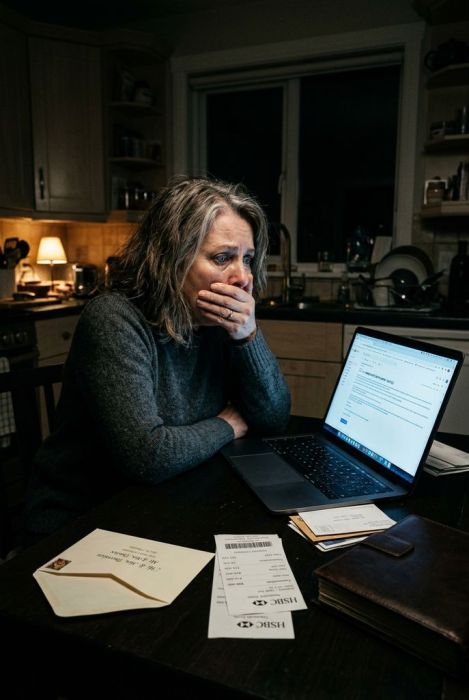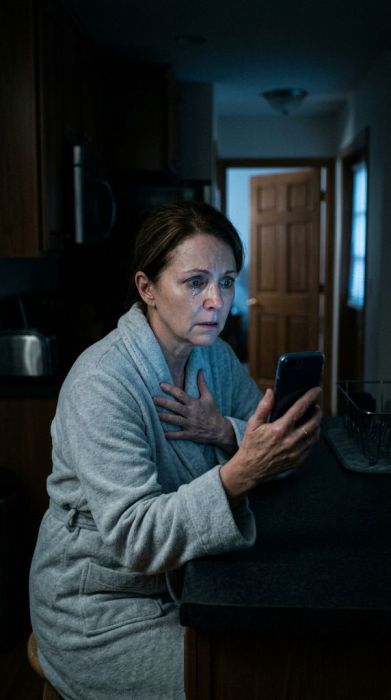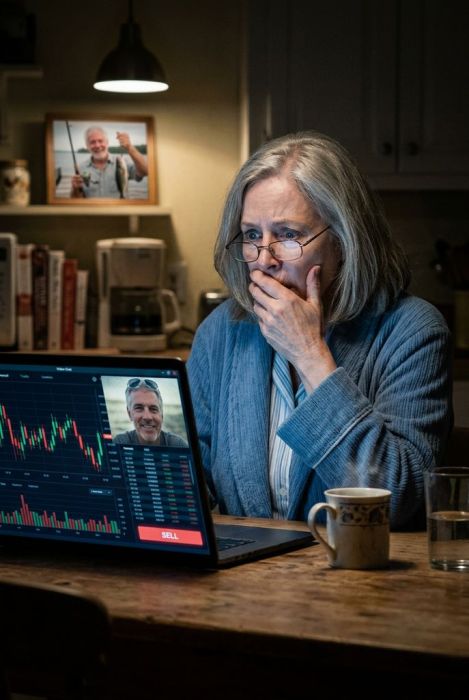
The text from her bank arrived at 9:47 on a Tuesday night, and Patricia Delgado almost swiped it away with the rest of the junk notifications. But the words on the screen stopped her cold. Alert: Check #4521 posted. Amount: $2,400.00. Payee: Summit Home Services, LLC.
Patsy had not written a check in four months. She paid her property taxes online, ordered her groceries with a card she kept in a zippered wallet compartment, and handed her church's building fund cash in an envelope every Sunday, the way she had done for more than a decade. Check number 4521 belonged to the old book in her kitchen drawer, the one her husband Ray had taught her to balance the year they bought the house on Alden Avenue. Ray had been gone eight years now, but she still used his fountain pen to write out the occasional payment, just to feel his handwriting under her fingers.
She called the number on the back of her card at 9:52, and by ten o'clock she was sitting at her kitchen table with a cold cup of tea while a cheerful young woman with a Tennessee accent explained that the check had been cashed at a check-cashing store in Parma. The signature, she said, matched Patsy's account records. Patsy felt the floor tilt. Whoever signed her name had done it well enough to fool the bank, the bank that had known her since 1987, and that was somehow the most frightening detail of all.
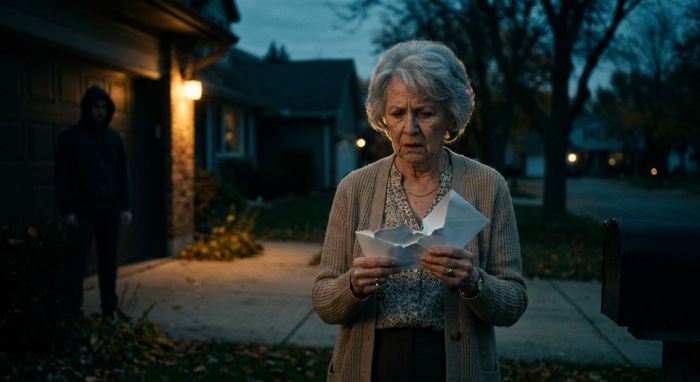
It started, as these things usually do, with a birthday card. Kelsey, her granddaughter, was a nursing student in Columbus, and every April she mailed a card with a check folded inside, always one hundred fifty dollars, always a handwritten note on the back about how much she missed her Nana. The card arrived on a Thursday, four days late, and Patsy knew something was wrong before she even opened the mailbox. The envelope had been slit open along the top with something sharp, clean as a surgeon's cut.
She pulled the torn envelope out and held it to the light. Inside, there was nothing. No card, no check, no note. Just the faint smell of someone else's hands. She stood on her porch for a long time, turning the envelope over and over, trying to convince herself that the card had simply fallen out somewhere between Columbus and Maple Heights. But she had been a cafeteria manager for thirty-one years. She knew the difference between an accident and a cut.
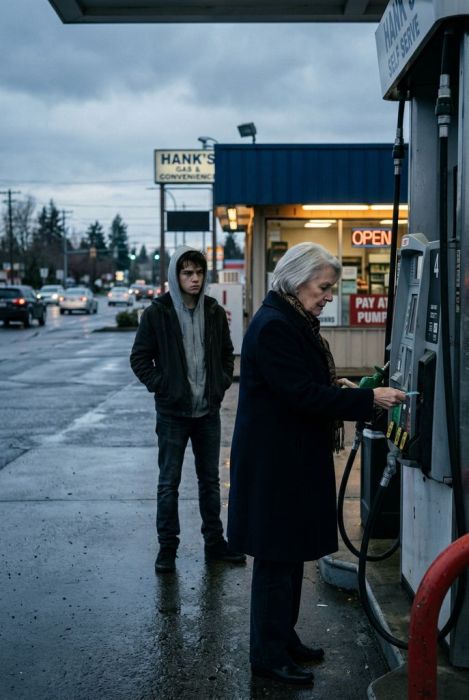
That Saturday, Marcus Whitfield came by to mow her lawn, the way he had done every two weeks since he was fifteen. Marcus was nineteen now, a lanky boy who worked at the AutoZone on the weekends and put himself through community college a few classes at a time. He lived three houses down with his mother, Darlene, a single parent who cleaned offices at night and grew the best tomatoes on the street. Marcus called her Miss Patsy and always asked about her knees.
She showed him the envelope. He frowned and turned it over in his long fingers. "That ain't right," he said. "Somebody cut that open." He told her to keep an eye on her mail, told her people were snatching checks right out of boxes these days, and offered to grab her mail for her whenever she was at her Tuesday card game with the ladies at the senior center. She thanked him and told him he was a good boy, and she meant it. She had known Marcus since he was a gap-toothed kid on a bicycle. He had helped her change a flat tire in a rainstorm when Ray was still alive. She trusted him the way she trusted the sun to come up.
The first check was only the beginning of the lesson.
Carla Nguyen, the fraud investigator assigned to her case, walked her through it over the phone with a patience Patsy hadn't expected from a bank. The word she used was "washing." They stole the check, she said, then bathed it in a chemical bath that erased the ink. Some of them, she added quietly, had gotten very good at leaving the signature intact, so the handwriting on file still matched. They rewrote the payee line, made the amount bigger, and ran it through a business account that had been open for exactly ninety days. Summit Home Services had no phone number, no website, no physical address. It existed only on a piece of paper in a check-cashing store in Parma, and on the statement of a sixty-eight-year-old widow who had never heard of it.
"They work your whole ZIP code," Carla said. "They count on people not checking their statements until the end of the month. By then the money's long gone."
Detective Roy Beckman of the Maple Heights Police Department took the report the following Monday. He was a heavyset man in his fifties with a mustache gone gray, and he told her the department had seen four cases like hers in the past three weeks, all seniors, all on the same two streets. He told her not to leave mail in her box overnight, to drop outgoing mail at the post office, and to consider a locking mailbox. Then he wrote his cell number on the back of his card and told her to call him night or day if anything else vanished.
Something else always vanishes when someone decides you're an easy target.
Kelsey called that night, furious and tearful, and insisted on sending a replacement card by express mail. It arrived two days later, and Patsy took it straight to the bank on Chesterfield Avenue and deposited the new check herself, watching the teller like a hawk. For a week, everything was quiet. She let herself believe the bad moment had passed. She resumed her Tuesday card games, her Saturday grocery runs, her Sunday envelopes at church. She even joked to Darlene over the fence that she should have become a detective, she was so vigilant now.
Then the insurance refund came. Her homeowners policy had been overbilled by mistake, and the company mailed her a check for one thousand two hundred forty dollars. Patsy left it on the entryway table for three days, meaning to deposit it, meaning to take it to the bank, meaning, meaning, meaning. On the fourth morning it was gone. She tore the house apart, emptied the drawer under the telephone, checked between the couch cushions, and finally called Detective Beckman with a shaking voice.
"Somebody knows when the mail comes," he said, and she heard something in his voice she hadn't heard before. "Somebody's watching your place."
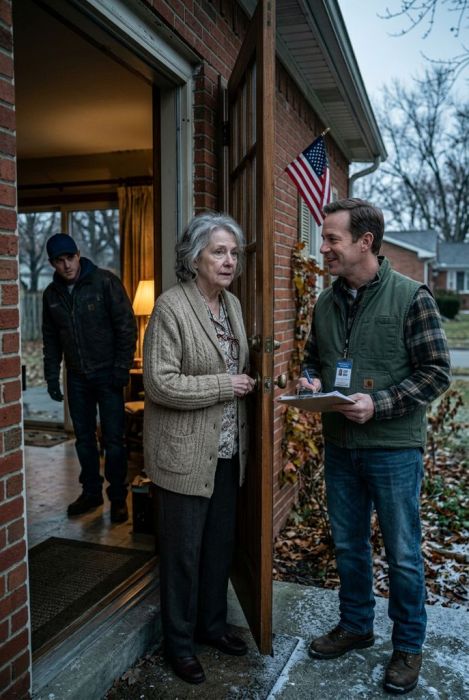
Two nights later, Marcus knocked on her door with a box in his hands. His mother's employer had given away free home security cameras at a company picnic, he explained, promotional units nobody wanted. He had one left over. "Let me put it up for you, Miss Patsy, point it right at your mailbox. Peace of mind." He was so earnest, so eager to help, and she was so tired of feeling helpless that she let him. He installed the little white camera on the corner of the porch in under an hour, connected it to her Wi-Fi, and showed her the grainy feed on his phone before setting up an account he said she could check anytime.
Patsy never checked it. She wasn't good with apps, and Marcus was always telling her not to worry, that he was up at five in the morning for work anyway, that he'd keep an eye on the feed for her. She handed him the Wi-Fi password without a second thought and went back inside to make her tea. The camera blinked its small red light at the mailbox like a patient animal, and Patsy Delgado slept better than she had in weeks, certain she was protected.
The fourth check was the one that broke her.
Friday morning, she wrote her quarterly pledge to the church building fund. Three hundred dollars, a check she had written for years, then sealed in the envelope and walked out to the blue run box at the corner because Detective Beckman had told her the mailbox out front was too easy. She watched the mail carrier empty the box at noon. She felt safe. The next afternoon, as she was shelling peas on the back porch, her phone buzzed with a notification she had come to dread. Check posted. Amount: $4,300. Payee: Summit Home Services, LLC.
She sat down on the porch steps and cried in a way she hadn't cried since Ray's funeral. Not for the money, though it was real and it hurt. She cried because someone had taken her mail right out from under her nose even after she'd done everything right, and because for the first time in her life she understood what it meant to be hunted.
Detective Beckman came to her door that evening with photographs. The check-cashing store in Parma kept security cameras pointed at the counter, and the person who had cashed both Summit checks had been careful, hood up, head down, quick. But the second photo was different. The person in it wore a red-and-black varsity jacket, and the camera had caught a clear flash of the sleeve. Stitched in worn gold thread was a name: Whitfield.
Patsy stared at the photograph for a long time. She recognized the jacket because she had watched Marcus wear it through two winters, had sewn a button back on its cuff herself when his mother couldn't find her needle. She wanted to tell the detective it was a mistake, that the jacket had been stolen, that someone was framing her Marcus. But she had been a cafeteria manager for thirty-one years. She knew the difference between a coincidence and a patch of gold thread with a boy's name on it.
Then Detective Beckman told her the rest, gently, the way you break news to someone you've come to respect. They had obtained a warrant for the cloud account attached to her new security camera. The camera Marcus installed, the one that was supposed to protect her, had been streaming to a phone that belonged to Marcus Whitfield. The logs showed him watching the mailbox feed at 5:12 in the morning, the day the insurance refund vanished. At 4:58 the morning the church check went into the blue box, he had been watching the street corner from his bedroom through a window he'd been given a front-row seat to.
"He wasn't watching your mailbox for you, Miss Delgado," the detective said. "He was watching it for himself."
Patsy drove home from the station on Friday with the windows down and the radio off. She had identified the photograph. She had signed the affidavit. The arrest was scheduled for the next morning, and Detective Beckman had urged her to stay away. But when she pulled into her driveway, Marcus was already on her porch, kneeling by the camera with a screwdriver in his hand, adjusting the angle. He stood up when he saw her, and he smiled that easy smile she had trusted since he was a gap-toothed kid on a bicycle.
"Hey, Miss Patsy," he said. "Just checking the feed. Something looked crooked."
She looked at him for a long moment, at the boy she had changed a flat tire with, the boy whose button she had sewn, the boy who had called her Nana's friend and brought her tomatoes from his mother's garden. Then she said his name, and something behind his eyes shifted. He saw the car turn the corner at the end of the street, the unmarked sedan with the man in the gray mustache behind the wheel, and his face did something Patsy would see in her sleep for years.
"It was just supposed to be one time," Marcus said, and his voice cracked like it had when he was fifteen. "I found the card in the box, the one from your granddaughter. It was sitting right there, Miss Patsy. It was just sitting there. My cousin knew a guy who washed checks. Tuition was due. My mama's rent was two months behind. I swear to God I was going to pay you back. I was going to fix it. That's why I put the camera up, so I could make sure nothing else got stolen." He stopped, swallowed, and the truth came out smaller and quieter. "And so I'd know when the mail came. That was the real reason. I'm sorry. I'm so sorry."
He was still apologizing, still saying her name over and over, when Detective Beckman climbed the porch steps and read him his rights. Darlene came running out of the house three doors down in her housecoat, screaming Marcus's name, and Patsy stood on her own porch and watched a neighborhood's worth of trust collapse like a house of cards. Marcus never looked at her again. They took him away in the back of the sedan, and the little white camera on the corner of her porch blinked its red eye at the empty mailbox all night long.
The bank refunded both checks after a thirty-day review, which Carla Nguyen warned her was the best outcome anyone could hope for. Marcus was charged with identity theft and forgery, and because it was his first offense, because he cooperated, because his lawyer made sure the judge heard about the two months of back rent and the tuition bill, he got probation and an order to pay restitution. Darlene paid Patsy back in cash, two hundred dollars a week, every Friday, without ever quite meeting her eyes. Kelsey started sending money through an app instead of checks, and she called every Sunday to make sure her Nana was eating.
Detective Beckman stopped by once more before he closed the case, bringing a stack of pamphlets from the Postal Service. Use gel pens, he told her, because the pigment soaks into the fiber of the paper and no chemical bath can lift it. Drop your mail inside the post office or hand it to a carrier, never leave it in a box for collection overnight. Sign up for Informed Delivery so you see scans of what's coming. Go paperless. Check every statement line by line, every single month. And never, ever hand your Wi-Fi password to anyone, not even a boy who mows your lawn, not even a boy whose button you sewed.
Patsy kept the camera. It's still on the corner of the porch, pointed at the mailbox, where she can see it from the kitchen window. But the feed goes to her phone now, and only her phone, and she checks it every morning with the same careful attention she once gave to balancing Ray's checkbook. She still thinks about Marcus sometimes, about the gap-toothed kid and the boy who carried her groceries, and she still doesn't fully understand how one hungry choice can rewrite a whole life. But she understands the mailbox now. Some lessons, the mailbox teaches you exactly once.