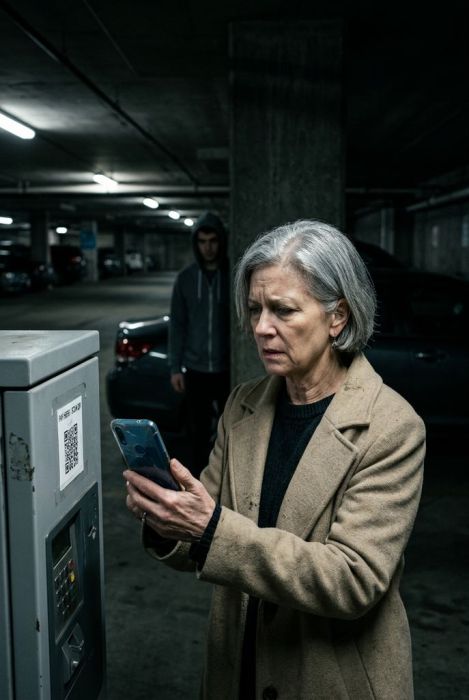
The register beeped twice, and Evie Carmichael felt the whole line behind her go quiet in that terrible, patient way. The birthday cake — vanilla with buttercream roses, for her granddaughter's twenty-first — sat between two bags of frozen casseroles, and the young cashier at Weis Markets was frowning at the little screen as if it had personally insulted her. "I'm sorry, ma'am," she said, not quite meeting Evie's eyes. "It says declined."
Evie felt heat climb her neck. "That can't be right. Run it again." The card went through a second time, and the machine coughed out the same red answer. Behind her, somebody sighed. Evie fumbled in her purse and found the credit card she kept for emergencies — the one she had always been secretly afraid of — and it worked, and the moment passed.
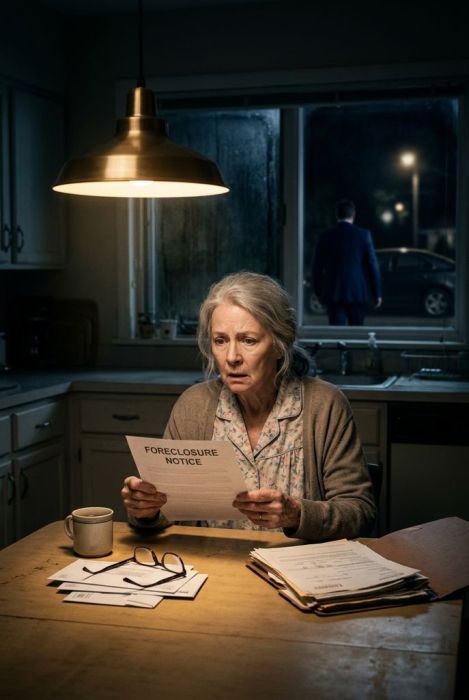
She drove home with the cake on the passenger seat and a low, unfamiliar worry in her chest. Her balance had been fine on Tuesday, when she checked it the way she did every week, sitting at the kitchen table with her reading glasses and her statements spread out like a game of cards. Harold had handled the money for forty years; after he died, she had taught herself to do it, slowly and stubbornly, the way she learned everything.
The call came Thursday morning at 9:14, from a number she didn't recognize. "Mrs. Carmichael? This is Natalie Reyes from the fraud department at Lehigh Valley Federal." Evie gripped the phone. "I'm sorry to ask, but — were you in Newark, New Jersey, on Wednesday morning?" Evie said she was in Allentown, Pennsylvania, in her kitchen, in her bathrobe. "Well," Natalie said gently, "someone with your card was."
The transactions came out of her like a confession: $1,500 from an ATM at 2:47 in the morning, another $1,500 at 3:12, another at 3:40, and then nearly $1,900 in purchases by noon. Six thousand, three hundred and forty dollars in under nine hours. "But I had the card," Evie insisted. "I used it Tuesday, at the gas station. That was the only time." She heard herself defending herself to the fraud department, as if she were the one on trial.
Natalie's voice softened into the tone people use when they need you to hold something heavy. "That's exactly when it happens, ma'am. We think someone put a card skimmer on the pump. A little device that fits over the card slot and reads your number." She paused. "They usually pair it with a camera or a keypad overlay to catch your PIN. It takes about eleven seconds to install."
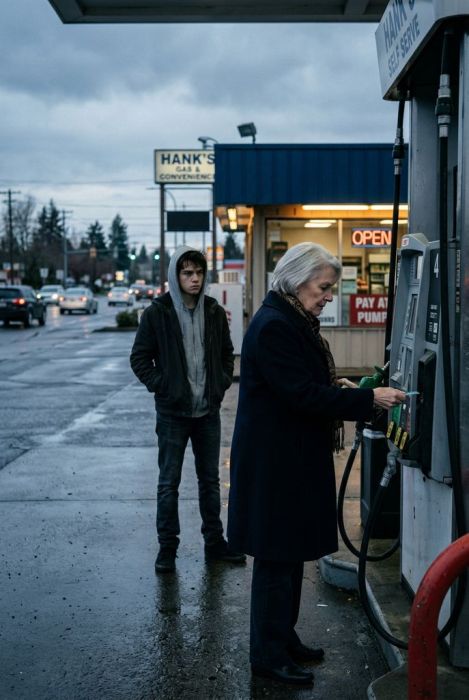
Evie closed her eyes and saw the Tuesday ritual she had kept for eleven years like a small religion: every Tuesday at four o'clock, she pulled Harold's 2012 Buick into Miller's Sunoco on Hamilton Street and bought thirty-eight dollars of regular. Harold had pumped his gas there for thirty years; after he died, she kept going because it felt like visiting him. She always cupped her hand over the PIN pad, some old tip Harold had taught her when ATM cards were new. "But I cover my PIN," she said. "Always."
"That's good," Natalie said. "But some of these overlays have a camera built right into the keypad, or the whole pad is a fake that records what you press. It doesn't matter if you cover it if the pad itself is watching." Evie was quiet. The room felt smaller. "The first withdrawal was from an ATM two blocks from Miller's," Natalie went on. "That's their test run. They try the card close to home first, make sure it works, then they hit the bigger markets before the bank catches on." She said it the way a doctor describes a disease.
They froze the account. They canceled the card. Evie would get the money back — Regulation E, sixty days to report, and she had reported in two — but for now she had forty dollars in cash, a credit card she'd always been afraid of, and a Tuesday ritual that suddenly felt like an open wound.
Over the next week, the small things started surfacing. Marcus, the station manager, had told her twice that the card reader on Pump 4 — the pump closest to the building — had been "acting funny" for weeks. He had called the pump company; they had found nothing, because skimmers hide inside the reader, and the ones bolted over it are only the cheap ones. And the week before it happened, Dylan had told her, "Don't use that one, Miss Evie. The one by the door's been acting funny. Use the middle one." She had thought he was being thoughtful. She kept replaying it, the way you replay a car crash in your head.
Dylan Kowalski. Everyone at Miller's knew Dylan. He was nineteen, a graduate of the high school down the street, saving up for a heating and air conditioning trade school. He called every customer over sixty "Miss" or "Mister," and he meant it. He had pumped Evie's gas for two years, checked her tires without being asked, once shoveled her driveway after a March ice storm and refused the twenty dollars she tried to press into his palm. His grandmother Betty was Evie's bridge partner, and Betty had raised Dylan since he was six, after his mother left and his father drifted.
Everyone loved Dylan. He read to Betty when her eyes got tired; he helped the church set up the food pantry; teachers remembered him as the kid who stayed after class to clean the whiteboards. The boy at the gas station with the soft eyes and the quick "Miss Evie." The boy who was somehow the exact person you would trust with your card, your car, your driveway, your grandmother.
Natalie called again the following Tuesday with the shape of the disaster. The skimmer had been on the pumps at Miller's for at least three months. It was not just Evie: forty-one cards had been burned across three stations — Miller's, a Sunoco in Bethlehem, a Marathon out by the highway — all of it feeding into the same network. The device found inside Pump 4 was a modern one, with a Bluetooth module and a microSD card, the kind of equipment you could order online and assemble at a kitchen table. And the footage from the other stations showed a figure in a gray hoodie, installing the skimmer at two in the morning on Thursdays, collecting it again late Sunday nights.
"There's a pattern," Natalie said. "The test runs are always the same machine — the PNC ATM on Seventh Street, two blocks from Miller's. Close enough to walk, far enough not to be suspicious." She paused. "We asked them to pull three months of that camera." Evie didn't ask what they found. She already knew, the way you know in a dream that the door is going to open.
The video was grainy, black-and-white, the kind of footage that makes everyone look like a ghost. But on a clear Thursday in November, the ATM's screen lit the figure's face for two full seconds — a boy with a high school grin, a clean jaw, the kind of face you would pick to ring your doorbell selling raffle tickets. Evie watched the clip on Natalie's laptop in the credit union's back office, and she did not recognize the man in the gray hoodie. She recognized the boy. "He pumps my gas," she said. The words came out flat, like something she was reading aloud. "He calls me Miss Evie. He shovels my walk. He's nineteen years old." She looked at Natalie. "You're sure this is him?"
It was him. The warrant came down on a Friday, but the police waited, because the pattern was the playbook: install Thursday, collect Sunday, test Monday. They wanted the network — if there was a network — and they wanted the hardware. What they found in the garage apartment above Betty's house made the officers go quiet. A laptop with the encoding software. A box of blank white cards. Six thousand, one hundred dollars in cash in a shoe box, next to a stack of losing bets on the Philadelphia Eagles, a sportsbook app open on the phone, and a balance printed in red that read negative nine thousand, four hundred dollars.
He had learned to gamble at nineteen, in the parking lot of a bar in Bethlehem where nobody carded him. He had won at first — they always do — and then he had chased it, quietly, secretly, the way you chase anything you can't say out loud. By the time the bookie asked for his money or his mother's address, Dylan had found a tutorial video that taught him how to build a skimmer from parts that arrived in unmarked boxes. He had told himself a story to get through it: it's just plastic, it's just numbers, the banks cover it, no one really loses. He believed it the way you believe a lie you're telling yourself in the dark.
They arrested him on a Tuesday at 4:07 in the afternoon, because the detectives had learned his habits, and because the cameras worked best in daylight. What they did not plan was that Evie would be there. She had come to fill the Buick — same day, same pump, because she was not going to let a crook take Harold's ritual from her. Two unmarked cars pulled into Miller's; three men in jackets crossed the lot toward the pump island where Dylan was wiping a customer's windshield. He saw Evie. "Miss Evie!" he called, and his voice cracked, and for half a second she almost believed he was happy to see her. Then one of the officers said his full name, and Dylan's face went completely still, like a television with the sound off.
Evie crossed the lot before anyone could stop her. She ignored the officers. She stood in front of the boy in the gray jacket and asked him the question she had been carrying for nine days. "I let you shovel my walk, Dylan. I gave you my card every Tuesday for two years. I brought your grandmother flowers when her hip went out. How does a boy who reads to his grandmother do this?" He looked past her, at the pumps, at the sky, anywhere but at her face. "I'm sorry," he said. "That's not what I asked," she said. He opened his mouth, closed it, and then whispered something she would carry forever: "I found it on the internet."
That was all he gave her. It was not an excuse, or an explanation, or a story about a grandmother's medical bills or a house in foreclosure. It was the truth, stripped down to bone: a kid who read to his grandmother at night had spent his afternoons reading card numbers off a stolen microSD card. The officers cuffed him and started walking him to the car, and Dylan held his chin up, the way the guilty sometimes do, until the door of Miller's Sunoco swung open and Betty came out.
Marcus had called her. That is what you do when your nineteen-year-old employee is arrested in front of God and everybody. Betty walked out onto the lot in her house slippers and her good coat, and she looked at her grandson the way you look at a house after a fire — at everything that was there, and everything that is gone. "Dylan?" she said. Not a question. Not an accusation. Just his name, said like a prayer with the ending torn off. And the boy who had not flinched for the police finally broke. He was crying before they put him in the car, and Betty stood in the lot until the car was out of sight, and then she let Evie hold her, two old women standing at the pumps where Harold used to fill up his Buick.
Two months later, the money came back. Regulation E, they told Evie — the bank's insurance against exactly this. Sixty days to report, and she had reported in two, so the six thousand three hundred and forty dollars reappeared in her account like a borrowed thing returned. But something else had been taken that no law could give back. She stopped going to Miller's. She drove the extra seven minutes to a station with tap-to-pay and pumps she could see from behind the wheel, and she learned, with a strange grim pride, to check the card reader before she used it — the wiggle test; you wiggle the card slot, and if it moves, you walk away.
She learned that the camera hides in the keypad overlay, or in the little slot above it; that a Bluetooth skimmer can beam your numbers to a phone in a parked car fifty feet away; that a skimmer can be installed in eleven seconds and removed in six; that the busiest pumps are the best for thieves, because a line of people is a collection plate. And she learned the most important thing, the one she now teaches: always use the credit card, not the debit card, because the credit card is the bank's money, and the debit card is yours — and the difference between those two sentences is the difference between an inconvenience and a disaster. Financial fraud works because it hides inside routines, and routines are exactly what a thief studies.
On a Tuesday afternoon in January, Evie stood in front of a small room at the senior center with a whiteboard, teaching a twenty-minute class she had quietly invented. Natalie Reyes had donated the evidence — a cut-open skimmer, mounted on a board like a butterfly in a frame. Evie called it show and tell for grown-ups. She showed them the device, held up the keypad overlay, explained the Bluetooth trick, told them about the test-run ATM two blocks from home. "The machine didn't betray me," she told the room. "A boy did." She let that sit in the air. "And the difference is — machines, you can check. People, you can't." She looked at the faces in front of her, a roomful of widows and veterans and grandparents who had all trusted someone. "So check the machine. Cover your PIN with the other hand. Use the credit card. Check your statements on the app, not the paper, because the paper lies by arriving late." She smiled, and the smile was sad. "And when a kid offers to pump your gas, you can still say yes. Kindness is real. Just watch his hands."
The Tuesday ritual was gone. Evie did not go back to Miller's, and she did not play bridge on Thursday nights anymore — not because of Betty, who was as much a victim as anyone, but because the game was at Betty's house, and the house had a garage apartment above it, and some doors you just don't walk through again. But she had the class now, and a little whiteboard with tally marks for every person who told her a story afterward — a cousin skimmed at a truck stop, a neighbor hit by a fake bank text. The board read forty-seven the last time anyone counted, and it kept growing, and Evie decided that was the real lesson after all.
The scams change. The numbers get bigger, the devices get smaller, the voices on the phone get more convincing. But the teeth are always human. Somebody smiles, somebody helps, somebody knows your name and your routine and your Tuesday afternoon. Identity theft does not announce itself; it waves at you from the pump island. "I'm not telling you to be afraid," Evie says at the end of every class. "I'm telling you to be awake. Harold used to say trust is earned. He was right. It's just that in my day, we never thought to check the machine while it was earning it."