The winning numbers flashed across the television above the counter at Cindy's Diner at 6:12 on a Tuesday morning, and Ruth Banning nearly choked on her coffee. She had played the same set of numbers with the same twelve neighbors for twenty-two years, and she knew them the way she knew the words to "Amazing Grace." Four. Seventeen. Twenty-three. Thirty-one. Forty-two. And the Powerball, nine. Every single one.
She fumbled for her phone, hands shaking so badly she could barely tap Dot Calloway's name. Dot ran the pool — had run it since the summer of 1999, when Ruth's husband Harry was still alive and they all still had hair. Every Wednesday, twelve of them handed Dot ten dollars in cash. Every Thursday, she brought the tickets to the coffee circle at the American Legion hall and passed them around the table like communion wafers. It was ritual. It was trust. It was the most dependable thing in Ruth's life since Harry died.
"Dot," Ruth said the moment the line picked up. "Turn on the news. The numbers. Honey, we hit. We hit the jackpot."
There was a pause so long Ruth thought the call had dropped. Then Dot's voice came through, thin and strange. "What numbers, sweetheart?"
"The pool numbers! Four, seventeen, twenty-three, thirty-one, forty-two, and the Powerball nine! Dot, we won!"
Another silence. Ruth could hear Dot breathing — short, shallow little breaths, the way she breathed when her asthma flared up. "I'm so sorry, Ruth," Dot said at last. "I bought the wrong ticket this week. I must have grabbed a quick pick by mistake. I'm sorry, honey. I really am."
Ruth spent the rest of that day in a fog. She called the other members one by one, and every conversation was like burying something alive. Marjorie Connelly cried. Ed Kowalski, who had been playing the same numbers since before his bypass surgery, kept saying "No, no, no" like a man watching his house burn. For twenty-two years they had joked that if they ever won, Dot would build them all a clubhouse with a bar. Now the joke felt like a eulogy.
She should have let it go. She tried to let it go. But a week later, Dot Calloway's son Kyle rolled into the senior park in a brand-new Ford F-150 with leather seats and a sticker price Ruth recognized from the flyer the dealership had been mailing her for months. Kyle had lived in his mother's basement for eleven years. He did not have a job anyone could name. And suddenly there he was, waxing a seventy-thousand-dollar truck in the driveway of a modest brick ranch on Emerson Lane.
The next Thursday, Ruth did something she had never done in all those years. She drove to the Speedway gas station on Route 9 — the same store where Dot bought the tickets every single Wednesday — and she went inside and bought a cup of coffee and a scratch-off, and she asked the clerk, a kid named Marcus who had grown up two streets over, whether anybody had won big around here lately. Marcus shrugged. "Somebody hit last month," he said. "My manager said it was a big one. Paid out through some trust thing. Lawyer came in, wanted to see the cameras."
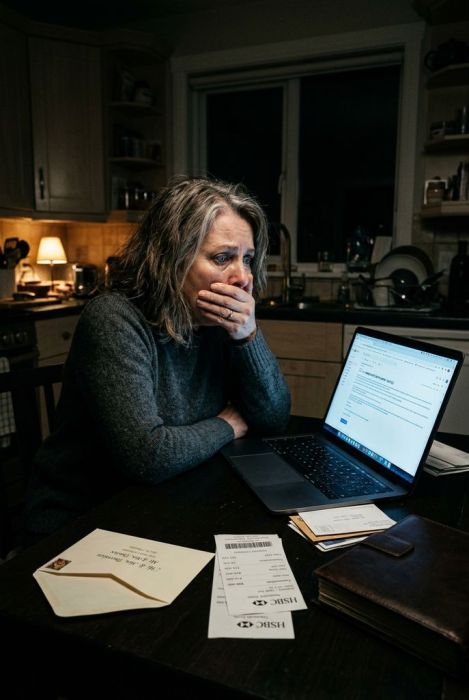
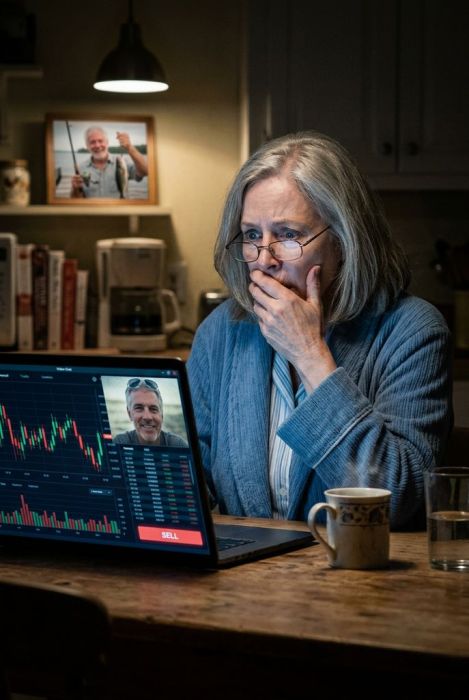
Something cold settled in Ruth's chest. She went home and opened her laptop — the one her granddaughter had bought her for Christmas — and she typed "Ohio Lottery recent winners" into the search bar. The page listed the paid claims, most of them anonymized through trusts, the way wealthy people did. One entry stopped her cold. The claim had been filed nine days after the drawing. The ticket had been purchased at the Speedway on Route 9, Columbus, Ohio. And the claim had been filed in the name of the Calloway Family Trust.
Dot's last name was Calloway. Her son's name was Kyle Calloway. For the first time in her life, Ruth Banning felt the floor move underneath her feet.
She told Marjorie Connelly over coffee, and for the first time in their forty years of friendship, Marjorie looked at her like she was losing her mind. "Dot Calloway? Ruth, she's the one who sat with me the whole day at Ray's funeral. She is not a thief." "I'm not saying she planned it," Ruth said. "I'm saying the truck is real." Marjorie shook her head and changed the subject, and Ruth understood then exactly how alone she was going to be in this.
She went to the police anyway — a young officer at the precinct on Weber Road who listened with real sympathy and then explained, gently, that this was a civil matter between friends, and that without a written agreement there wasn't much anyone could do. "I'm sorry, ma'am," he said. "But a lottery ticket belongs to whoever is holding it." Ruth thanked him and drove home with her hands white-knuckled on the wheel.
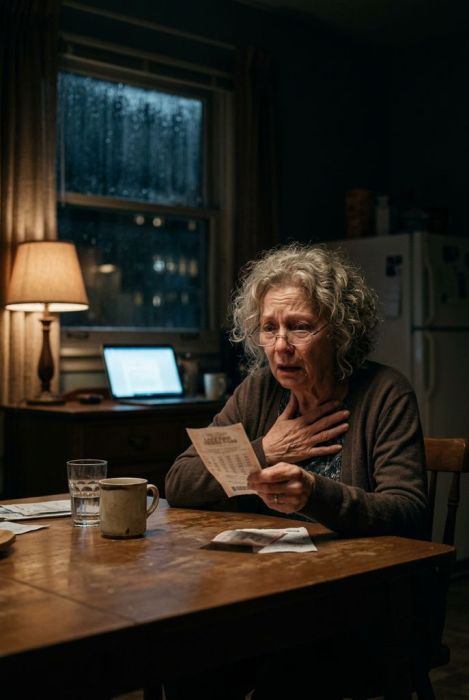
That night she packed a Tupperware of her famous macaroni salad and drove to Dot's house, because that was what you did when you needed to talk to a woman you had known since the Nixon administration. Dot's face went pale when she opened the door. Kyle was in the kitchen with half a sandwich in his mouth, the television tuned to the fishing channel. Ruth set the Tupperware on the counter and saw, half-buried under a stack of old phone books, a crumpled receipt from the Speedway. Dot snatched it away before Ruth could read a single number. But not before Ruth saw the date. It was the date of the drawing. And the total was sixteen dollars.
Fifteen dollars for fifteen tickets. One for each of them. Sixteen dollars meant sixteen tickets. Somebody out of that machine had an extra one. And the Calloway Family Trust had claimed the jackpot nine days later.
"Sixteen dollars, Dot," Ruth said. Her voice was quiet, the way it always got when she was about to cry. "Fifteen of us. Fifteen tickets. What was the sixteenth?"
Kyle's jaw worked. He took a step forward, and for one horrible second Ruth thought he was going to hit her. "Get out of my mother's house," he said.
"Kyle," Dot whispered. "Kyle, please."
"Mom, shut up."
It was the way he said it — the practiced, flat cruelty of it — that cracked something open in Dot Calloway. She was the softest of them all, the one who brought cookies to every funeral, the one who remembered every birthday. Twenty-two years of standing at that gas station counter with twelve neighbors' cash in her apron pocket. She lowered herself into a kitchen chair, and when she looked up at Ruth, her eyes were wet and ruined.
"The first few years, I was as honest as the day is long," Dot said. "Every dollar went to tickets. But then the roof caved in, and the insurance didn't cover it, and Kyle was in his bad patch with the gambling, and..." She stopped. "It started with ten dollars. Just ten dollars out of the pot, and I swore I would pay it back. Then it was twenty. Then it was so easy, Ruth. Nobody ever counted the tickets. Nobody ever checked the numbers against the sheet."
Ruth felt tears coming and did nothing to stop them. "The night we won," she said. "You bought fifteen tickets for us. And one more. For Kyle."
"I bought sixteen tickets," Dot said, "with the pool money. And the one that won —" She couldn't finish. She didn't have to.
"Mom." Kyle's voice was loud now, desperate. "Mom, you shut your mouth. Right now."
Dot looked at her son, and something in her face shifted — twenty years of denial and excuse-making and telling herself it was all for him, draining away like water from a cracked bowl. "The truck is in your name, Kyle. You think that makes you safe. But the trust has my signature on every page, and I opened a separate account for the payout, and our lawyer has copies of all of it." Her voice broke. "We're both going to prison unless I tell the truth. And I'm going to tell the truth tonight."
She told it at the American Legion hall, to the eleven faces she had known for half her life. The room was so quiet you could hear the ceiling fan. Ruth sat beside Marjorie, and Ed Kowalski held his wife's hand, and Dot stood at the head of the table in the same blue sweater she always wore, and she confessed to every single Wednesday for twenty-two years. The skimmed cash. The tickets never bought. And finally, the jackpot — the ticket she had bought with their money and claimed through a trust with her own son's name on it.
What happened next moved fast. The lottery commission froze the payout on the strength of the bank records and the store's surveillance footage. The group's lawyer — Marjorie's nephew, a sharp young man from Cleveland — filed a civil suit, and the court ruled in favor of the pool, because twenty-two years of documented contributions and a consistent set of numbers constituted an enforceable agreement under Ohio law. The money was returned. Almost all of it. And then the criminal case came, and it was Kyle who folded first, pleading to charges related to the fraud, pointing at his mother from the witness stand like she was a stranger.
Dot Calloway stood before a judge and took responsibility for everything her son accused her of. She was seventy-one years old, with a bad heart and no family left to speak for her, and the judge gave her probation and restitution, because even the prosecutor could see she was more broken by her own choices than any sentence could break her. Kyle got five years. The story made the local news for exactly one weekend, and then the town moved on, the way towns do.
The money came back, and that part was a blessing. Marjorie paid off her mortgage. Ed finally fixed the roof on the house he had been born in. Ruth put her share into a savings account for her grandkids and donated the rest to the food bank, because she could not stand to look at it. What did not come back was the friendship. You cannot sit across a table from a woman for twenty-two years and then watch her take your dream apart piece by piece, and expect anything to be the same.
Ruth visited Dot once, six months later, at the little apartment she rented above her sister's garage in Reynoldsburg. They sat on the back steps with two cups of coffee, and Dot said, "I never meant for it to go that far," and Ruth said, "I know you didn't. That's the worst part." They did not hug. They did not cry. They just sat there until the sun went down, two women who had known every secret of each other's lives except the one that mattered.
These days Ruth still buys a lottery ticket every Wednesday, but she buys it for herself, and she signs the back of it before she leaves the store, and she keeps it in a zippered pocket where nobody but her can touch it. She laminated the old pool agreement and keeps it in her recipe box, a reminder of what trust looks like when nobody writes it down. It's not as much fun as it used to be. But it's honest. And after twenty-two years of believing one thing about a friend, Ruth Banning has learned that honest is the only thing worth betting on.