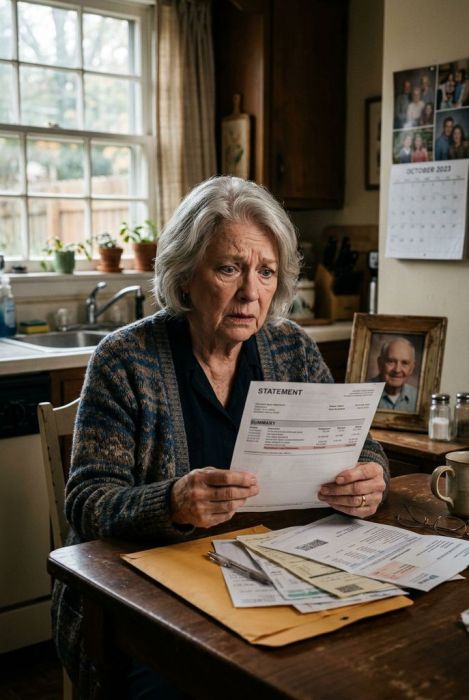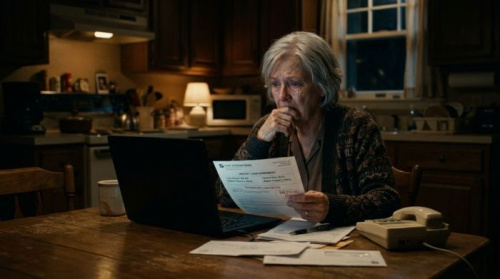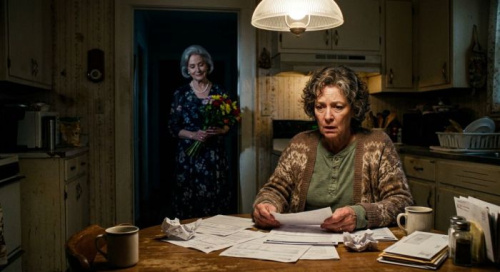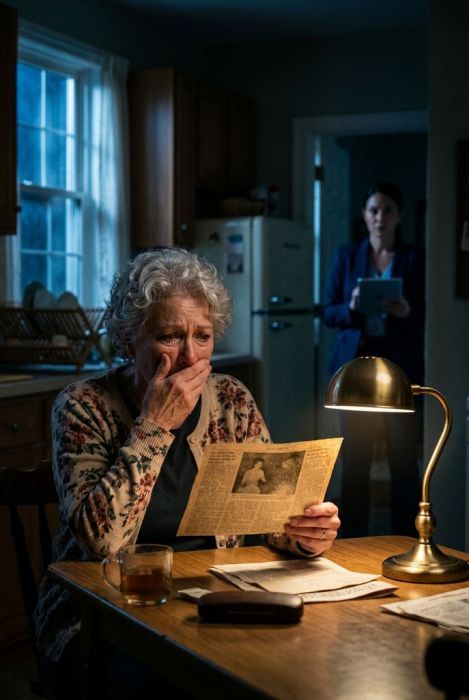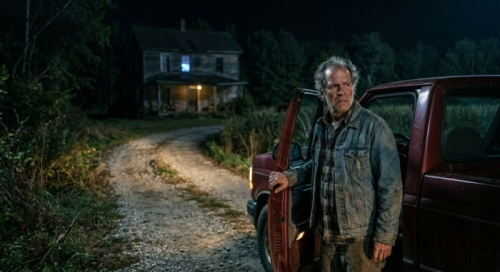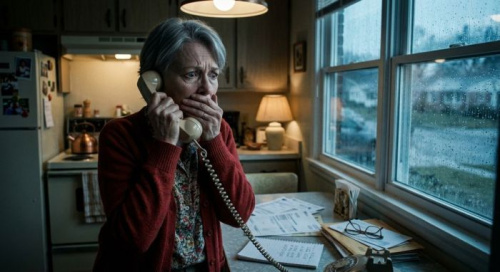
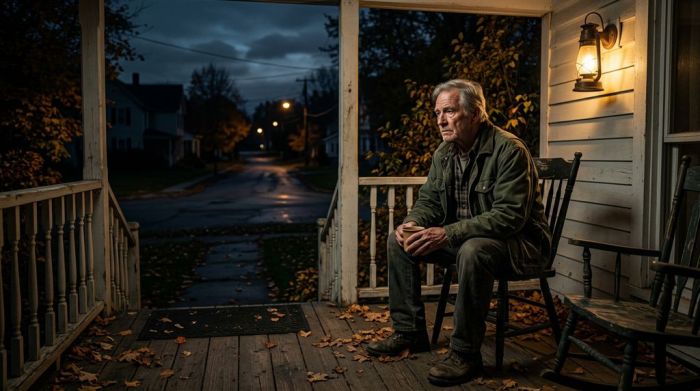
George Kowalski, a seventy-four-year-old retired firefighter from Pittsburgh, Pennsylvania, has kept a single porch light burning every night for thirty years. The neighbors think he is just a forgetful old man who leaves his light on. They do not know about the argument that happened on a cold November night in 1994. They do not know about the seventeen-year-old boy who walked out that door with a backpack and a broken heart. And they do not know about the promise George made to himself — that he would keep the light burning until the day his son Michael came home.
This is a story about the unbreakable hope of a parent's heart. It is about the mistakes we make when we love too hard, the pride that keeps us silent, and the quiet, stubborn love that never gives up — even after three decades of waiting.
The Night Everything Changed
November 15, 1994, started like any other Tuesday in the Kowalski household. George had just returned from a twenty-four-hour shift at the Pittsburgh Fire Department, Station 17. He was forty-four years old then, strong as an ox, with hands that had pulled people out of burning buildings and a heart that had learned to shut out the screams he heard in the dark.
His wife Clara had passed away three years earlier from breast cancer. She was only forty-one. George had held her hand through every chemo session, every sleepless night, every moment of fear. He had watched the love of his life fade away ounce by ounce, and when she finally went, something in him closed off. He did not mean for it to happen. It just did. Grief had a way of making a man quiet when he should have been speaking, distant when he should have been holding on.
Michael was fourteen when his mother died. He was a quiet boy, sensitive, with Clara's green eyes and her habit of drawing little pictures in the margins of his notebooks. He had been a mama's boy in the best way — the kind of child who brought her dandelions in the spring and drew her cards for no reason at all. When she died, Michael stopped drawing.
George noticed. Of course he noticed. But he did not know what to do about it. He was a firefighter, not a therapist. He knew how to extinguish flames, not the slow-burning grief in a teenage boy's chest. So he did what men of his generation did — he kept busy. He worked double shifts. He fixed things around the house. He made sure there was food on the table and a roof over their heads. He told himself that was enough.
It was not enough.
By the time Michael was seventeen, the silence between them had become a physical thing, a wall of unspoken words and unexpressed grief that neither of them knew how to tear down. Michael had stopped coming to dinner. He stayed in his room, playing music too loud, emerging only when George was asleep. His grades had slipped. His drawings had been replaced by a sullen anger that George did not recognize and could not reach.
And on that cold November night in 1994, the wall finally collapsed.
George had found a pack of cigarettes in Michael's jacket pocket. It was a small thing, insignificant in the grand scheme of raising a teenager. But George was tired. He was lonely. He was carrying the weight of three years of grief that he had never properly mourned. And when he confronted Michael, the words that came out were not the words he had meant to say.
"Is this what your mother would have wanted?" George shouted, holding up the cigarettes. "Is this how you honor her memory?"
Michael's eyes flashed with a pain that George, in that moment, was too blind to see. "You don't get to talk about Mom," he said, his voice low and shaking. "You never talk about her. You act like she never existed. You never once asked me how I felt. You never once held me when I cried. You just went to work and pretended everything was fine."
"That's not true."
"It is true. You think I don't remember? The night of the funeral, I sat on the stairs waiting for you to come home. I waited until midnight. You came in, looked at me, and said, 'Go to bed, son. You have school tomorrow.' You didn't even hug me."
George felt the words like a knife. He wanted to explain. He wanted to tell Michael that he was barely holding himself together, that if he had stopped to hug him, he would have fallen apart and never gotten back up. But he did not know how to say those things. He had never learned how.
So instead, he said the worst possible thing a father could say.
"Then maybe you should leave."
Michael stared at him for a long, terrible moment. His green eyes — Clara's eyes — filled with a hurt so deep that George would see it in his nightmares for the next thirty years. Without a word, Michael walked upstairs. George heard him open the closet door. Heard him unzip a duffel bag. Heard his footsteps coming back down.
Michael stopped at the front door. He turned around. "I'm going to Grandma's house," he said. "When I'm eighteen, I'm joining the Army. And I'm never coming back."
"Michael, wait —"
But the door was already closing. George ran to the porch, his heart pounding. "Michael! Michael, come back inside! Let's talk about this!"
Michael kept walking. Down the driveway. Down the street. His figure grew smaller and smaller under the pale orange glow of the streetlights, until he turned the corner and disappeared.
George stood on the porch for hours, staring at the empty street, waiting for his son to come back. The November wind cut through his thin shirt, but he did not feel it. He stood there until the sun rose, and Michael did not come back.
The Promise
George called his mother-in-law the next morning. Michael was there, she said. He was safe. "Give him time, George," she told him. "He needs to heal."
So George gave him time. A week passed. Then a month. George called every day, but Michael refused to speak to him. He sent letters that came back unopened. He drove to his mother-in-law's house, but Michael would not come to the door.
On Christmas Eve, George drove to the house and left a present on the front step — a new set of drawing pencils and a sketchbook. He wrote a note: "I'm sorry, son. Please come home. — Dad"
The next morning, the present was still on the step, untouched, soaked with rain.
George picked up the ruined sketchbook and carried it home. He placed it on the mantle next to Clara's photograph. And then he walked out to the porch, reached up to the light fixture, and made a silent promise to himself and to God.
He would keep the porch light on. Every single night. Until his son came home.
If the light was burning, Michael would know that there was still a place for him. If the light was burning, Michael would know that his father had not given up. If the light was burning, Michael would know that somewhere in this cold, lonely world, there was a door that would always be open.
And so George Kowalski kept that light burning through the winter of 1994, and through the spring of 1995, and through every season that followed.
Thirty Years of Light
Michael turned eighteen and joined the Army, just as he had promised. George found out through his mother-in-law, who still called him every few months with updates. Michael was stationed in Fort Bragg, North Carolina. He was doing well. He had become a medic. He was saving lives.
George wrote him a letter of congratulations. It came back unopened.
In 1998, Michael was deployed to Kosovo. George watched the news every night, scanning the faces of soldiers, looking for his son's green eyes. He sent a care package — warm socks, instant coffee, a photograph of Clara — but he did not know if it ever reached him.
In 2001, after 9/11, Michael was deployed to Afghanistan. George did not sleep for weeks. He sat on the porch every night, staring at the light, praying to a God he was not sure he believed in anymore. "Bring him home," he whispered into the darkness. "Just bring him home. I don't care if he never speaks to me again. Just let him be safe."
In 2005, Michael was discharged from the Army. He settled in Seattle, three thousand miles away from Pittsburgh. George found this out from a letter Michael had sent to his grandmother — the first sign of life that came directly from his son's hand. The letter said he was doing well, working as an EMT, and that he had met someone special. Her name was Rachel.
George wrote another letter. "I am so proud of you, son. I always have been. I would love to meet Rachel someday. The light is still on. It will always be on."
It came back unopened.
Years passed. The porch light became a landmark in the neighborhood. New families moved in and asked about the old man who kept his light on all night. The older neighbors would tell them the story — the argument, the promise, the thirty years of waiting. Some thought it was beautiful. Some thought it was sad. Some thought George was a crazy old man who needed to move on.
But George did not care what they thought. Every evening, at precisely six o'clock, he would walk out to the porch, check the bulb, and watch it flicker to life. If a bulb burned out, he replaced it within the hour. He kept a box of bulbs in the hall closet, always stocked, always ready.
Clara's photograph sat on the mantle next to the ruined sketchbook. George would look at it every morning and say, "Not yet. But maybe today."
And then, on a rainy Tuesday in September of 2024, the doorbell rang.
The Homecoming
George was seventy-four years old now. His hair was white, his hands were shaky, and his back had been ruined by decades of carrying people out of burning buildings. He was heating up a can of soup in the kitchen when he heard the doorbell. He shuffled to the door, muttering about salesmen and church visitors, and pulled it open.
The man standing on the porch was in his late forties. He had gray at his temples and deep lines around his eyes. He was wearing a simple blue jacket and carrying a small duffel bag. But when he looked at George, his eyes were the same green eyes that George had seen in his dreams for thirty years.
"Hello, Dad."
George's hand flew to his mouth. He could not speak. His legs felt like they might give out. He gripped the doorframe to steady himself and stared at the face of his son — the son he had last seen as a seventeen-year-old boy with a backpack and a broken heart.
"Michael," he whispered. "Michael, is it really you?"
Michael nodded, his own eyes filling with tears. "It's me, Dad. I'm home."
George reached out, hesitating for a moment, afraid that if he touched him, he would vanish like a dream. But Michael stepped forward and wrapped his arms around his father. George felt the solid weight of his son, the warmth of him, the reality of him, and he began to cry the way he had not cried since the day Clara died.
"I'm sorry," George sobbed into his son's shoulder. "I'm so sorry, Michael. I should have held you. I should have talked to you. I should have been there. I am so, so sorry."
"I know, Dad," Michael said, his voice thick with emotion. "I know. I forgive you. I forgave you a long time ago."
They held each other for a long time on that porch, two men who had spent thirty years learning the same lesson — that pride is a poor substitute for love, that silence can be the cruelest weapon, and that it is never, ever too late to come home.
When they finally pulled apart, Michael looked up at the porch light, still glowing even in the daytime. He laughed through his tears. "You kept it on."
"I promised I would," George said. "I promised myself, and I promised your mother. Every night for thirty years. I never missed a single one."
Michael shook his head in wonder. "I saw it," he said quietly.
"What?"
"Three years ago, I was in Pittsburgh for a conference. I drove past the house in the middle of the night. I didn't plan to. I just... found myself here. And I saw the light on. I sat in my car for two hours, just watching it. I wanted to come to the door. I had my hand on the handle. But I wasn't ready yet. I needed to finish some things first. I needed to be sure that when I came back, I was coming back for good."
George placed his hand on his son's cheek. "What changed?"
Michael reached into his jacket and pulled out a worn, faded letter. It was the letter George had written in 2005, the one that had come back unopened. But the envelope was torn open now, its edges soft from years of handling.
"I opened it last month," Michael said. "I had kept it in a box for nineteen years. I never had the courage to read it. But Rachel — my wife — she found it. She said, 'Michael, if you don't read this letter, you will regret it for the rest of your life.' So I read it."
He pulled out the letter, the paper yellowed with age, and read the last line aloud: "The light is still on. It will always be on."
Michael looked at his father, his green eyes shining. "I've been all over the world, Dad. I've seen terrible things and beautiful things. I've saved lives and lost friends. But in all that time, the one thing I never forgot was that light. I saw it in my dreams. I saw it in the darkness of Afghanistan. I saw it every time I closed my eyes. That light was always there, waiting for me."
George pulled his son into another embrace. "It will always be here, Michael. As long as I am alive, that light will be burning for you."
Epilogue: A New Dawn
That was six months ago. George Kowalski is seventy-five now, and he has never been happier. Michael moved back to Pittsburgh with his wife Rachel and their two children — a boy named Benjamin, who is eight, and a girl named Clara, after her great-grandmother.
Every Sunday, the family gathers at the house on Oakwood Avenue. Rachel brings her famous lasagna. Benjamin tells his grandfather about his baseball games. Clara sits on George's lap and asks him to tell stories about when he was a firefighter.
And every evening, just before sunset, George walks out to the porch with his grandchildren. He checks the light bulb. He flips the switch. And he watches the warm golden glow spread across the wooden planks.
"Grandpa," Clara asked him one evening, "why do you keep the light on? It's not even dark yet."
George looked at his son, who was sitting on the porch steps, watching the sunset with a smile that had not left his face since the day he came home.
"Because, sweetheart," George said, lifting Clara onto his lap, "this light is not for seeing. It is for finding. It is a way of telling the people you love that no matter how far they go, no matter how long they stay away, there will always be a light waiting for them. There will always be a way home."
Clara thought about this for a moment. Then she looked up at him with her great-grandmother's green eyes and said, "Can I turn it on tomorrow?"
George laughed, a full, joyful sound that filled the evening air. "You can turn it on every single day for the rest of your life, if you want to."
The porch light on Oakwood Avenue still burns every night. If you ever find yourself in Pittsburgh, driving through the quiet neighborhoods where the autumn leaves gather on the sidewalks, look for the house with the golden glow. Look for the old man sitting on the porch, his grandchildren climbing over his knees, his son laughing beside him.
And know that some lights never go out. Some loves never fade. Some doors never close.
All you have to do is come home.