Amber Lawson was twenty-eight years old, and she had been working the register at Piggly Wiggly on Main Street in Marietta, Georgia, for three years. It was not the life she had imagined for herself. At twenty-two, fresh out of community college with a degree in early childhood education, she had dreamed of a classroom full of tiny desks and finger paints and children who called her Miss Amber. But the teaching jobs in Cobb County were scarce, and the ones that existed paid barely more than minimum wage. So she had taken the cashier job at the grocery store, telling herself it was temporary. Three years later, she was still there, scanning barcodes and counting change, her dreams packed away in a box under her bed next to her old textbooks and the empty frames that had never held a teaching certificate.
She was a single mother to a six-year-old boy named Caleb, who had her brown eyes and his father's habit of humming while he colored. His father had left when Caleb was three months old — a text message, not even a conversation — and Amber had learned to carry the weight of parenthood alone. She woke at five every morning, made Caleb's breakfast, packed his lunch, walked him to the bus stop, and then drove to the Piggly Wiggly for her six-thirty shift. She worked until three, picked Caleb up from after-school care, made dinner, helped with homework, and collapsed into bed by nine. It was a life of routines, not dreams. But it was a life. And she was grateful for it.
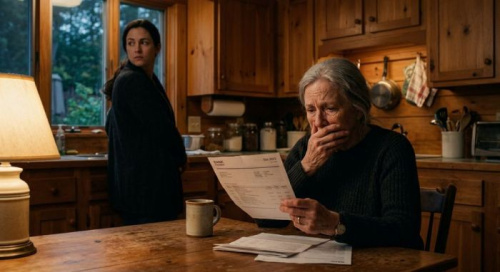
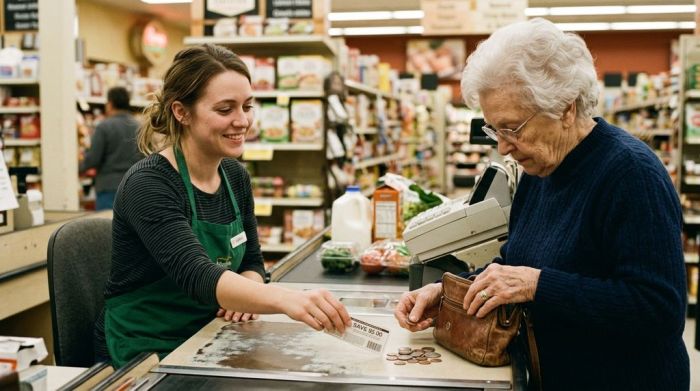
The elderly woman appeared on a Sunday morning in early March, just as the first hint of spring was warming the Georgia air. Amber was working the register nearest the exit, the one with the broken conveyor belt that the manager said he would fix any day now. The woman was small and silver-haired, with hands that trembled slightly as she placed her items on the counter — a carton of eggs, a loaf of white bread, a small bag of apples, and a can of chicken noodle soup. She was wearing a faded floral dress and a cardigan that had been washed so many times its color had softened to a pale, comfortable gray.
Amber scanned the items. The total came to eleven dollars and forty-three cents. The woman reached into her worn leather purse and pulled out a small coin purse, the kind that closes with a metal clasp. She opened it slowly, her fingers working with the careful deliberation of age, and counted out the money. She was short by sixty-seven cents.
"I'm sorry, dear," the woman said, her voice soft and slightly embarrassed. "I must have left my wallet at home." She began to put the items back into her cart, her movements slow and resigned.
Amber did not hesitate. She reached into her own pocket, pulled out a dollar bill, and placed it in the register drawer. "You're all set, ma'am," she said, handing the woman her change. "Have a blessed day."
The woman looked at her, surprised. "Are you sure?"
"I'm sure. It happens to all of us."
The woman's eyes, a pale blue that had once been sharp, filled with gratitude. "Thank you, dear. Thank you so much." She took her bag and walked slowly toward the exit, her cane tapping against the linoleum floor.
Amber watched her go, and she did not think much of it. It was a dollar. She had given away more than that to strangers before. But the next Sunday, at exactly the same time, the woman returned. She came through Amber's line again, with the same items — eggs, bread, apples, soup. And the same thing happened. She was short by about the same amount. Amber covered it again, with a smile and a wave.
"You keep showing up on my shift," Amber said, smiling. "I think that means we're friends now."
The woman smiled back, a warm, crinkly smile that transformed her face. "I think it does, dear. My name is Evelyn. Evelyn Porter."
"I'm Amber. Nice to meet you, Evelyn."
And so a tradition was born. Every Sunday morning, at exactly nine o'clock, Evelyn Porter would walk through the automatic doors of the Piggly Wiggly on Main Street. She would pick up her small cart of groceries — always the same items, always the same careful selection — and she would come to Amber's register. And every Sunday, Amber would find a way to make sure Evelyn left with her groceries and her dignity intact.
She did not always use her own money. Sometimes she used her employee discount, which gave her ten percent off. Sometimes she clipped extra coupons from the Sunday paper and scanned them for Evelyn's order. Sometimes she would quietly mark down an item that was nearing its expiration date. She never told Evelyn she was doing it. She never made a big deal out of it. She just did it, week after week, because it was the right thing to do.
Over time, Amber learned Evelyn's story. She was eighty-two years old, a retired third-grade teacher who had taught at the same elementary school for forty-three years. She had been widowed for eleven years. Her husband, a high school football coach named Thomas, had passed away from a heart attack on the sidelines of a Friday night game. Her daughter, a journalist named Sarah, lived in Atlanta and visited once a month, but Evelyn refused to leave Marietta. "This is my home," she said. "I taught three generations of children in this town. I'm not going anywhere."
Evelyn lived on a fixed income — Social Security and a small pension from the school district. The pension had not been adjusted for inflation in twenty years. She could afford her rent, her medications, and her utilities, but barely. Groceries were where she cut corners. The eleven dollars she spent at the Piggly Wiggly every Sunday was her main food shopping for the week. She made the eggs last, stretched the soup into two meals, and saved the apples for when she needed something sweet.
Amber listened to all of this, and she felt a kinship with this woman that she could not quite explain. They were both doing the best they could with what they had. They were both invisible to the world in different ways. And they were both, in their own quiet ways, holding on.
The Sunday morning routine continued for six months. June turned into July. July turned into August. The Georgia heat became oppressive, and the air conditioning at the Piggly Wiggly struggled to keep up. But every Sunday at nine, Evelyn appeared, and Amber made sure she left with her eggs and her bread and her dignity.
And then, on a Sunday in September, everything fell apart.
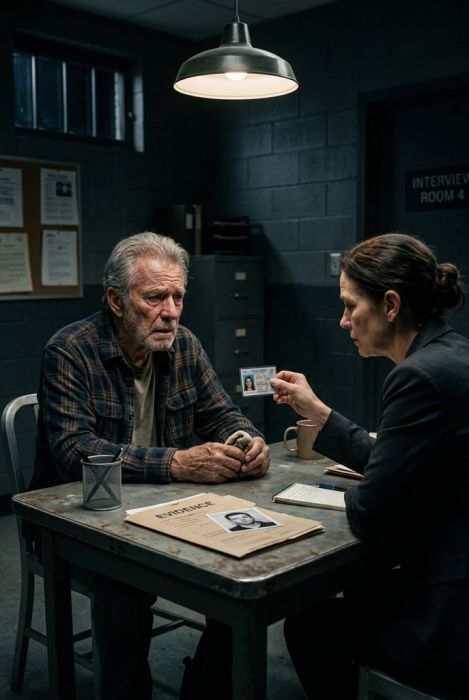
Amber's manager, a man named Mr. Hendricks who had been with the company for twenty-two years and had the tired, suspicious eyes of someone who had seen every scam in the book, called her into the back office after her shift. He closed the door. He sat down behind his cluttered desk. And he told her that a security camera had caught her using her employee discount on a customer's purchase.
"It's a violation of company policy," he said, his voice flat. "You know that, Amber. You've been here long enough."
Amber's heart sank. She had been careful. She had been so careful. She had always made sure no one was watching, always timed it when the other registers were busy. But the cameras saw everything, and the cameras did not care about the difference between a policy violation and an act of kindness.
"I know it's against policy," she said, her voice quiet. "But she's an elderly woman, Mr. Hendricks. She's a retired teacher. She's on a fixed income. She can barely afford to feed herself. I was just helping her."
"I understand that," Mr. Hendricks said. "Truly, I do. But policy is policy. I have to write you up. And if it happens again, I'll have to let you go."
Amber nodded, her throat too tight to speak. She walked out of the office with a written warning in her hand and a weight in her chest that she could not shake. She thought about Caleb. She thought about the rent that was due in two weeks. She thought about the pile of bills on her kitchen table that she had been avoiding. She thought about Evelyn, who would walk into the store next Sunday expecting to see her familiar face, and who would not know that the kindness she had come to rely on had come at a cost.
The next Sunday, Evelyn came through the automatic doors at nine o'clock, as she always did. She placed her items on the counter — eggs, bread, apples, soup. She looked at Amber with her warm, trusting eyes. And Amber scanned her items, her hands shaking, and she did what she had to do. She rang up the full price. She did not use her discount. She did not clip a coupon. She watched Evelyn count out her coins, watched her realize she was short, watched the familiar embarrassment creep across her face.
"I'm sorry, dear," Evelyn said, beginning to put the items back. "I don't have enough."
And Amber stood there, frozen, wanting to help, knowing she could not, feeling the weight of the system pressing down on both of them. She opened her mouth to say something, but before she could speak, a voice behind her said, "I'll cover it."
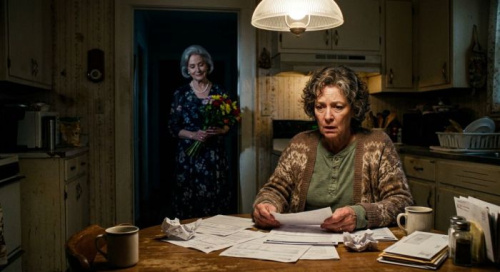
Amber turned. A woman in her late forties, with Evelyn's blue eyes and a press badge clipped to her jacket, was standing behind her. She was holding a notepad and a pen, and she was looking at Amber with an expression that was equal parts gratitude and curiosity.
"Mom," the woman said, walking past Amber to the register, "why didn't you tell me?"
Evelyn looked up, startled. "Sarah? What are you doing here?"
Sarah Porter — Evelyn's daughter, the journalist from Atlanta — had driven to Marietta that morning for an unannounced visit. She had stopped at the grocery store to pick up flowers, and she had walked in just in time to see her mother counting coins at the register, just in time to see the young cashier's face fall when she realized she could not help.
Sarah paid for the groceries. She walked her mother to the car. And then she came back inside, found Amber in the break room, and asked her to tell the whole story.
Amber told her. She told her about the first Sunday, about the sixty-seven cents, about the six months of quiet kindness. She told her about the written warning and the policy violation and the fear of losing her job. She told her about Caleb, about the teaching degree she had never used, about the dreams she had packed away in a box under her bed.
Sarah listened. She took notes. And when Amber finished, she reached across the table and took her hand.
"You're a hero," she said. "Not because you did something grand. Because you did something kind, quietly, for six months, without expecting anything in return. And I'm going to make sure the world knows about it."
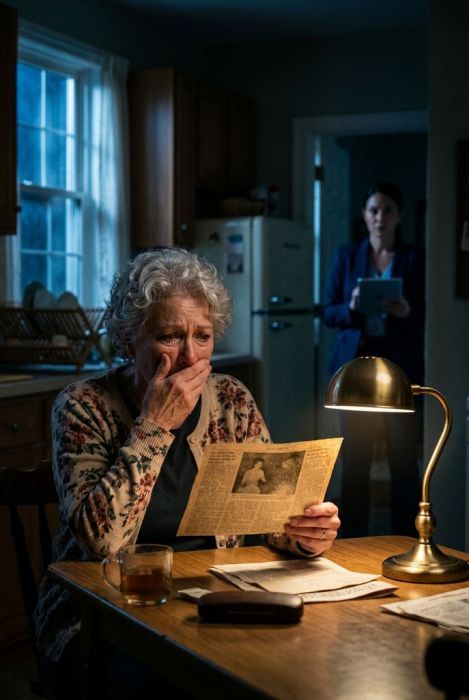
The article ran in the Atlanta Journal-Constitution the following Sunday. It was titled "The Sunday Morning Coupon: How a Cashier and a Retired Teacher Found Each Other." It told the story of Evelyn Porter, a retired teacher who had given forty-three years to the children of Marietta, and Amber Lawson, a single mother who had quietly made sure that Evelyn never left the grocery store hungry. It ran on the front page of the local section. It was shared over ten thousand times on social media. The comments section overflowed with stories of people who had been helped by strangers, who had been the recipient of quiet kindness, who wanted to do something to pay it forward.
Within a week, the community had rallied. The Piggly Wiggly's corporate office, bombarded with calls and emails, reversed Amber's written warning and issued a statement praising her for "exemplifying the spirit of community service." A local restaurant owner started a fund for Evelyn, collecting over twelve thousand dollars in donations to supplement her pension. The principal of the elementary school where Evelyn had taught offered her a part-time position as a reading assistant, working with children who struggled with literacy. And a private school in Marietta, having read about Amber's unused teaching degree, offered her a job as a kindergarten teacher, starting at a salary that was more than double what she made at the grocery store.
Amber accepted the teaching job. She gave her two weeks' notice at the Piggly Wiggly, and on her last day, Evelyn Porter walked through the automatic doors one final time. She was not carrying her usual groceries. She was carrying a small gift bag, wrapped in yellow tissue paper.
"I wanted to give you something," Evelyn said, her voice trembling with emotion. "To remember me by."
Amber opened the bag. Inside was a framed photograph — a candid shot from the classroom, taken years ago, of a younger Evelyn sitting cross-legged on the floor with a circle of children, reading a book. On the back of the frame, in careful handwriting, Evelyn had written: "To Amber. The teacher I always knew you were. With love, Evelyn."
Amber cried. She stood in the middle of the grocery store, holding the frame, tears streaming down her face, while Evelyn hugged her with the fierce, unconditional love of a grandmother who had found a granddaughter she never knew she needed.
That was three years ago. Amber Lawson is a kindergarten teacher at a private school in Marietta now. She has her own classroom, with tiny desks and finger paints and children who call her Miss Amber. Every morning, before the first bell rings, she looks at the framed photograph on her desk — a younger Evelyn, reading to a circle of children — and she remembers why she became a teacher in the first place.
Evelyn Porter is eighty-five now. She still lives in her small house in Marietta, surrounded by the photographs of the three generations of children she taught. She works two days a week as a reading assistant at the elementary school, and she tells everyone who will listen that her Sunday morning cashier changed her life. She is not wrong. But she does not know the whole truth.
The truth is that Amber Lawson changed Evelyn's life. But Evelyn Porter changed Amber's too. Because sometimes, the smallest acts of kindness — a dollar at a register, a coupon clipped from the Sunday paper, a hand extended to a stranger — ripple outward in ways we can never predict. They connect us. They remind us that we are not alone. And they lead us, often when we least expect it, to the life we were always meant to live.
Amber is thirty-one now. She still shops at the Piggly Wiggly on Main Street, though she no longer works there. She walks through the automatic doors, and the cashiers wave at her, and she remembers the woman who taught her that kindness is never wasted. She takes Caleb, who is nine now and tall for his age, to visit Evelyn every Sunday afternoon. They sit on Evelyn's porch, eat apples from her tree, and listen to stories about the old days, when third graders learned cursive and football games were played on Friday nights under the lights.
And every Sunday morning, before she drives to Evelyn's house, Amber stops at the Piggly Wiggly. She buys a carton of eggs, a loaf of bread, a small bag of apples, and a can of chicken noodle soup. She brings them to Evelyn, and they make lunch together, the way they have done every Sunday for three years.
Because that is what love looks like, in the end. It is not grand gestures or perfect moments. It is showing up, week after week, with eggs and bread and a heart full of grace. It is a coupon shared between strangers. It is a Sunday morning ritual that became a family.