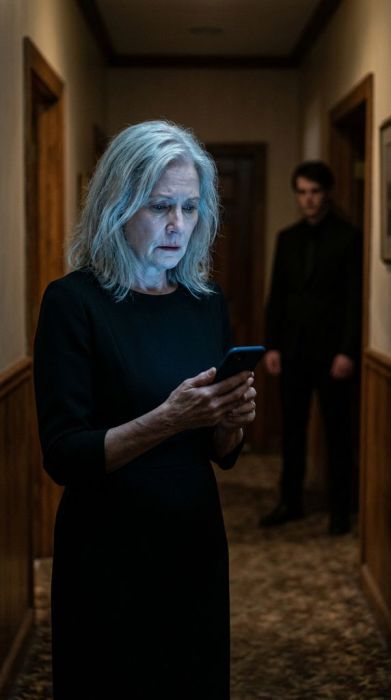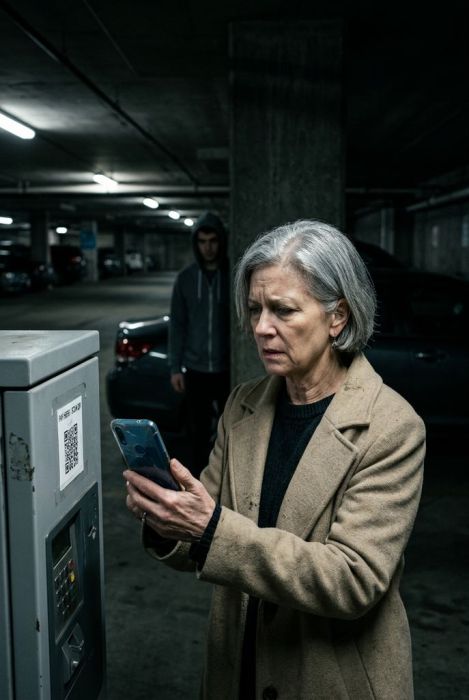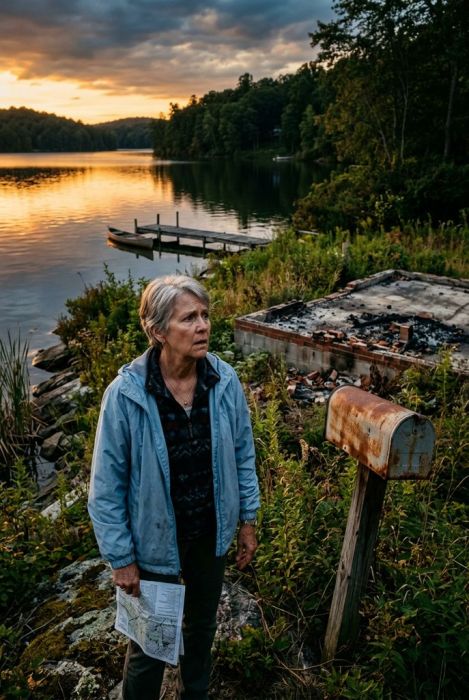
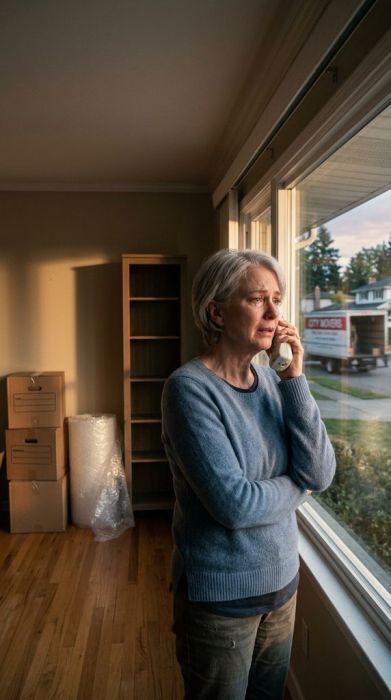
The first phone call came eleven minutes after the truck pulled away, but Ruth Callahan let it ring. She was standing in the middle of her empty living room on Cedar Street in Kenosha, Wisconsin, staring at the pale rectangle on the wall where Frank's recliner had sat for thirty-one years. The moving truck with the cheerful red fox painted on its side had rolled around the corner and vanished, taking with it her grandmother's china, the cedar chest Frank had built before their first anniversary, and every photograph of the life they had shared. She had stood on the porch and waved at it, absurdly, the way you wave at a train you were supposed to be on.
The foreman in the black polo had smiled at her through the passenger window before the truck pulled away. "Call us when you're ready to pay for what this move actually costs," he'd called out, and Ruth had laughed, because it was a joke. It had to be a joke. She had a contract. She had Derek's signature. She had the young man's promise, made at her own kitchen table, that she was family.
Ruth Callahan was sixty-eight years old, a retired third-grade teacher with arthritis in both hands and a heart condition her daughter called manageable. Emily had finally won the argument that lasted a year: the house on Cedar Street was too much. The stairs were too much. The yard was too much. The quiet pressed in from every room like weather, and Tucson offered one level, warm winters, and grandchildren who needed their grandmother. Ruth had cried twice over the decision and then made it.
The young man from SwiftMove arrived on a Tuesday in April, rang the bell, and introduced himself as Derek Whitfield. Maybe twenty-eight. Clean-shaven. A salesman's bright teeth and a soothing habit of repeating her name. "Ruth. Ruth. I love that name." He walked through every room with a clipboard, ran a finger over the piano, crouched by the boxes she had already packed, and told her this was the easiest job he'd had all week.
"A lot of folks in your position get taken advantage of, Ruth," he said at her kitchen table, patting her hand with the easy warmth of a grandson. "That's why I give every senior customer my personal guarantee. You're not just a contract to me. You're family." He quoted her three thousand four hundred dollars, binding, printed on the form in bold letters. He helped her tape the last box, and at the door he hugged her and told her to call him personally if she had any questions at all, day or night.
Ruth called Emily that night, just to share the news about the wonderful young man she'd found. SwiftMove had come recommended by her best friend of fifty years, Marge Delgado, whose own move into a condo the year before had gone so smoothly. "Ask for Derek," Marge had said. "He's a doll." Ruth told Emily she had never met a boy so polite, and Emily said that was exactly the kind of boy to be suspicious of, and they both laughed.
Moving day arrived gray and humid, the sky the color of old dishwater. The truck came three hours late. Dispatch answered once — a gruff man named Tony who said trucks run on their own schedule, ma'am, and hung up. Two movers unloaded the ramp, neither of them Derek. They worked fast but careless, and when Ruth pointed out that one had scraped the doorframe carrying Frank's workbench, the man only shrugged. "Long carry. That's extra. Talk to the foreman."
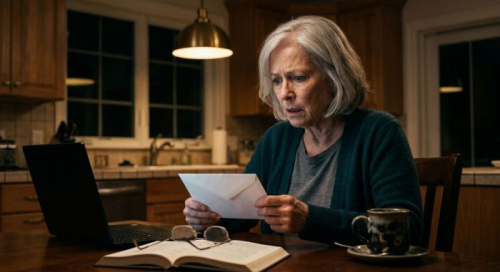
The foreman appeared at eleven, a large man in an unstained black polo with a clipboard of his own. He walked the nearly empty house twice, making marks, then stood over Ruth where she sat on the only chair left in the kitchen. "Ma'am," he said, "we got a problem with your estimate." The three thousand four hundred was gone. The real number, according to his arithmetic, was twelve thousand dollars.
Stairs. Long carry. Box weight. Cubic footage. A fuel surcharge. A summer season adjustment. Every word was a small stone dropping into her stomach. Ruth mentioned the contract, the binding estimate, Derek's signature, and the foreman smiled in a way that held none of Derek's easy warmth. "Derek don't work here no more, ma'am. Derek don't work here at all." He walked out, climbed into the truck, and the driver pulled away before Ruth had moved from her chair.
She stood on the porch and watched it go. The phone rang eleven minutes later. She answered, and the same gruff voice told her that her belongings were safe, climate-controlled, in a secure facility, and that storage cost two hundred dollars a day. Twelve thousand covered the move, he said. "You wanna talk tomorrow, it's twelve-two."
Emily flew in from Tucson that night, gray-faced, hugging her mother so long Ruth's shoulder went numb. They hired a lawyer, a brisk woman named Patricia Osei, who called the number on the contract twenty times and listened to a full voicemail. They found the website, with its stock photos and its fake address, and they found that the USDOT number printed on the truck's door belonged to a company in Ohio dissolved three years earlier. The police were sympathetic and powerless. A civil contract dispute, they explained. The goods were legally loaded. The company held them pending payment. "Call your bank," the officer said kindly, missing the point entirely, because the point had never been twelve thousand dollars.
That night Ruth lay on a borrowed air mattress in the bare house, listening to the furnace groan, thinking about Frank's cedar chest and her mother's china and the tiny blue dress Emily had worn home from the hospital in 1987. It was not the money. It had never really been about the money. It was the weight of a life, sealed in boxes, held for ransom by a voice that refused to give its name.
On the third night, Emily went through the paperwork again and found something. The contract listed a dispatch line, and Emily typed it into a phone directory, then a search engine, then a county records database a lawyer friend helped her crack open. The number surfaced under a handyman advertisement three years old, and then under a small delivery company, and then under a name.
Derek Whitfield. Emily said it out loud, and the name lay on the kitchen island between them like a live wire. Ruth knew that name the way she knew the sound of her own doorbell. Marge's grandson. The boy who grew up two streets over, who stole cookies from Ruth's kitchen at seven and mowed Marge's lawn at fifteen, who had called her Aunt Ruth at every birthday, every graduation, every Thanksgiving for twenty years. The boy Marge had raised after his parents' divorce. The boy who had hugged Ruth on her own porch fourteen days earlier and told her she was family.
Marge came over at midnight in a robe and slippers, car keys shaking in her fist. She read the paperwork twice at the kitchen island, and the color left her face like water leaving a glass. "I recommended him," she whispered. "I told you to call him. I went to his company party last year, Ruthie. There were balloons." And then the truth beneath the truth, which was the worst of it: Marge's own move had cost eleven thousand dollars for a one-bedroom condo. She had paid without complaint because he was her grandson, because he said it was a fair price, because she loved him. He had taken her money, and she had thanked him, and she had sent her best friend into the same machine with a smile.
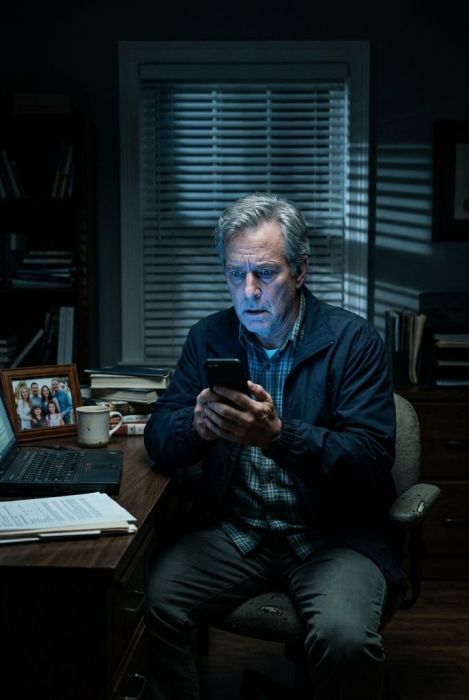
There was more. A neighbor's Ring camera had caught the loading dock behind the SwiftMove warehouse on the day of the move. There, with his cap off, stuffing padding into his shoulders, was a young man with Derek Whitfield's face and Derek Whitfield's shoulders and Derek Whitfield's nervous habit of rubbing his palms on his thighs. The foreman who had demanded twelve thousand dollars in Ruth's kitchen was Derek Whitfield. The gruff voice named Tony, the dispatcher who hung up on her, the negotiator who counted her storage days like currency — all of it was Derek. There was no Tony. There was no other company. There was only the boy who had quoted her a price he had never intended to honor, who had gone home, changed his voice and his posture and his clothes, and come back to watch her wave goodbye to everything she owned.
Ruth sat for a long time looking at the photograph on Emily's phone. Part of her insisted it could not be him. The part that had been loving him for twenty years refused to believe it, and for the first time in her life, Ruth did not trust her own heart. She trusted the photograph.
The confrontation happened at a diner on the edge of town, two days later. Ruth, wearing a sheriff's department recording wire beneath a baggy cardigan, sat in a booth with a bank envelope full of paper clipped shut on the seat beside her. She had called the number the night before and said she would pay the twelve thousand in cash, no questions, she just needed one more night to think. Tony called back with a time and a place, and his voice had been warm, almost tender, the way Derek's had been.
He came through the door at 7:13 in a ball cap and sunglasses. For one bankrupt moment Ruth saw not a criminal but a boy she had watched grow up, and the wire dug into her ribs and she could not breathe. He sat down across from her, and he smiled at her with the salesman's bright teeth, and he said, "I knew you'd come around, Ruth." And she said, "Derek." And he went very still.
The men who stood up from the booths around them wore badges. The federal agent from the motor carrier division wore a suit, a patient expression, and a folder fat with LLC records, fake review rings, dissolved USDOT numbers, deposit accounts under four different names. They had fourteen victims in three states, interstate hostage loads, wire demands, and now twenty minutes of tape of Derek Whitfield explaining to his grandmother's best friend why twelve thousand dollars in cash was not an unreasonable price.
The warehouse raid the next morning found everything. Ruth's cedar chest, dented but whole, on a shelf beside her mother's china, wrapped like a gift in bubble wrap. The photographs, in a banker's box labeled in Derek's own handwriting, as if he had kept them the way a person keeps a trophy. Ruth stood in the climate-controlled facility and cried into Emily's shoulder, and Marge stood apart, silent, watching her grandson's life come down around his ears.
Derek was charged federally — interstate transportation of household goods with the intent to defraud, wire fraud, and a list of smaller offenses that ran like a grocery receipt of ruin. Marge testified against him, and Ruth sat in the second row and held her hand, and Derek did not look at either of them. The evidence showed he had done this fourteen times in three states, and three of his victims had been his own relatives, including his grandmother.
Ruth moved to Tucson in August, with a licensed and bonded company this time, one she researched twice and whose USDOT number she verified on the federal website, whose estimate she paid by credit card and never in cash. She kept the house on Cedar Street rented, the way you keep a grave tended. Marge visits every spring, and the two women sit in the Arizona sun and do not talk about Derek, or talk about him sometimes, in the careful way people talk about a storm that once flattened a town.
The lesson Ruth tells any neighbor who asks is quiet and practical: kindness is not evidence. A warm hand on yours is not a contract. Verify the license. Read the fine print. Pay by card. And love the people in your life with your eyes open, because the cruelest scams are not the ones that threaten you. They are the ones that smile, help you tape the last box, hug you at the door, and tell you — sincerely, even — that you are family.