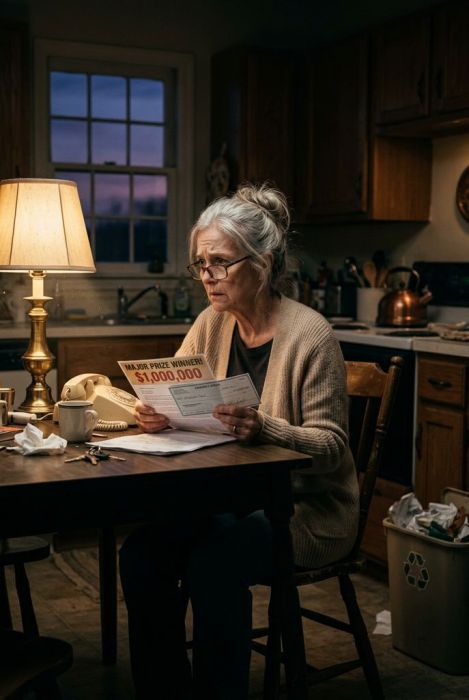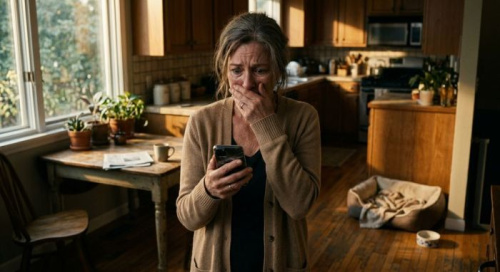
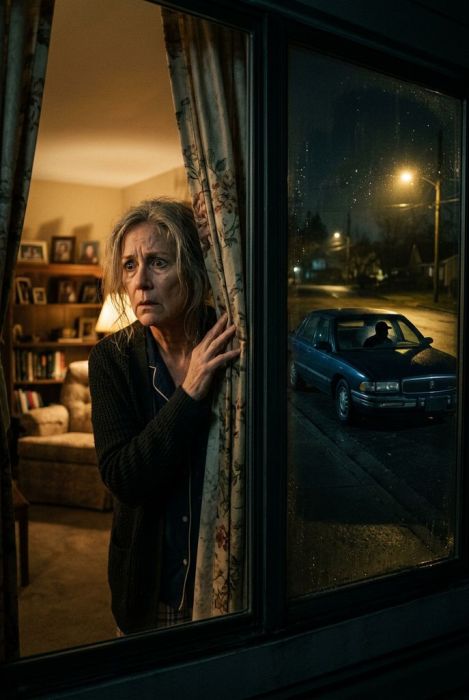
Ellen Morrison first noticed the blue sedan on a Tuesday night in late October. She was washing dishes in her cozy Portland kitchen, the warm water running over her arthritic hands, when she glanced out the window above the sink and saw it sitting across the street, engine off, lights out, just sitting there in the darkness like a patient animal. She thought nothing of it at first. People parked on the street all the time in her quiet Southeast neighborhood, near the intersection of Division and 52nd. It was a residential area, safe and tree-lined, the kind of place where neighbors waved to each other and mail carriers knew your name. Ellen had lived there for thirty-four years, first with her husband Frank, then alone after he passed away from a heart attack in 2019. She knew every car on her block. She did not know this one.
The next night, it was there again. Same spot. Same blue sedan, a slightly dented Hyundai Elantra with an Oregon plate she could not quite read from her window. Ellen stood in her living room at ten o'clock, peering through the curtain, and felt something cold settle in her chest. She told herself she was being silly. It was probably someone visiting a neighbor. A shift worker who parked in a different spot each night. A delivery driver taking a break. There were a hundred innocent explanations. But when she woke up at three in the morning to use the bathroom and looked out the bedroom window, the car was still there, and she could see the orange glow of a phone screen from inside the driver's seat. Someone was sitting in that car, watching her house, and Ellen Morrison was suddenly very, very afraid.
She called the non-emergency police line the next morning. The officer who answered was polite but dismissive. "Ma'am, has anyone threatened you?" No, she admitted. "Has anyone tried to enter your home?" Not yet. "Has anyone contacted you in a threatening manner?" She hesitated. Someone had left a note on her windshield two days ago, a single piece of folded notebook paper that said only, "You have a beautiful smile." She had assumed it was a kind gesture from a neighbor. Now she was not so sure. The officer told her to call back if anything more serious happened, and that was that. Ellen hung up the phone feeling foolish and afraid at the same time, a combination that made her feel old and small and powerless.
The notes kept coming. On Thursday, she found one tucked under her welcome mat. "I love the way you water your garden in the morning. You are so gentle." Ellen's hands trembled as she read it. She had been watering her petunias at seven-thirty every morning for years. Someone had been watching her, learning her routine, studying her movements like a wildlife photographer observing a deer in the woods. She called her daughter Rachel, who lived in Seattle, and tried to keep her voice steady. Rachel wanted to drive down immediately. Ellen told her not to, that it was probably nothing, that she was just an old woman getting paranoid in her empty house. But after she hung up, she walked through every room and locked every window, something she had not done since Frank was alive.
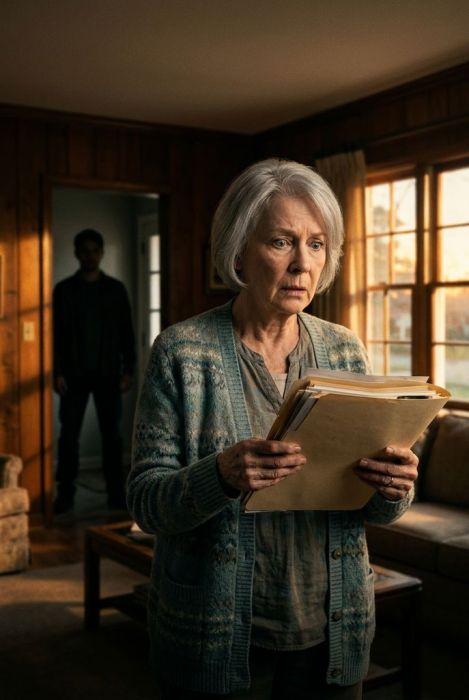
The following Monday, Ellen came home from her weekly grocery run at Fred Meyer and found that her front door was unlocked. She was certain she had locked it. She always locked it, a habit drilled into her by forty years of teaching middle school in a district where you learned to secure your classroom door without thinking. She stood on the porch, her bags of groceries growing heavy in her arms, and stared at the door that was slightly ajar. The police came this time. Two officers, a young man and a younger woman, who walked through her house with professional calm and found nothing missing. Nothing disturbed. But on her kitchen counter, perfectly centered on the cork coaster Frank had always used, was a single red rose and a note that read, "I would never take anything from you. I only want to give."
The officers exchanged a look that Ellen could not read. They told her to keep her doors locked, to call if she saw anything suspicious, and that they would increase patrols in the area. They did not tell her that the note was a clear escalation, that the stalker had been inside her home. They did not tell her that the rose and the coaster meant whoever had done this knew her house intimately, had watched her long enough to understand her habits, her grief, her loneliness. They did not tell her that the most dangerous stalkers are the ones who believe they are in love. Ellen knew this anyway. She had watched enough true crime documentaries in her quiet evenings alone to understand the pattern. She just never thought it would happen to her.
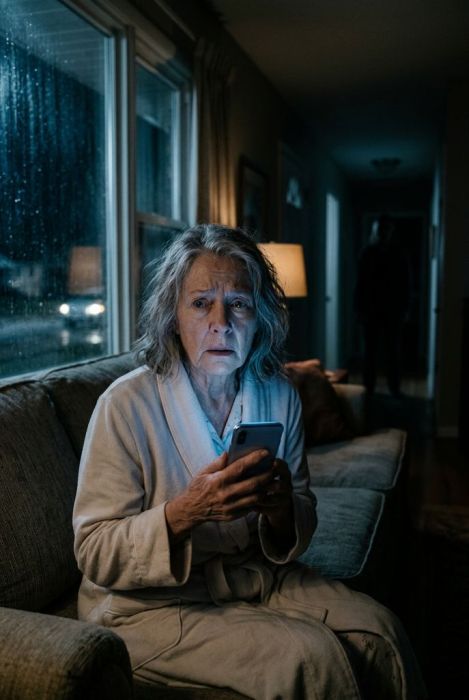
The next two weeks were a slow descent into something Ellen could only describe as living inside a nightmare while the rest of the world went about its business. She stopped sleeping in her bedroom and moved to the living room couch, where she could see both the front door and the street. The blue car was there every single night, and she began to recognize the silhouette of the driver, a man with broad shoulders and a baseball cap pulled low. He never got out of the car. He never approached her house. He just sat there, watching, waiting, a ghost in the dark. Ellen's neighbor Carol noticed she looked tired and asked if she was okay. Ellen said she was fine, because what was she supposed to say? That a stranger was camping outside her home and the police had told her to wait until something bad happened?
The breaking point came on a cold November evening when Ellen returned from her Wednesday night bingo game at the community center, a small pleasure she had allowed herself to ease the loneliness of widowhood. She parked her car in the driveway, gathered her purse and her coat, and walked toward the front door. The blue car was not there. For the first time in three weeks, the street was empty, and Ellen felt a wave of relief so powerful she almost cried. She unlocked her front door, stepped inside, and immediately knew something was wrong. The air smelled different. Someone had been in her house again. She walked slowly through the living room, her heart hammering, and stopped at the hallway that led to the bedrooms. Every single photograph on the wall had been turned to face the wall. Every single one. The wedding photos. The pictures of Rachel as a baby. The school portraits. The vacation snapshots. All of them turned around, as if whoever had entered her home wanted to erase her history, her identity, her very existence.
Ellen did not call the police. She was too afraid, too tired, too ashamed of her own fear. She sat on the couch with the lights off and the front door locked and the phone in her hand, trembling, and she waited for morning. When dawn finally broke through the curtains, she gathered her courage and checked the security cameras she had installed after the first break-in. She had not looked at the footage earlier because she was too afraid of what she might see. Now she forced herself to watch. The footage from the back porch camera showed a figure approaching her house at 4:17 PM, just before she returned from bingo. The person moved with confidence, as if they owned the place, and when they reached the back door, they did not break in. They pulled a key from their pocket and opened the lock as if it were their own home.
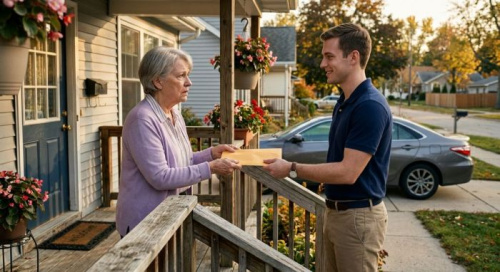
Ellen watched the footage three times, her hand pressed to her mouth. She did not recognize the face clearly. But she recognized the jacket. It was a navy blue windbreaker with a yellow logo on the chest. She had seen that jacket dozens of times over the past six months. It belonged to the young man who delivered her Meals on Wheels every Tuesday and Thursday. His name was Derek. He was twenty-three years old, soft-spoken, always smiling, always asking about her garden and her daughter and her bingo games. He had been inside her home twice a week for six months. He knew where she kept her spare key. He knew she was a widow. He knew she lived alone. He knew exactly when she would be home and when she would not. And he had been using that knowledge to stalk her, to enter her home, to leave his notes and his roses, to sit outside her window every single night.
Ellen called the police again, and this time, they listened. They arrested Derek at the Meals on Wheels distribution center the next morning. In his car, they found a notebook filled with detailed observations about Ellen's daily routine, her family members' names, her medical history, her late husband's death date, and the exact time she left for bingo every Wednesday. They also found similar notebooks for three other elderly women on his delivery route. Women who had not reported anything because they thought they were imagining things, because they were too afraid to be a bother, because they did not want to seem like paranoid old people wasting police time. Ellen's case broke open a pattern that had been building for over a year, a quiet, systematic campaign of psychological terror that had gone completely unnoticed by the system that was supposed to protect them.
The trial was a brutal education for everyone involved. Derek's defense attorney argued that his client had never physically harmed anyone, that the notes were expressions of affection, that the entries into the homes were harmless. But the prosecutor presented the notebooks, the security footage, the testimony of three terrified elderly women, and the jury deliberated for only four hours before returning a guilty verdict on charges of stalking, burglary, and possession of burglar's tools. Derek was sentenced to eight years in state prison. Ellen sat in the front row of the courtroom, her daughter Rachel holding her hand, and she watched the young man who had terrorized her for months being led away in handcuffs. She did not feel triumph. She felt a deep, aching sadness for the system that had failed her and the women who had suffered in silence before her.
Ellen Morrison still lives in the house on Division Street, but she has made changes. She got a guard dog, a gentle golden retriever named Frankie who sleeps at the foot of her bed and barks at nothing. She joined a neighborhood watch program and became its most vocal member, speaking at community meetings about the importance of trusting your instincts and documenting everything. She testified before a state committee that eventually passed a bill strengthening stalking protections in Oregon, making it easier for law enforcement to intervene before a pattern of harassment escalates into violence. And every time she sees a car parked on her street that she does not recognize, she writes down the license plate and calls it in, because she learned the hardest lesson of her life: that the people who hurt you do not always look like monsters. Sometimes they look like the nice young man who brings you a warm meal and asks about your garden, and you let them into your home because you are lonely, and you are kind, and you never imagined that kindness could be used as a weapon against you.