The knock came at 6:47 on a Tuesday morning.
Raymond Porter was still in his bathrobe, standing at the kitchen counter with a mug of black coffee and the crossword puzzle from Sunday's paper. He had been retired for eighteen months now, and mornings like this — slow, quiet, unbothered — were the compensation he had earned for thirty-four years of teaching high school history in the same suburban Philadelphia district.
He looked through the frosted glass of his front door and saw two figures standing on his porch. One wore a dark blue police uniform. The other wore a suit.
His first thought was that something had happened to his daughter. She was thirty-one, living in Chicago, and she always called before visiting. The idea that the police would come for him never crossed his mind. Not once.
Detective Marlene Vasquez showed him the warrant. She was a slender woman in her early forties with tired eyes and a professional tone that suggested she had done this many times before. The charge was corruption of a minor and indecent assault. The alleged victim was a former student named Kevin Matthews, now nineteen years old, who claimed that during his junior year — twelve years ago, when Raymond was fifty and the boy was fifteen — inappropriate接触 had taken place in Raymond's classroom after school.
Raymond read the words three times before they made sense. Then he read them again.
"This is a mistake," he said. His voice came out strange, like someone else was speaking through his mouth. "I never — this didn't happen. Kevin? Kevin Matthews? I barely remember him."
The officer behind Detective Vasquez adjusted his stance. "Mr. Porter, you need to come with us."
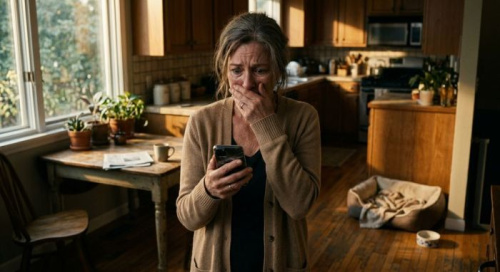
He called his wife from the holding cell at the police station. Linda answered on the second ring. She had been at the grocery store when the police car pulled out of their driveway, and she had come home to find the front door wide open, his coffee still warm, the crossword puzzle half-finished on the counter.
"Ray?" Her voice cracked. "Ray, what is happening?"
"I didn't do anything," he said. He had already said it a hundred times in the past hour. To the booking officer. To the detective. To himself. "Linda, I swear to God. I don't even remember this kid."
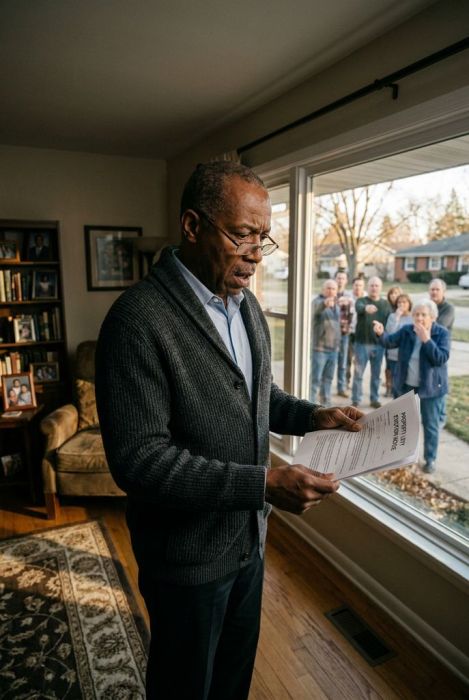
The arrest made the local news by noon. RETIRED TEACHER CHARGED WITH HISTORICAL SEXUAL ASSAULT. The story ran with his old faculty photo from the school district website — the one where he was wearing a tweed jacket and smiling at some long-forgotten awards ceremony. The comments section lit up within hours. Strangers who had never met him called him a monster. People he had known for decades stayed silent.
His next-door neighbor, a man named Gary Parsons who had borrowed Raymond's lawnmower every summer for fourteen years, put up a security camera facing the driveway. He did not say hello when they passed each other on the street.
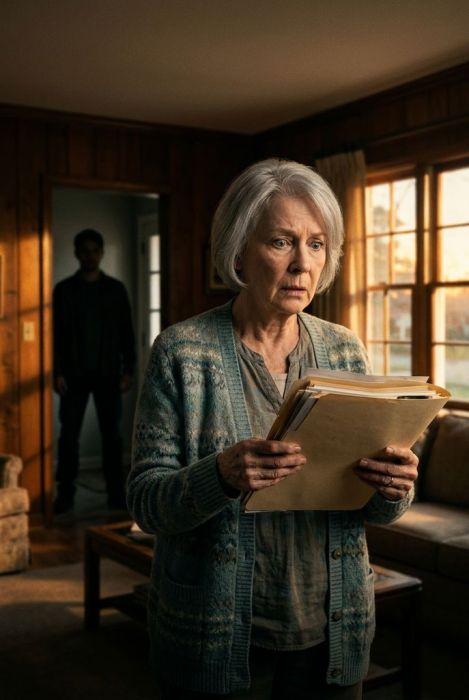
The legal process moved with a strange, disjointed rhythm. There were long stretches of silence interrupted by violent bursts of activity. His lawyer, a no-nonsense woman named Anita Reyes who specialized in defending educators against false accusations, spent the first week gathering every scrap of documentation from his thirty-four years of teaching. Attendance records. Lesson plans. Email correspondence. Performance reviews. Student evaluations. Yearbook photos.
"Kevin Matthews was in your third-period class during the 2012-2013 school year," Anita told him during their second meeting. She spread papers across the conference table. "He was a quiet student. C's and D's. Never caused trouble. But here's what's interesting — he dropped out halfway through the spring semester. Moved to Delaware with his mother after his parents' divorce."
"I remember now," Raymond said slowly. "He sat in the back, near the window. He used to draw in the margins of his notebook. I told him once that he had talent."
"That's it?"
"That's it. I don't think I ever spoke to him alone. I had a hundred and fifty students that year. A hundred and fifty."
Anita nodded, but her expression was guarded. "The problem is timing. He's claiming the incidents happened in March and April of 2013. That's fifteen years ago. There are no security cameras from that period. No witness statements. No physical evidence. It's his word against yours."
"Then how can they charge me?"
"Because in Pennsylvania, there's no statute of limitations for certain sexual offenses against minors. And because a jury might believe him." She paused. "Especially if he's convincing."
The weeks that followed were a slow erosion of everything Raymond had built. The school district, where he had been Teacher of the Year in 2008 and had mentored dozens of young educators, issued a terse statement saying they were cooperating with authorities. They did not mention his thirty-four years of service. They did not mention the scholarship fund he had started for underprivileged students. They mentioned nothing at all, which was worse than saying something.
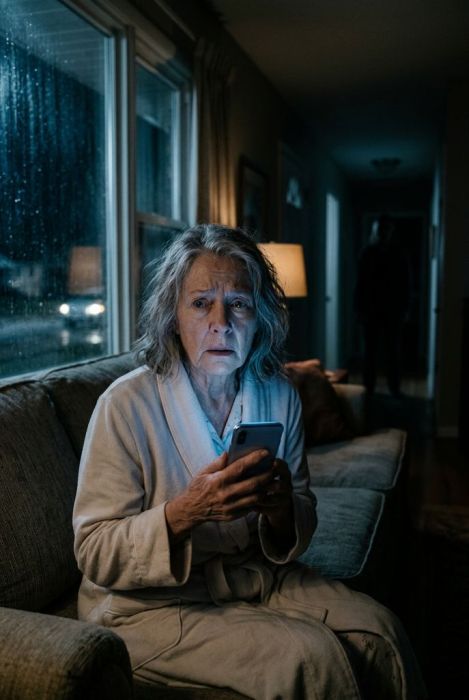
His sons stopped returning his calls. Not because they believed the accusations, he told himself, but because they did not know what to say. His daughter flew in from Chicago and sat with him in the living room, her eyes red, her hands wrapped around a mug of tea that had gone cold hours ago.
"Dad," she whispered. "Tell me again."
"It's not true, sweetheart. None of it."
"I know." She wiped her face with the back of her hand. "I know it's not true. But that doesn't change what's happening."
The discovery phase was where everything began to crack open.
Kevin Matthews sat for a deposition in the district attorney's office. He was nineteen now, a thin young man with nervous hands and a way of looking down at the table when he spoke. The story he told was detailed. Specific. He described the classroom, the desk where he sat, the posters on the wall, the way Raymond would call him up to discuss his grades after class. He described incidents in the storage closet where old textbooks were kept, the smell of dust and paper, the sound of the door clicking shut.
Anita Reyes watched the deposition video three times. Then she called Raymond.
"There's something wrong with his story," she said.
"Everything is wrong with it."
"No, I mean specifically. Listen to this part." She played the clip. Kevin was describing the storage closet — the one behind Raymond's classroom. He mentioned the broken window at the back, the one that was covered with cardboard and duct tape.
"That window was fixed in 2010," Raymond said. "A pipe burst in the science lab upstairs, and water damage came through the ceiling. They replaced the window and the entire back wall. It wasn't broken when Kevin was in my class."
Anita's eyes narrowed. "So he's describing something that didn't exist during his time as a student."
"He's describing what someone else told him."
The investigation pivoted. Anita hired a private investigator named Carlos Mendez, a quiet man with a gray beard and the patient demeanor of someone who had spent decades watching other people's secrets. Carlos went to Delaware, where Kevin lived with his mother. He talked to neighbors. He talked to former classmates. He pulled public records.
What he found was a spiderweb.
Kevin Matthews had a stepsister named Emily. Emily was twenty-seven years old, married, living in Wilmington. And Emily had a severe grudge against the Cherry Hill School District. She had been a student there eight years after Kevin. She had been sexually abused by a different teacher — a coach named Gerald Hawkins who had been convicted in 2019 and was serving twelve to twenty-four years in state prison.
Emily had filed a civil lawsuit against the district, claiming they had ignored warning signs about Hawkins. The lawsuit was still pending. And according to Carlos's investigation, Emily had been coaching her brother Kevin — feeding him details, constructing a narrative that mirrored her own experience, hoping that if he won his case, it would strengthen hers.
The storage closet? Emily had never been in Raymond's classroom. But she had been in Gerald Hawkins's office. Hawkins had a storage closet too. With a broken window covered in cardboard and duct tape.
Anita filed a motion to dismiss based on fabricated evidence. The hearing was scheduled for a Tuesday morning in September, six months after Raymond's arrest.
He sat in the courtroom wearing a dark blue suit that Linda had brought from home. The fabric still smelled like their closet. Like safety. Like a life he was not sure he would ever get back.
Kevin Matthews took the stand. He looked smaller than Raymond remembered, if he remembered him at all. The boy's hands trembled as he swore to tell the truth.
Anita stood up slowly. She held a single photograph.
"Mr. Matthews, can you describe the storage closet in Mr. Porter's classroom?"
Kevin nodded. "It was small. Maybe eight by ten. There was a broken window on the back wall with cardboard taped over it. Old textbooks stacked on metal shelves. A mop bucket in the corner."
"And this window — how long had it been broken?"
"I don't know. It was like that the whole time I was in that class."
Anita turned to the judge. "Your Honor, I'd like to introduce Exhibit D." She handed the photograph to the court clerk. "This is a renovation record from the Cherry Hill School District, dated September 2010. It shows that the back wall and window of classroom 214 — Mr. Porter's classroom — were fully replaced after a water damage incident. The window Kevin Matthews described did not exist during his time at that school. It had been removed and replaced two and a half years before he ever stepped foot in that room."
The courtroom went silent.
Raymond watched Kevin's face. The boy's composure cracked, just slightly. His eyes darted toward the gallery, toward a woman sitting in the back row. His sister, Emily. She was staring straight ahead, her jaw tight, her hands folded in her lap.
"Mr. Matthews," Anita continued, her voice soft but relentless, "can you explain how you remember a window that never existed during your time as a student?"
Kevin did not answer.
"Or should we ask your sister? She spent considerable time in Gerald Hawkins's classroom. His storage closet had a very similar broken window, didn't it?"
The judge called for a recess. When they returned, the district attorney requested a dismissal. The charges were dropped the same afternoon.
Raymond walked out of the courthouse into the pale September sunlight. His daughter was waiting on the steps. His wife was crying. There were reporters with cameras and microphones, but he did not see them. He saw only the faces of the people who had believed him.
The story made the news again. TEACHER EXONERATED AFTER SIX-MONTH NIGHTMARE. But the damage was not something a headline could repair. The neighbors who had turned away from him did not suddenly become friendly again. The school district did not issue an apology. The comments section did not delete the thousands of words that strangers had written about him.
And somewhere in Delaware, a young man named Kevin Matthews sat in his mother's living room, staring at a window that was not broken, wondering how he had been convinced to destroy a good man's life for a sister who never told him the whole truth.
It took Raymond Porter two years before he could enjoy a quiet Tuesday morning again. The crossword puzzles never felt the same. But every time he heard about someone accused of something they did not do, he remembered the smell of that holding cell, the way the world can turn against you in the space of a single knock on the door, and he thanked God that the truth — slow and patient and stubborn — had found its way out before it was too late.
He started volunteering with a legal aid organization that helped others wrongfully accused. Not because he was a hero. Because he understood something now that he wished he never had to learn: that an accusation, once spoken, could never be fully unspoken. That the absence of evidence was not always enough. And that sometimes, the most dangerous weapon in the world was not a gun or a knife, but a story told by someone who knew how to make it sound true.