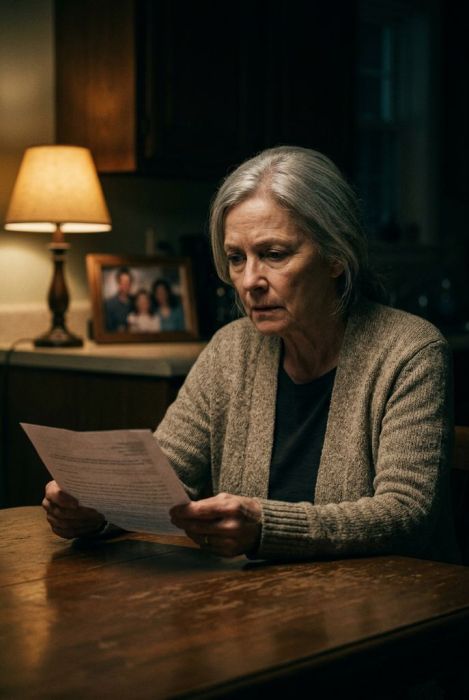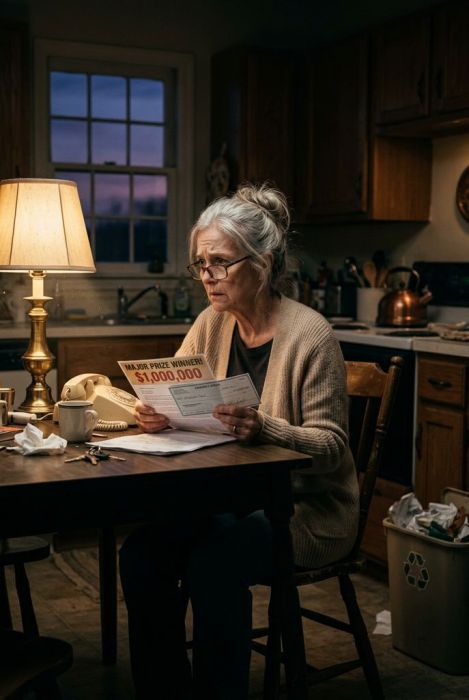
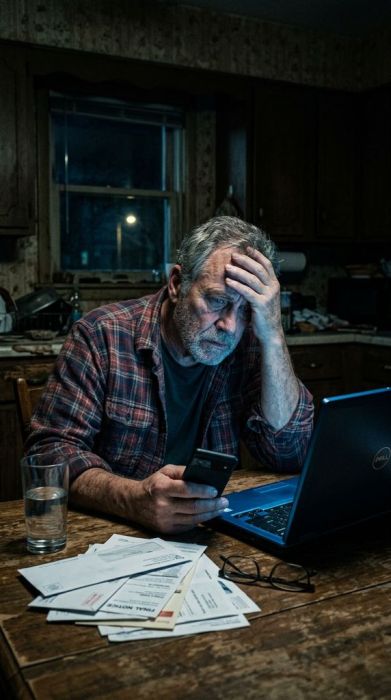
The email arrived at 2:14 in the morning, and Ray Kessler was already awake, staring at the ceiling and listening to the furnace tick. Sleep had been thin since Marlene died four years ago, and the house on East Avenue had a way of amplifying every creak and groan. When his phone buzzed on the nightstand, he assumed it was another weather alert. Then he read the subject line, and his chest went cold.
"I have been watching you for six months. I have a video of you, and everyone you love will see it unless you pay. Your password is Mustang78. Send $1,200 in Bitcoin within forty-eight hours. Tell anyone and I send it tonight."
Ray sat up so fast the sheet slid off the mattress. He read it twice, then a third time, tracing the letters with a trembling finger. Mustang78 — the car he and Marlene had rebuilt in the garage on weekends, the one he still drove to the hardware store every Saturday. He had used that password for everything since 2008. Somehow, impossibly, a stranger had it.
His first instinct was to call Erin. But what would he say — that a stranger had been watching him through the camera on his own phone? The shame closed his throat before he could form the words. Ray Kessler had spent sixty-seven years being the man who fixed things: the machinist who never missed a shift, the father who could spot a lie in a teenager's face, the grandfather who taught Caleb to change a tire without swearing once. Good men didn't get emails like this. And good men especially didn't call their daughters to admit they were terrified.
So he typed a reply with unsteady thumbs. "How do I know you have anything? Prove it."
The response came back in under three minutes, and it was worse than any threat. "You tested me. Mustang78. Do not test me again. Goodbye."
After that, he didn't reply again. He got dressed, drove to the gas station on West 12th, and stood in front of the Bitcoin ATM like a man at a firing squad. The machine ate four hundred-dollar bills and spat out a receipt with a wallet address. He typed the address into the payment screen. Twice. The first payment was gone at 6:10 that morning.
He told himself it was over. He was wrong. The second email arrived the next afternoon, while he was picking at a frozen dinner — an "unusual activity notice," it said, demanding another $2,400 for "re-verification." Then a third, for $4,800, with a countdown timer that started the instant he opened it. Each time, he paid. Each time, he swore it was the last. By the end of the week he had drained nearly nine thousand dollars from the account Marlene used to call their safe place, and he still couldn't tell a single soul why.
The Sundays were the hardest. Every week Erin made meatballs, and every week Caleb sat across the table with his eyes glued to his phone, thumbs moving under the cloth like he was practicing a secret. Ray used to tease him about it. Lately he couldn't look at the boy without feeling the weight of his own secret pressing on his chest. Erin noticed. She always noticed. "Dad, you look tired," she said that Sunday, and for one terrible moment he almost told her everything. Instead he said he'd been having trouble sleeping. It was the truth, and it was also the biggest lie he had ever told.
The only person who came close to the truth was Gus Mancuso, the retired cop next door who fed Ray's cat when he was out of town. Gus saw him at the gas station that Tuesday, feeding cash into the orange machine with the Bitcoin logo. "Didn't know you were a tech guy, Ray," Gus laughed. Ray laughed too and said something stupid about crypto being the future. Gus didn't push. But Gus noticed that Ray's hands were shaking when he pocketed the receipt. Retired cops notice things. They just don't always say them out loud.
The fourth email was the one that broke him. It was addressed to "Dear Ray" — not the cold generic greeting of the others but his actual name — and it threatened to send the video not just to Erin and the church, but to the plant where he'd worked for thirty-one years. There was no video, of course. Not then, not ever. But Ray didn't know that. All he knew was that his name was in the email, and that meant whoever was behind this could reach into the meat of his life and pull out the people he loved. He had sixty-two hundred dollars left. He was already planning the withdrawal when Erin knocked on the door with Gus behind her.
Gus had broken his eight-year silence that morning over coffee, telling Erin what he'd seen at the gas station. "Twice in one week, Ray Kessler feeding a Bitcoin machine — that's not a retirement hobby, honey, that's a scam." Erin had gone home and checked her father's checking account — she'd been on it since Marlene's funeral, just in case — and watched over nine thousand dollars bleed out in six days, all of it to one company name. Then she drove to East Avenue with a cardboard box of bank statements and the look of a woman who had already decided who was going to cry first.
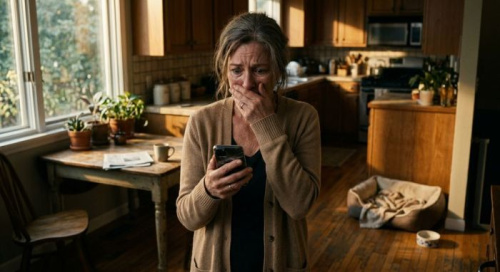
"It's a sextortion scam, Dad. It's been on the news for five years." Erin's voice was gentler than Ray deserved. "Nobody watched you. There's no video. These emails come from data breaches — somebody stole your password in a hack years ago, and they buy the lists by the millions. Mustang78 came from a breach. The only reason they used your name is that the script says to personalize it." She pulled up the FBI's website, IC3.gov, right there on her phone, and read the warning aloud: never pay, report it, the scammers only raise the price. Ray Kessler, who had rebuilt carburetors and thought he'd seen every kind of lowlife there was, sat in his own kitchen and wept.
What happened next was the part that still wakes Erin up at night. Gus, who had followed her in and stood by the door like the cop he used to be, turned to the family photo on the hutch — the one from Thanksgiving six years ago, with Marlene still alive and a fifteen-year-old Caleb grinning with his arm around Ray. "Has anybody asked Caleb about the Telegram app on his phone?" Gus asked, almost casually.
Erin went cold. She thought about her son's moodiness, his new silence, the way he'd flinched at Sunday dinner when Ray mentioned the Bitcoin machine. And then she thought about the phone Caleb had left on her kitchen counter that morning, still unlocked, still showing notifications.
She found it in the notepad app. A numbered list of email addresses — most marked "no reply" — and under one heading, "Processing," the address her father had used since before Y2K. Beneath it, a note in her son's handwriting: "Ray — panicked quick. Sent twice. Ask for more before Friday."
Caleb didn't deny it. He sat at the kitchen table the next afternoon — Ray's kitchen, Ray's chair, Ray's whole world — and he told them everything. The online betting had started with twenty bucks during a game he couldn't afford to care about. The first win felt like free money; that was the trick. By the time he lost his whole paycheck at the car wash, he owed a man named Dwayne six thousand dollars, with interest that grew weekly and threats that grew with it. Desperate men find bad solutions. He found a Telegram channel that sold "combo lists" — leaked email and password pairs — for fifty dollars a throw. The first blast was random. His grandfather's address was just another line on the list. But when a panicked reply came back in that old man's shaking voice, Caleb recognized the email. And he did not delete it. He added "Dear Ray" and typed a countdown he knew would terrify him, because terrified old men pay faster than strangers.
"I kept telling myself I'd pay him back," Caleb whispered, his face buried in his hands. "The guys who really run the scam never touch the money. They told me old people have insurance, that nobody really gets hurt. And I wanted to believe it, because believing it was easier than looking at what I was doing." Erin had to leave the room. Gus stood by the window with his arms crossed, the way he'd stood in a hundred interrogation rooms. Only Ray spoke, and what he said wasn't anger. "You didn't have to rob me, Caleb. All you had to do was ask."
Caleb broke open at the table. He was nineteen, scared out of his mind, in over his head with a loan shark and his own conscience. Ray looked at his grandson for a long time — the boy who had helped him rebuild the Mustang's alternator, the boy who had signed the garage wall in marker when he was nine — and he made a decision that surprised everyone, including himself. No police report would name Caleb. But the Bitcoin address would be reported to the FBI's Internet Crime Complaint Center and the local cyber unit, because that address was a thread in a much larger net and Ray wanted the people who sold the lists burned with it. Caleb would move into East Avenue for the summer, work double shifts, and hand over every paycheck until the money was repaid. "You owe me more than eight thousand dollars, son," Ray said quietly. "You owe me the truth, every time, for the rest of your life."
The detective who took the report, a young woman named Sato who had seen a hundred of these cases that month alone, told Ray something that stuck with him. "You got scammed twice, Mr. Kessler — once by the strangers, and once by your own pride. The scammers don't need to be smart. They just need you to be ashamed." Then she gave him the checklist that changed his year: freeze the credit, change every password, turn on two-factor authentication, and never trust an email engineered to make you feel small. Ray did all of it, slowly, with Caleb coaching him over the phone from the other room, because even the family that breaks you can help you rebuild.
Thanksgiving, one year later. Erin put down the turkey and watched her father walk in holding a plain white envelope. Caleb sat in the same chair he'd sat in every Thanksgiving of his life, and Ray set the envelope in front of him without a word. Inside was the last six hundred dollars — the final payment of a debt that had never really been about money. Caleb counted it, stood up, and handed it back. "It's yours, Grandpa. For real this time." And Ray, who hadn't cried in a year, opened the envelope, took out exactly one hundred dollars, and pressed it into his grandson's hand. "Then this is your first honest tip," he said. "Save it for a day you need reminding that you don't have to steal to survive." The table went quiet. Then somebody laughed, and then everybody did.
The video never existed. Nobody had ever watched Ray through his phone camera. The password wasn't magic — it had been sitting in a leaked data file for over a decade, sold in bulk to anyone with fifty dollars and a Telegram account. And the only thing that made the scam work was the one ingredient every con artist in history has counted on: shame. Ray Kessler doesn't preach about it. He doesn't hand out pamphlets at church. But when the young cashier at the hardware store asked why he had a little fingerprint icon on his screen now, Ray just smiled. "Two-factor authentication," he said. "Turns out an old machinist can learn a new trick. And the one thing I know now is that nobody is ever too old — or too proud — to get got. The scammers don't care if you're seventeen or seventy. They're looking for people who believe they're alone with their fear. Don't be one of them. Tell somebody."