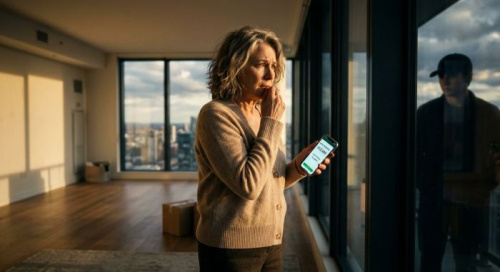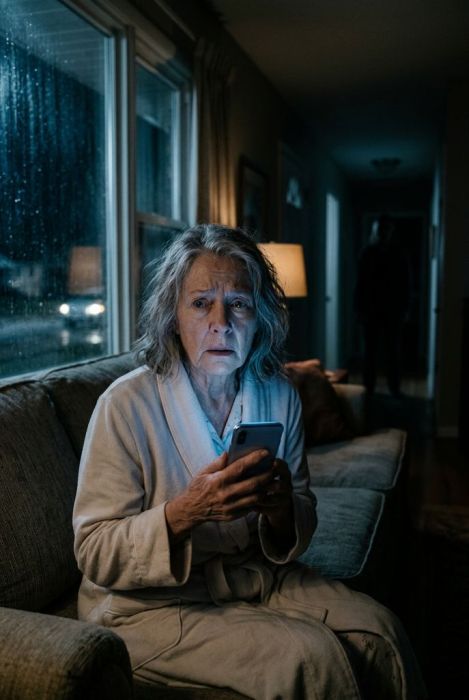
Patty Holloway was halfway through her crossword puzzle when her phone buzzed. The screen showed an unknown number with a California area code, and she almost let it go to voicemail. But something made her pick up. She would replay that moment a hundred times in the weeks that followed, wondering whether answering that call was the worst mistake of her life or the wake-up call she desperately needed.
"Grandma?" The voice was trembling, broken by sobs. "Grandma, it's me. It's Ethan."
Patty's hand flew to her chest. Her grandson's voice was unmistakable — that particular warmth, the way he stretched the word Grandma into two syllables like he had since he was a toddler. Except now it was choked with tears and fear.
"Honey, what's wrong? What happened?"
"I'm in trouble, Grandma. I'm so sorry. I don't know who else to call."
The story that spilled out was fragmented, panicked. Ethan had been driving his roommate's car to the store. He hit a woman crossing the street. She was pregnant. The police said she was in the hospital, that she might lose the baby. They arrested him. He was in a holding cell in Sacramento.
"Sacramento?" Patty said, her mind struggling to keep up. "I thought you were at school."
"I was visiting a friend. Please, Grandma. I can't call my mom. She'll kill me. They said I need bail money. Eight thousand five hundred dollars."
A new voice came on the line. A man identifying himself as Mark Reynolds, the public defender assigned to Ethan's case. His tone was calm, professional, and urgent. He explained that because of the severity of the charges, Ethan needed to post bail immediately. Cash or wire transfer only. The court accepted Bitcoin deposits through a specific machine. He gave her step-by-step instructions.
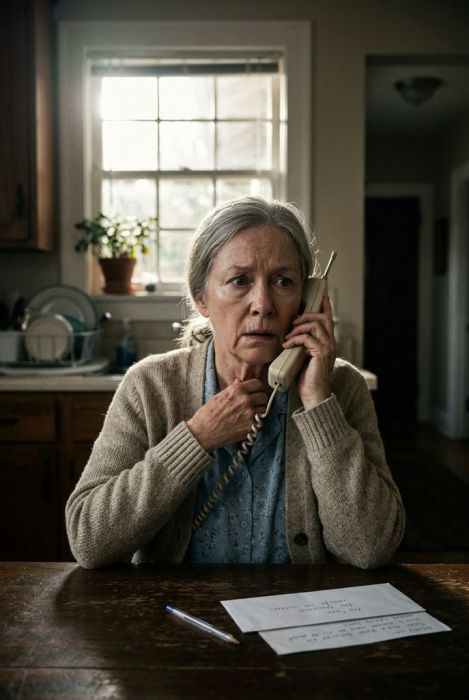
Patty had never used a Bitcoin machine. She barely understood what Bitcoin was. But the terror in her grandson's voice was still ringing in her ears, and the lawyer sounded so official, so certain. She wrote everything down on the back of an envelope.
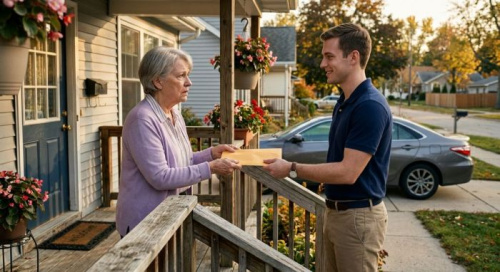
She drove to the Gas-N-Go on Burnside Road, her hands trembling on the steering wheel. The Bitcoin machine looked like a strange ATM from the future. She followed the instructions, fed in the money she had withdrawn from her savings account — eighty-five hundred dollars, most of the money she had set aside for her new roof — and pressed send.
The next morning, the phone rang again.
"Mrs. Holloway?" It was the lawyer again. "We have a situation."
The pregnant woman had lost the baby. The family was filing a wrongful death lawsuit. They were willing to settle for fifteen thousand dollars. If Patty paid immediately, they would drop the charges completely. Ethan would be free by tonight.
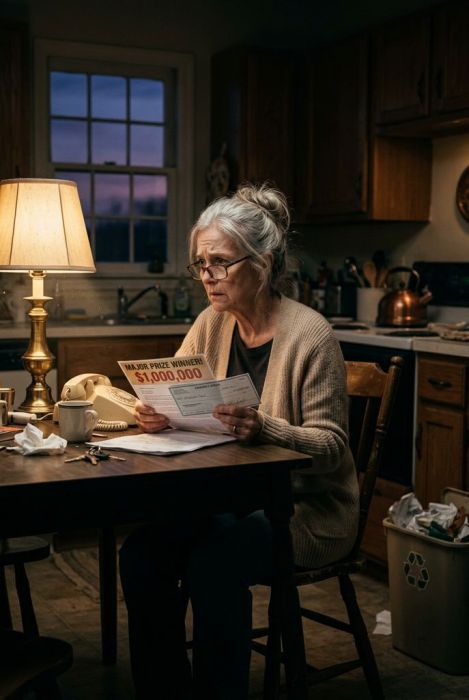
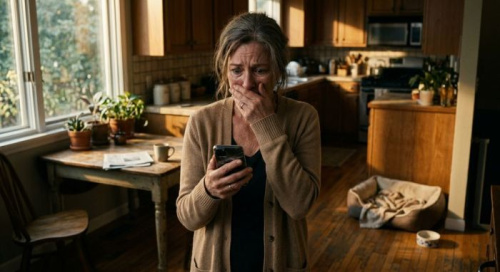
Patty sat down heavily at her kitchen table. The morning light streamed through the window, illuminating the dust motes floating in the air. She noticed, for the first time, how quiet the house was. How alone she felt.
"Can I speak to Ethan?"
There was a pause. Then her grandson's voice came back on the line, exhausted and defeated. "Grandma, please. I just want to come home."
That was the moment when something small and quiet in the back of Patty's mind started whispering. She had taught third grade for thirty-four years. She had seen children lie, manipulate, and cover up their mistakes. She knew the difference between genuine fear and performed panic. And something about Ethan's voice, even through the tears, felt slightly off. Like a photograph that was almost right but not quite.
"I need to call you back," she said.
She hung up and dialed Ethan's cell phone directly. Not the unknown number. The one she had saved in her contacts under "Ethan ❤️."
It rang four times. Then voicemail.
"Hey, you've reached Ethan. Leave a message."
She tried again. Same result.
She called his apartment landline. His roommate, a boy named Marcus, answered on the second ring.
"Hey, Mrs. Holloway. Ethan's not here right now. He's at the library studying for his finals."
"The library?" Patty's voice came out sharper than she intended. "Marcus, is Ethan in Sacramento?"
"Sacramento? No, ma'am. He's been here all weekend. I saw him this morning at breakfast."
Patty's blood turned cold.
She hung up and stared at the back of the envelope where she had written the instructions for the Bitcoin machine. Her handwriting, shaky with fear, seemed foreign to her. She had sent eight thousand five hundred dollars to a stranger. Because a stranger had sounded exactly like her grandson.
The police arrived within the hour. Detective Maria Santos from the Financial Crimes Unit was a sharp-eyed woman in her forties with graying hair pulled back in a tight ponytail. She listened to Patty's story without interruption, taking notes in a small leather notebook.
"Mrs. Holloway, you're not the first person this has happened to," she said gently. "This is a sophisticated operation. They're using AI voice cloning technology."
Patty blinked. "AI? Like a computer?"
"Generative artificial intelligence. They extract voice samples from social media videos — TikTok, Instagram, YouTube. With just a few seconds of audio, they can generate any sentence in that person's voice. It sounds completely natural because it is. It's your grandson's voice, just not your grandson saying those words."
Patty thought about Ethan's TikTok account. He was always sending her videos of himself playing guitar, reviewing movies, talking about his classes. She had watched every single one, proud of his confidence, his humor. He had thousands of followers. His voice was out there, available for anyone to steal.
"The technology is advancing faster than legislation can keep up," Detective Santos continued. "These scammers target grandparents specifically. They know you'll drop everything for your grandchild. They know you won't stop to verify. And they know you have savings."
The investigation that followed was painstaking but ultimately fruitless. The Bitcoin transaction was traced to a wallet in Southeast Asia. The phone number was a burner registered with a fake ID. The voice of Mark Reynolds, public defender, was also AI-generated, assembled from a combination of several different lawyers' public recordings.
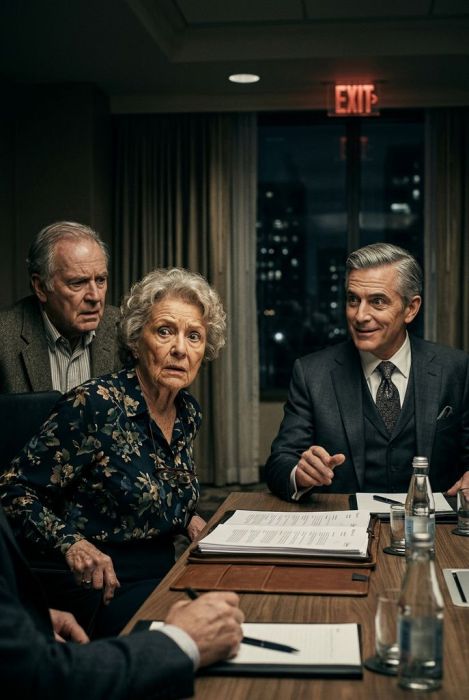
Patty attended a community meeting organized by the Portland Police Department two weeks later. She sat in the back of the room, listening as Detective Santos presented the same information she had heard before, this time to a crowd of sixty elderly residents. Some of them had experienced similar scams. Others were there to learn how to protect themselves.
"These scams thrive on urgency and isolation," Detective Santos told the crowd. "They create a crisis, they pressure you to act quickly, and they cut you off from anyone who might help you think clearly. If you receive a call like this, hang up. Call your grandchild directly. Call another family member. The scam depends on you staying on that phone call."
When the presentation ended, Patty stood up.
She walked to the front of the room and asked if she could say something. Detective Santos nodded.
"My name is Patricia Holloway," she said, her voice steady. "And three weeks ago, I lost eight thousand five hundred dollars to people I never met. I sent it because I heard my grandson crying on the phone. I heard him say 'Grandma, please. I just want to come home.'"
Her voice cracked, but she continued.
"That voice was not my grandson. It was a machine. A computer program that used his real voice, his actual voice from videos he posted online, to lie to me. And I believed it. I believed it because it sounded exactly like him."
She paused, looking out at the faces in the room. Some were crying. Others looked angry. Many looked scared.
"I'm telling you this because I want you to know that it can happen to you too. I'm a retired teacher. I've always been careful with money. I taught children about stranger danger for thirty-four years. But I wasn't prepared for this. None of us are."
The applause that followed was soft and respectful. Several people came up to her afterward, shaking her hand, thanking her for her courage. One woman in her seventies whispered that the same thing had happened to her aunt in Florida. She had lost her entire retirement savings.
Patty drove home that evening and called Ethan, for real this time. They talked for an hour. He told her about his finals, his plans for the summer, a girl he had started dating named Rachel. She listened to every word, memorizing the cadence of his voice, the way he laughed, the pauses when he was thinking. She was trying to create a mental recording that no computer could replicate.
"Grandma," he said near the end of the call. "I'm really sorry they used my voice to hurt you."
"It's not your fault, sweetheart."
"But it was my voice. I put it out there. I never thought about how someone could use it like that."
"Neither did I," she said. "Neither did any of us."
Before she hung up, she made him promise her one thing.
"From now on, if we ever talk on the phone and you need help, we'll use a safe word. Something only you and I know. Something no computer could guess."
They settled on "Gandalf" — the character from the Lord of the Rings movies they had watched together when he was twelve. It was silly and personal and perfect.
Patty hung up the phone and sat in the quiet of her kitchen. The new roof would have to wait. But she had learned something more important than any lesson she had ever taught in thirty-four years of education. She had learned that in a world where machines can perfectly imitate the voices of the people we love, the only defense we have is the human instinct to pause, to question, and to verify.
The next morning, she drove to the Gas-N-Go on Burnside Road. She wanted to look at the Bitcoin machine again, to face the place where she had made the worst financial decision of her life. But when she got there, the machine was gone. A handwritten sign on the wall said it had been removed for maintenance.
Patty stood in the fluorescent glare of the convenience store, watching through the window as a young mother filled her car with gas. The woman's phone was pressed to her ear, her free hand gesturing animatedly as she talked. Her child, a boy of about seven, was unbuckling his seatbelt in the back seat, completely unaware of the digital world waiting outside the glass, a world where voices could be stolen and love could be weaponized.
The convenience store clerk cleared his throat. "Can I help you, ma'am?"
Patty shook her head. "No. I think I'm done here."
She walked out into the gray Portland morning, the cool air sharp against her cheeks. Her phone buzzed in her pocket. A text from Ethan: a photo of him and Marcus at the campus library, both of them making exaggerated faces at the camera.
She smiled, saved the photo, and got into her car. Then she drove home, sat down at her kitchen table, and picked up her crossword puzzle. The pen felt heavy in her hand, but she wrote anyway, filling in the boxes one by one, putting the pieces back together.